Progress in the Study of Distant Activity of Long-Period Comets
Recently, a research team from the Shanghai Astronomical Observatory (SHAO), in collaboration with the Purple Mountain Observatory (PMO), has achieved significant progress in the study of distant activity of long-period comets. By conducting systematic observations of the long-period comet C/2023 A3 (Tsuchinshan–ATLAS) using the high-precision telescope (YHPT) at the PMO Yao'an Observation Station, this study reveals, for the first time, the activity enhancement process of this comet at large heliocentric distances (from 7.2 au to 5.9 au). The findings characterize the evolutionary features of its distant activity and provide observational evidence for understanding the activity mechanisms and evolutionary patterns of long-period comets at large heliocentric distances. The results were published online on May 25, 2026, in The Astrophysical Journal.
To address key scientific questions regarding cometary activity at heliocentric distances beyond 5 au—where sublimation driven by water ice is traditionally considered weak, the activity mechanisms remain poorly understood, and observational samples are scarce—the team conducted continuous monitoring of C/2023 A3 from March to July 2023. A total of 21 nights of high-quality data were obtained, covering the comet's journey from 7.2 au to 5.9 au.
The analysis reveals that both the dust production rate and the effective scattering cross-section of the comet increase continuously as heliocentric distance decreases. The activity index exhibits two distinct evolutionary phases, with distant-stage activity intensity significantly exceeding that of typical comets. The coma colors show a unique evolutionary pattern, suggesting the combined effects of gas emission and dust particle size variation.
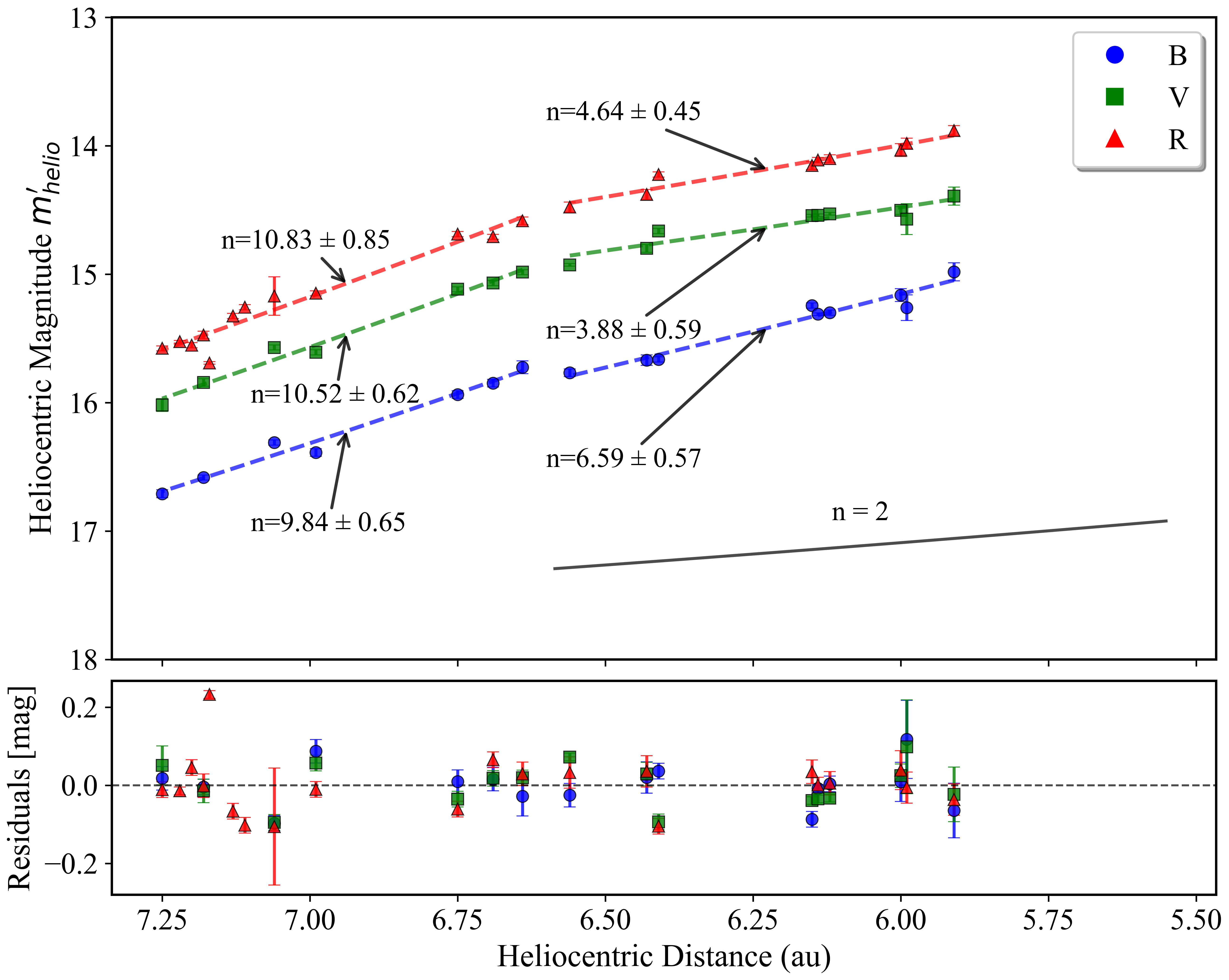
Fig 1. Variation of the activity index of comet C/2023 A3 (Tsuchinshan–ATLAS) as a function of heliocentric distance.
This study successfully fills the observational gap for comet C/2023 A3 (Tsuchinshan–ATLAS) in the distant range of 5 au to 7 au. It also provides a highly valuable typical observational sample and empirical support for establishing a robust classification framework for the distant activity of long-period comets.
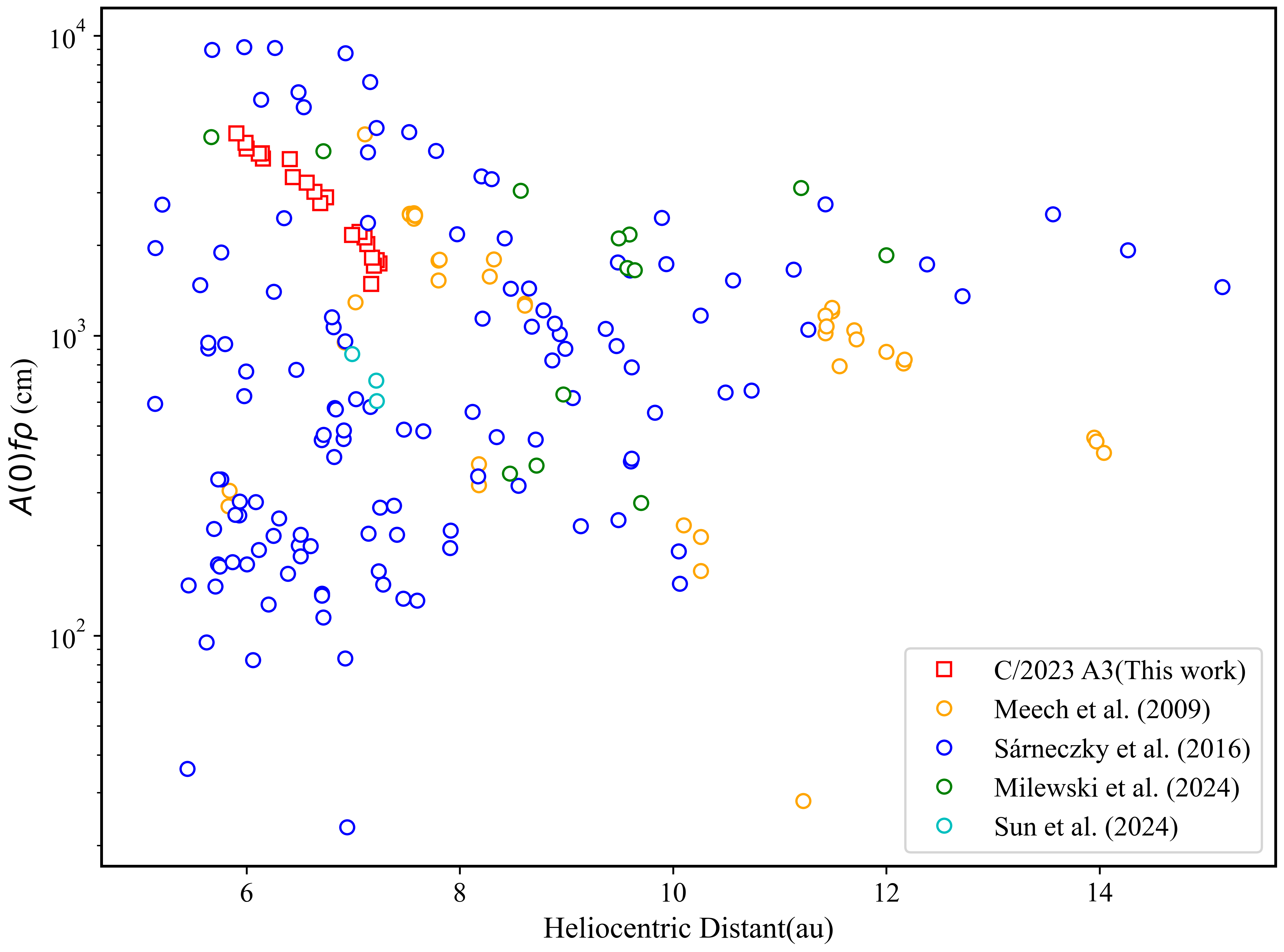
Fig 2. Comparison of the Afρ values of comet C/2023 A3 (Tsuchinshan–ATLAS) with those of other distant long-period comets as a function of heliocentric distance.
The first author of the paper is Wu Yingqi, a master’s student at SHAO, and the corresponding author is Shi Jianchun. This research was supported by the National Natural Science Foundation of China, the Chinese Academy of Sciences Telescope Operation and Maintenance Upgrading Fund, and the China Manned Space Engineering Program.
DOI: https://iopscience.iop.org/article/10.3847/1538-4357/ae6649
Scientific Contact: SHI Jianchun, jcshi@shao.ac.cn
Download attachments:




