SHAO Advances Laser-Based Precise Orbit Determination and Time-Frequency Transfer in Cislunar Space
A research team from the Shanghai Astronomical Observatory (SHAO) of the Chinese Academy of Sciences (CAS) has made a series of advances in applying satellite laser ranging (SLR) to precise orbit determination and timefrequency transfer for cislunar spacecraft. Their study on precise orbit determination by integrating two-way SLR with ground-based radio ranging was published in SCIENTIA SINICA Physica, Mechanica & Astronomica, while their work on precise orbit determination and timefrequency transfer for cislunar spacecraft using one-way laser ranging was published in Advances in Space Research.
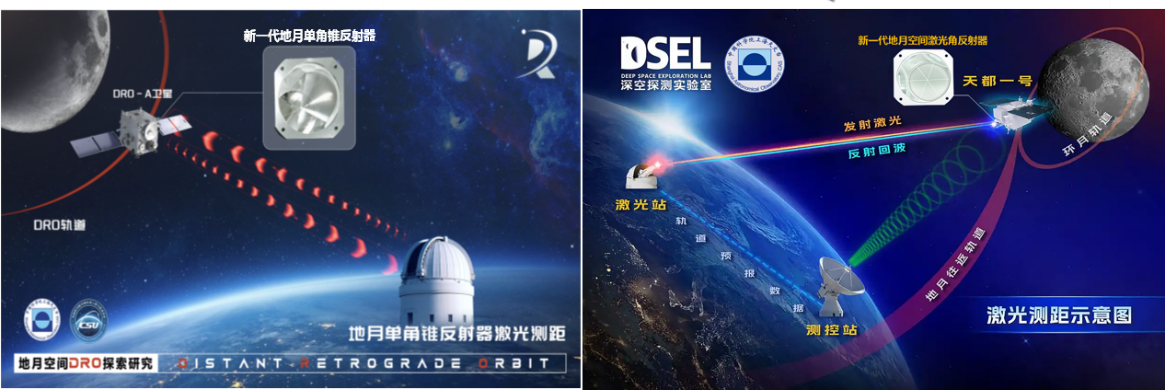
Fig. 1. Schematic of two-way laser ranging observations of the TD-1 and DRO-A satellites
By incorporating SLR observations into orbit determination based on ground-based radio ranging data from the deep space tracking network, the researchers significantly improved the orbit solutions for the Tiandu-1 (TD-1) communication and navigation technology test satellite and DRO-A, which operates in a lunar distant retrograde orbit. The three-dimensional position differences between overlapping orbit arcs were reduced from 656 m to 179 m for TD-1 and from 854 m to 266 m for DRO-A. Using SLR observations as an independent external validation of the radio-ranging-based orbit solutions, the researchers found that the radial orbit accuracies of DRO-A and TD-1 were better than 5 m and 20 m, respectively.
The team also developed a cislunar time frequency transfer model with picosecond-level computational accuracy. The resulting engineering-oriented computational method can be directly integrated into time transfer data-processing software, provides well-defined error bounds, and has been validated through closed-loop software tests. The model was successfully applied to satellite-to-ground laser time-frequency transfer data from DRO-A. The one-way satellite-to-ground clock-offset measurements achieved a 1-s normal-point precision of approximately 50 ps and an Allan deviation of 3 × 10⁻¹² at an averaging time of 30 s.
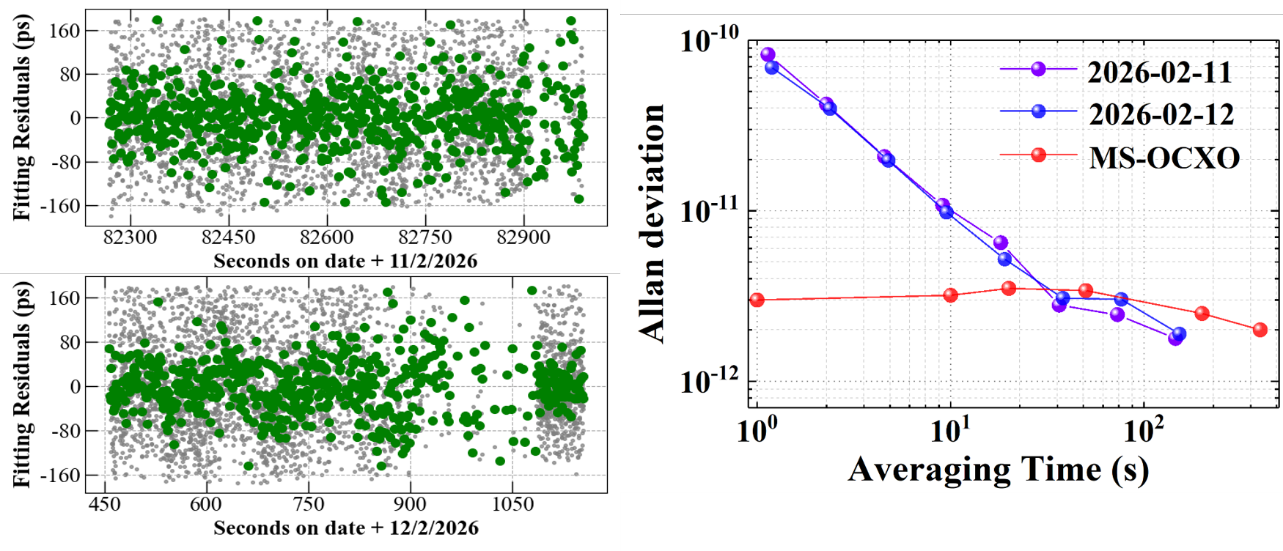
Fig. 2. Left: Residuals after high-order polynomial fitting of the clock offsets obtained from DRO-A one-way laser time frequency transfer. Right: Allan deviation of the raw clock-offset measurements. An EndRun Meridian II GPS-disciplined high-stability clock was used at the ground station, while a rubidium atomic clock was carried onboard DRO-A.
The key spaceborne laser payloads used in the cislunar laser ranging and time frequency transfer experiments were developed by SHAO. The team developed a spaceborne laser transponder payload and a next-generation lunar retroreflector (NGLR), both of which were carried aboard DRO-A. The team also developed an NGLR for TD-1.
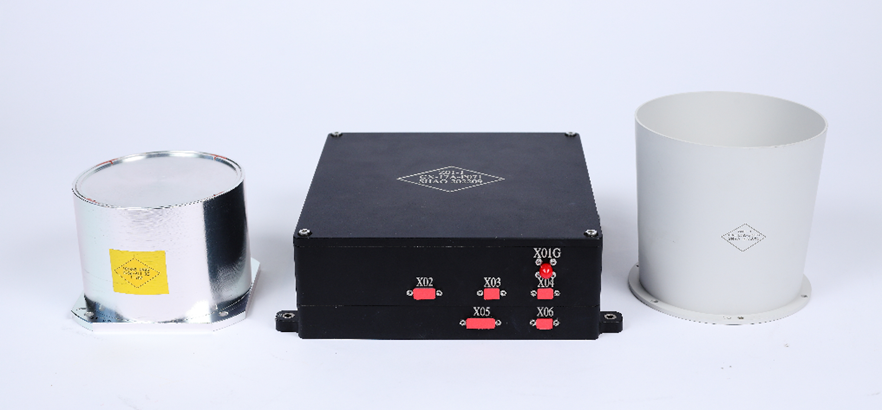
Fig. 3. The laser transponder and next-generation lunar retroreflector (NGLR) payloads onboard DRO-A.
Dr. Geng Renfang, a postdoctoral researcher at SHAO, is the first author of the research, and Prof. Huang Yong of SHAO is the corresponding author. Collaborators include the research team led by Prof. Li Yuqiang at Yunnan Observatories, CAS; Prof. Wang Wenbin from the Technology and Engineering Center for Space Utilization, CAS; and Prof. Chen Xiao from the Deep Space Exploration Laboratory, among others.
Related papers:
https://doi.org/10.1016/j.asr.2026.09.011
https://doi.org/10.1360/SSPMA-2026-0280
Scientific contact:
Prof. Huang Yong
Email: yongh@shao.ac.cn
Download attachments:




