SHAO Provides Core Support for Global Astronomical Data Heritage Preservation
Recently, researchers at the Shanghai Astronomical Observatory (SHAO), Chinese Academy of Sciences, published their findings on a newly developed high-precision plate digitization instrument in the international astronomical journal Publications of the Astronomical Society of the Pacific (PASP), under the title “A New Astronomical Plate Digitizer at Shanghai Astronomical Observatory.” This instrument achieves significant breakthroughs in both astrometric and photometric precision, offering critical technical support for the global effort to digitally rescue endangered historical astronomical plates and advance long-term time-domain astronomical research.
Between 1850 and 2000, observatories worldwide accumulated over three million astronomical photographic plates, the majority of these plates have not yet been digitized with high precision and are now at serious risk of physical degradation—such as cracking or emulsion deterioration—leading the Committee on Data of the International Science Council (CODATA) to classify them as endangered scientific data heritage.
The new high-precision plate scanner developed by SHAO integrates core components including an air-bearing motion platform, illumination unit, imaging system, and an automated plate storage chamber. It also features stringent environmental controls and a vibration-isolation system to ensure hardware-level operational stability. In operation, the device employs a step-and-stitch scanning mode: a single 300 mm × 300 mm astronomical plate can be fully scanned in just 220 seconds.
To achieve high-precision digitization, the researchers established a dual calibration system for both photometry and astrometry. For photometric accuracy, they defined precise preheating stabilization conditions for the illumination unit and applied flat-field correction to eliminate brightness non-uniformity across images. After nonlinear calibration, the imaging system’s nonlinear deviation was controlled to within 0.1%. For astrometric accuracy, the team meticulously calibrated multiple factors, including image scale, optical geometric distortion, and stitching errors.
Performance tests were conducted using various historical plates from former observatories such as Beijing Astronomical Observatory and Purple Mountain Observatory. Results demonstrated that the scanner achieves a positional repeatability better than 0.1 μm, photometric repeatability better than 0.01 magnitude, overall scanning astrometric accuracy of 0.3 μm, and photometric accuracy of 0.02 magnitude—fully meeting the stringent requirements for scientific-grade digitization of astronomical plates.
Leveraging this advanced instrument, SHAO has initiated international collaborations with astronomical institutions in Italy, Chile, Japan, Uzbekistan, and other countries under a “contribution–sharing” model: partner institutions provide historical plates, while SHAO performs high-precision digitization, and both parties jointly share the resulting digital data for astronomical research. To date, this collaboration has successfully rescued and digitized about 50,000 international endangered astronomical plates. Moving forward, SHAO plans to further expand its global partnerships to promote deeper data mining and scientific applications, delivering high-quality observational data for astronomy and contributing China’s expertise to the global preservation of astronomical data heritage.
This research was supported by the Shanghai Municipal Science and Technology Commission’s Innovation Action Plan, the Chinese Academy of Sciences’ International Partnership Program, and the National Natural Science Foundation of China.
Paper link: A New Astronomical Plate Digitizer at Shanghai Astronomical Observatory - IOPscience
Scientific contacts:
Meiting Yang : ymt@shao.ac.cn
Yong Yu : yuy@shao.ac.cn
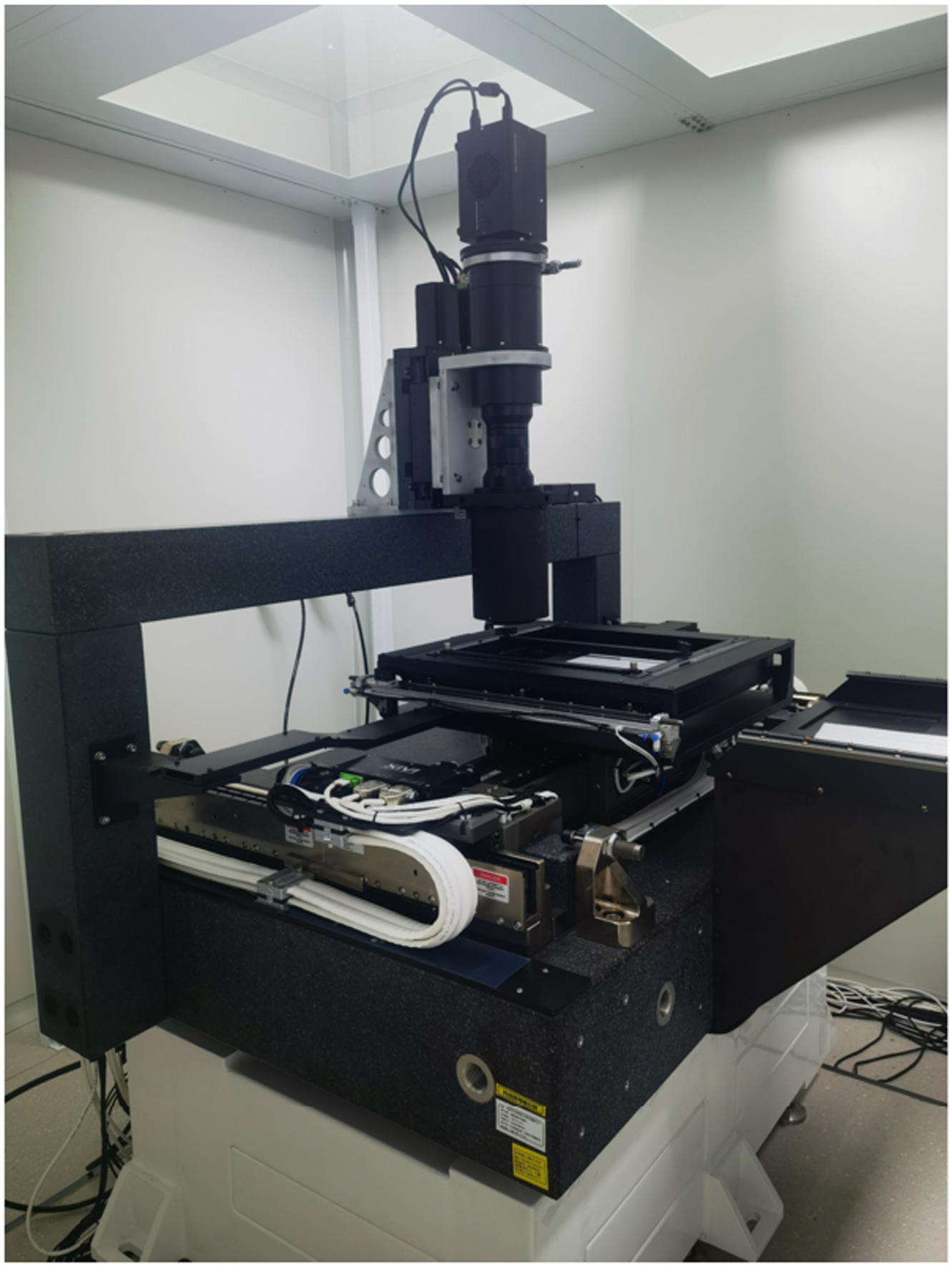
Figure 1. The New High-Precision Astronomical Plate Digitization Instrument of the Shanghai Astronomical Observatory

Figure 2. Digitized image of astronomical plate BJ8204DA3376001. Left: full plate with angular size 8.1。 × 8.1。. Right: a magnification of the plate’s central area with angular size 25’×25’.
Download attachments:




