2026 Shanghai Astronomical Society Annual Conference Successfully Held

Group photo of the 2026 Shanghai Astronomical Society Annual Conference
The 2026 Shanghai Astronomical Society Annual Conference concluded successfully on May 16 in Chongming, Shanghai. This year’s conference was jointly organized by the Shanghai Astronomical Observatory of the Chinese Academy of Sciences, Shanghai Jiao Tong University, Fudan University, Shanghai Normal University, and Shanghai University of Engineering Science, co-organized by the Shanghai Astronomical Society, and hosted by the Shanghai Astronomical Observatory of the Chinese Academy of Sciences. The event brought together more than 150 experts, scholars, and early-career researchers from the astronomy community in Shanghai, establishing an efficient and practical academic exchange platform for the collaborative innovation and high-quality development of Shanghai’s astronomy enterprise.

Professor Jing Yipeng delivering a speech
The opening ceremony was presided over by Kong Dali, Director of the Shanghai Astronomical Observatory, Chinese Academy of Sciences. Professor Jing Yipeng from Shanghai Jiao Tong University delivered a welcome address on behalf of the organizing committee. Professor Jing extended a warm welcome to all participants. He noted that astronomy is currently embracing new historical opportunities, and Shanghai possesses a strong foundation in astronomical research and robust disciplinary strengths. The annual conference aims to create a high-level academic exchange platform, with particular attention to the growth and presentation opportunities of early-career researchers, fostering the collision of academic ideas and collaborative innovation. He expressed his hope that the attending experts and scholars would engage in in-depth communication and cooperation to jointly advance the development of astronomy in Shanghai and across China.
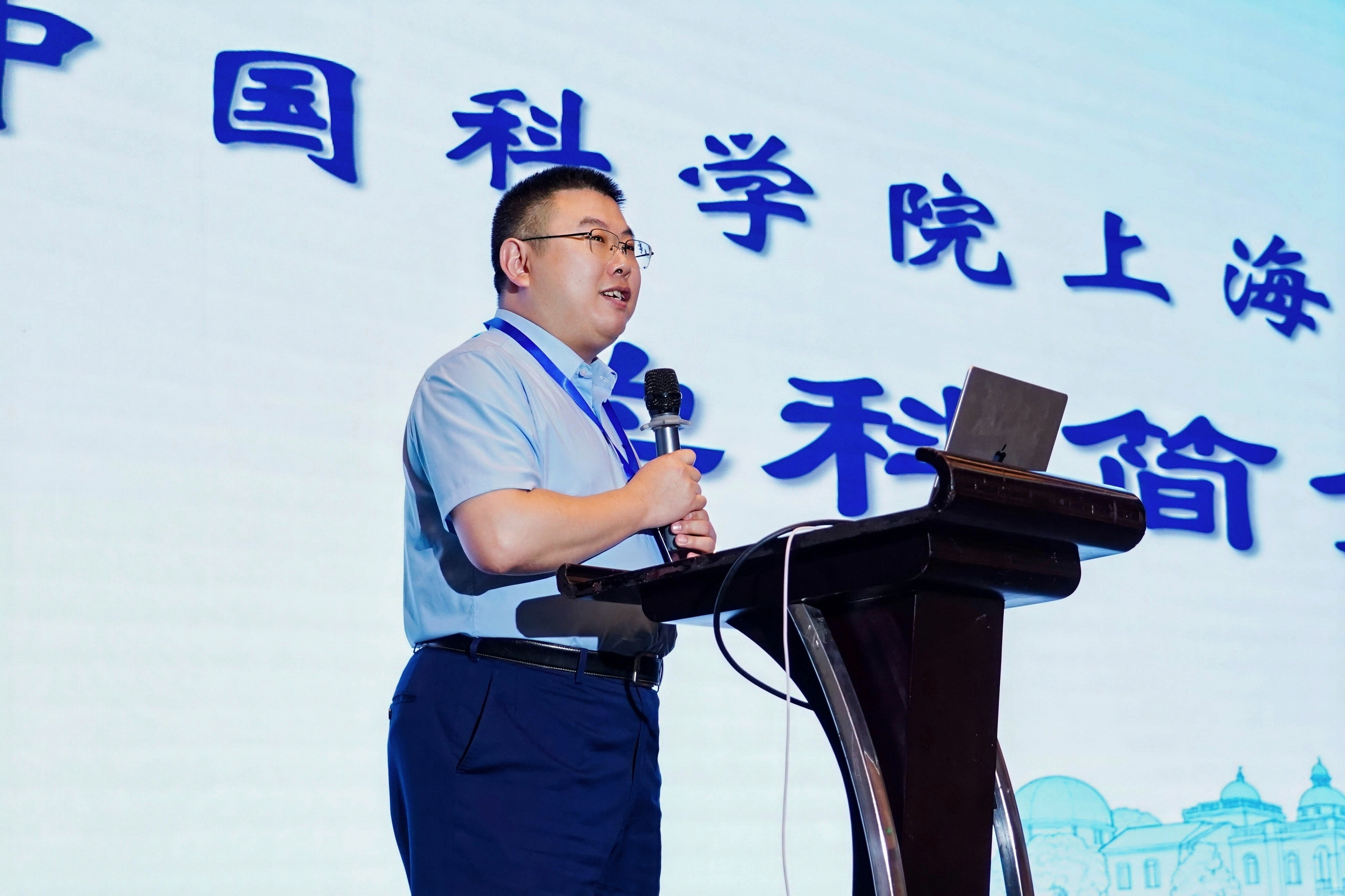
Host institutions delivering scientific introduction reports
At the beginning of the conference, each host institution delivered a scientific introduction report covering disciplinary foundations, core research achievements, research teams, and future development plans, setting a solid academic tone for the annual meeting.
The conference then focused on early-career researchers, showcasing high-level scientific outcomes. A total of 29 academic presentations were arranged, covering cutting-edge topics such as astronomical image processing and artificial intelligence applications, telescope technologies and detection instruments, galaxy formation and evolution, gravitational wave detection, cosmology and dark matter research, stellar and planetary science, high-precision astronomical measurement techniques, and key technologies for deep space exploration. These presentations comprehensively reflected the latest progress of Shanghai’s astronomy community in basic research, technological breakthroughs, and international collaboration.

Professor Yuan Feng delivering concluding remarks
At the conclusion of the conference, Professor Yuan Feng from Fudan University delivered a summary speech. Participants actively offered suggestions and recommendations regarding conference organization, academic development, and disciplinary advancement. There was a consensus to establish a regular mechanism for the annual conference, with multiple institutions taking turns hosting it and regularly organizing thematic academic symposia. Furthermore, it was suggested to promote the deep integration of astronomical research and science education, support the development and career growth of early-career researchers, continue to invite top domestic experts for high-level academic exchanges, deepen collaborative efforts in the Yangtze River Delta region, continuously strengthen fundamental research, enhance cross-disciplinary and cross-institutional cooperation, and comprehensively advance Shanghai’s astronomical research innovation, science popularization, and talent cultivation to a new level, achieving high-quality development.
Download attachments:




