A Hybrid Method for Refining Gaia’s Parallax Zero Point
The astrometry team at the Shanghai Astronomical Observatory (SHAO), Chinese Academy of Sciences, has developed a high-precision hybrid calibration method to eliminate spatial systematic errors in the Gaia Data Release 3 (GDR3) parallaxes. The peer-reviewed study, published in the Monthly Notices of the Royal Astronomical Society (MNRAS), provides a significantly more reliable data baseline for measuring stellar distances, mapping the structure of the Milky Way, and establishing celestial reference frames.
By integrating a global parametric pre-correction with a data-driven local refinement, the new scheme successfully suppresses persistent, large-scale spatial patterns and "striping" artifacts inherent in the Gaia scanning law. These localized residual errors, which reach amplitudes of 10 to 30 microarcseconds ( ) under standard official calibration models (Figure 1), are flattened across the entire celestial sphere to near-zero levels (Figure 2).
To address the drastic variations in calibrator density across different magnitudes, the research team adopted a targeted approach split by a data-driven threshold at G = 18.0. For the faint regime (G > 18.0), the method uses a continuous, non-parametric Sliding Window technique driven by a purified sample of approximately 1.4 million extragalactic quasars, which serve as absolute geometric anchors with near-zero physical parallax. For brighter stars (G < 18.0), the scheme incorporates relative spatial constraints from wide physical binaries, balancing the sparse distribution of absolute extragalactic indicators in the bright regime.
"The Gaia catalogue delivers unprecedented astrometric precision, but at this extreme level of accuracy, subtle systematic errors on the microarcsecond scale become highly significant," said Ye Ding, a PhD candidate at SHAO and the first author of the paper. "Our work is designed to expose and eradicate these hidden, localized biases across different regions of the sky."
Dr. Shilong Liao, a research professor at SHAO and the corresponding author, emphasized the broader impact of the framework: "This study not only presents a highly refined correction map for GDR3 users but also underscores the critical diagnostic value of massive quasar samples in space astrometry. Furthermore, it offers a proven mathematical and empirical methodology that can serve as a vital reference for processing the parallax zero-point issue in the upcoming Gaia Data Release 4 (GD4)."
Co-corresponding author Dr. Zhaoxiang Qi added that advancing high-precision astrometric catalogs demands a profound understanding of underlying physical and instrumental systematic errors. The team’s hybrid calibration approach represents a crucial step toward pushing the boundaries of reliable data application in both galactic archaeology and modern astrophotonics.
The team's latest advancements in high-precision astrometric data processing and multi-wavelength celestial reference frames were recently presented through oral and poster presentations at the European Astronomical Society Annual Meeting (EAS 2026). Along with Ye Ding’s oral presentation on the hybrid calibration, postdoctoral researcher Qiqi Wu and master's student Keyu Zhu presented updates on optical reference frame source strategies and mid-infrared celestial reference frame construction, respectively (Figure 3).
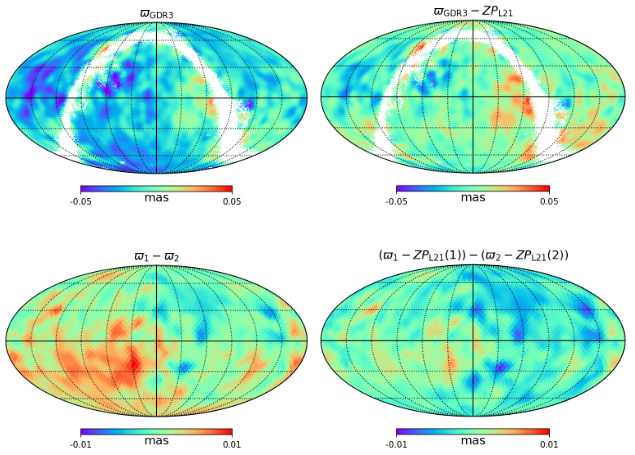
Figure 1. Sky maps presenting the mean parallaxes of the quasar sample (top row) and the mean parallax differences of the wide binary sample (bottom row). Comparing the raw data (left) with the data corrected by the official L21 model (right) reveals that while the L21 model provides a global correction, significant localized spatial parallax zero-point structures remain across the celestial sphere, with error amplitudes reaching 10 to 30 microarcseconds ( ).
).
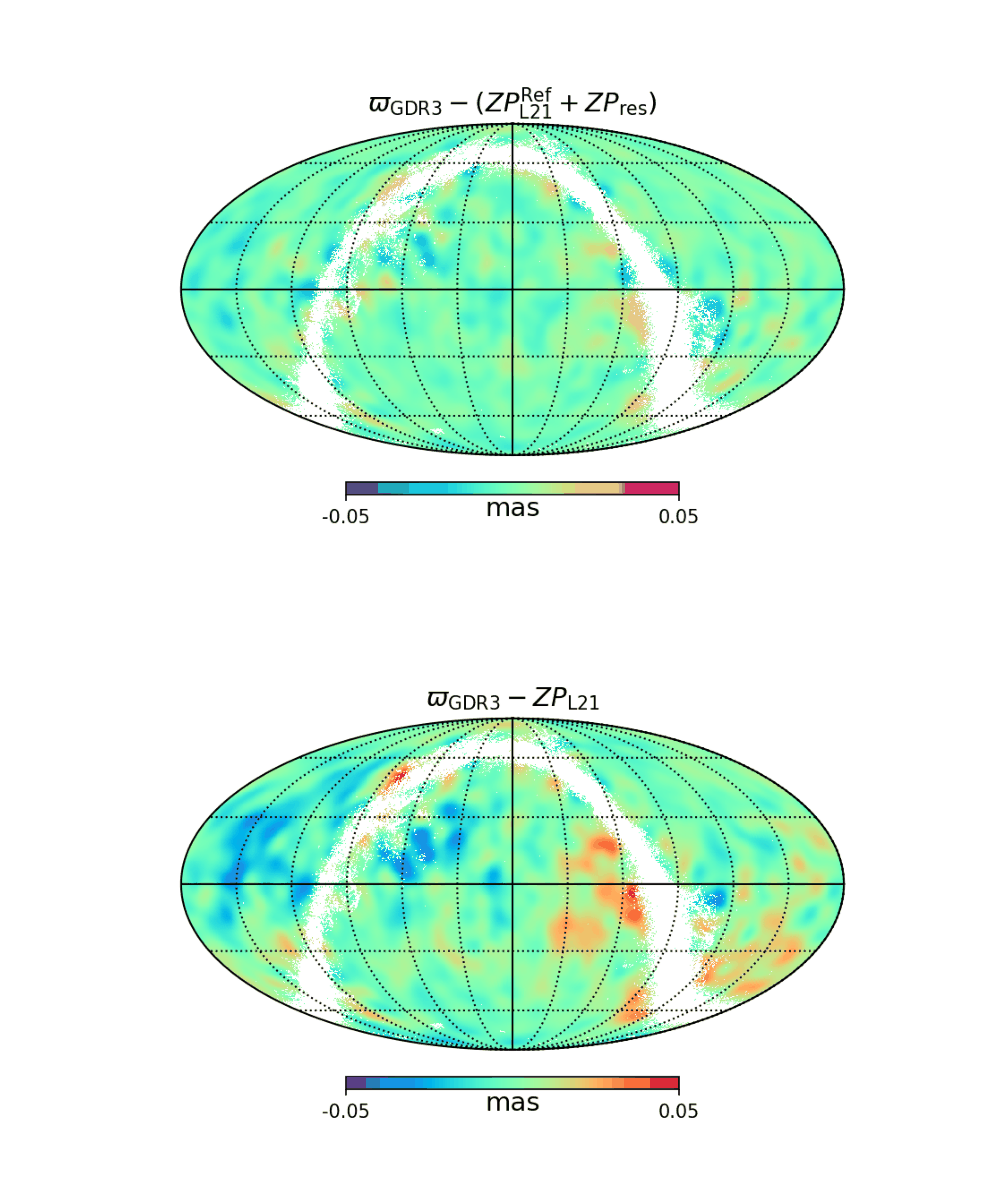
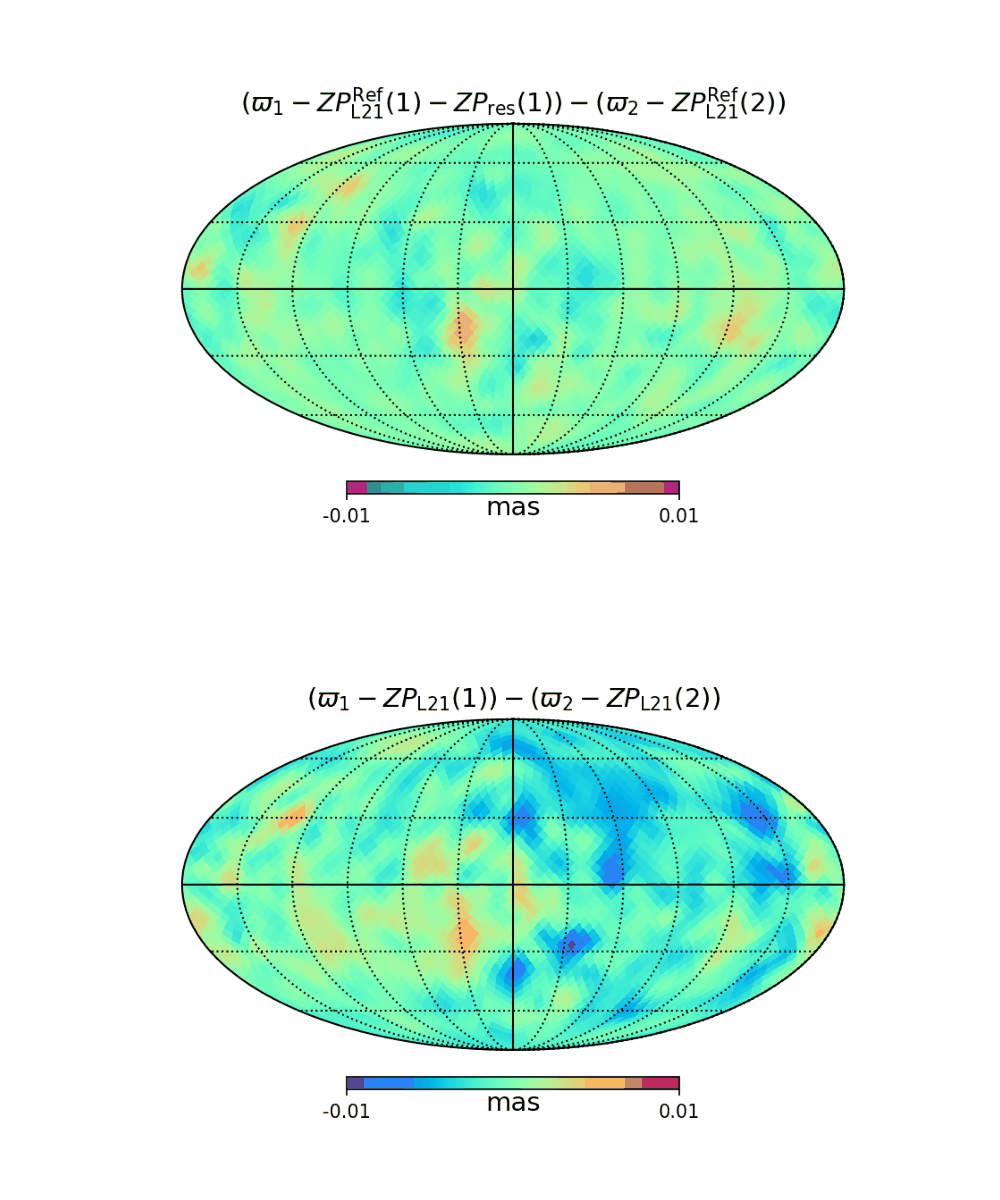
Figure 2. Sky maps comparing the mean parallaxes of the quasar sample (Above) and the mean parallax differences of the wide binary sample (Below) after applying the official L21 model versus the team's proposed hybrid strategy ("global pre-correction + local refinement"). In contrast to the mottled red-and-blue patterns remaining after the L21 correction, the sky maps using the hybrid strategy exhibit a highly uniform green coloration (representing residuals approaching zero). This demonstrates that the new strategy successfully and effectively flattens the extremely subtle localized zero-point residuals, achieving a major leap in calibration precision.
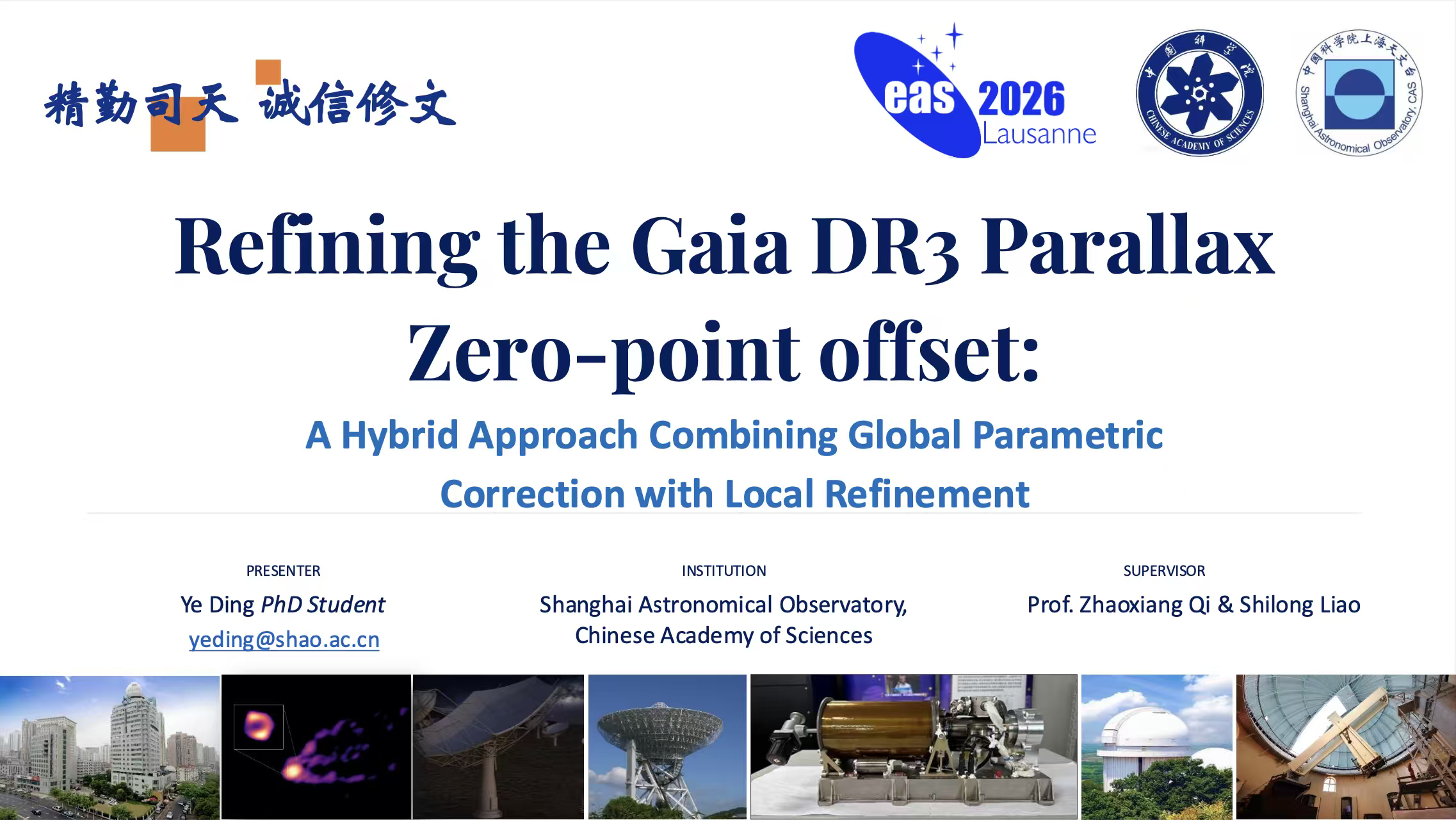
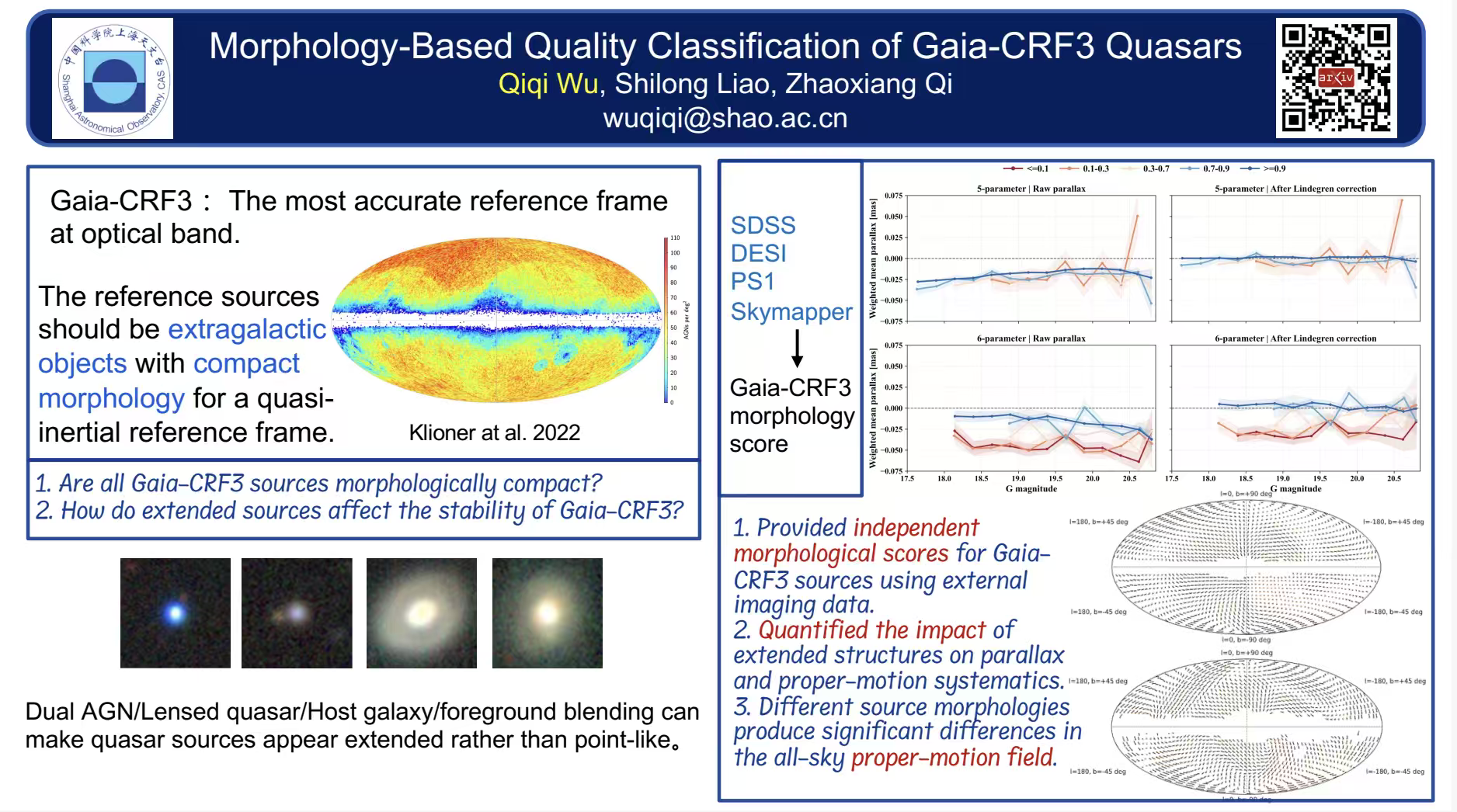
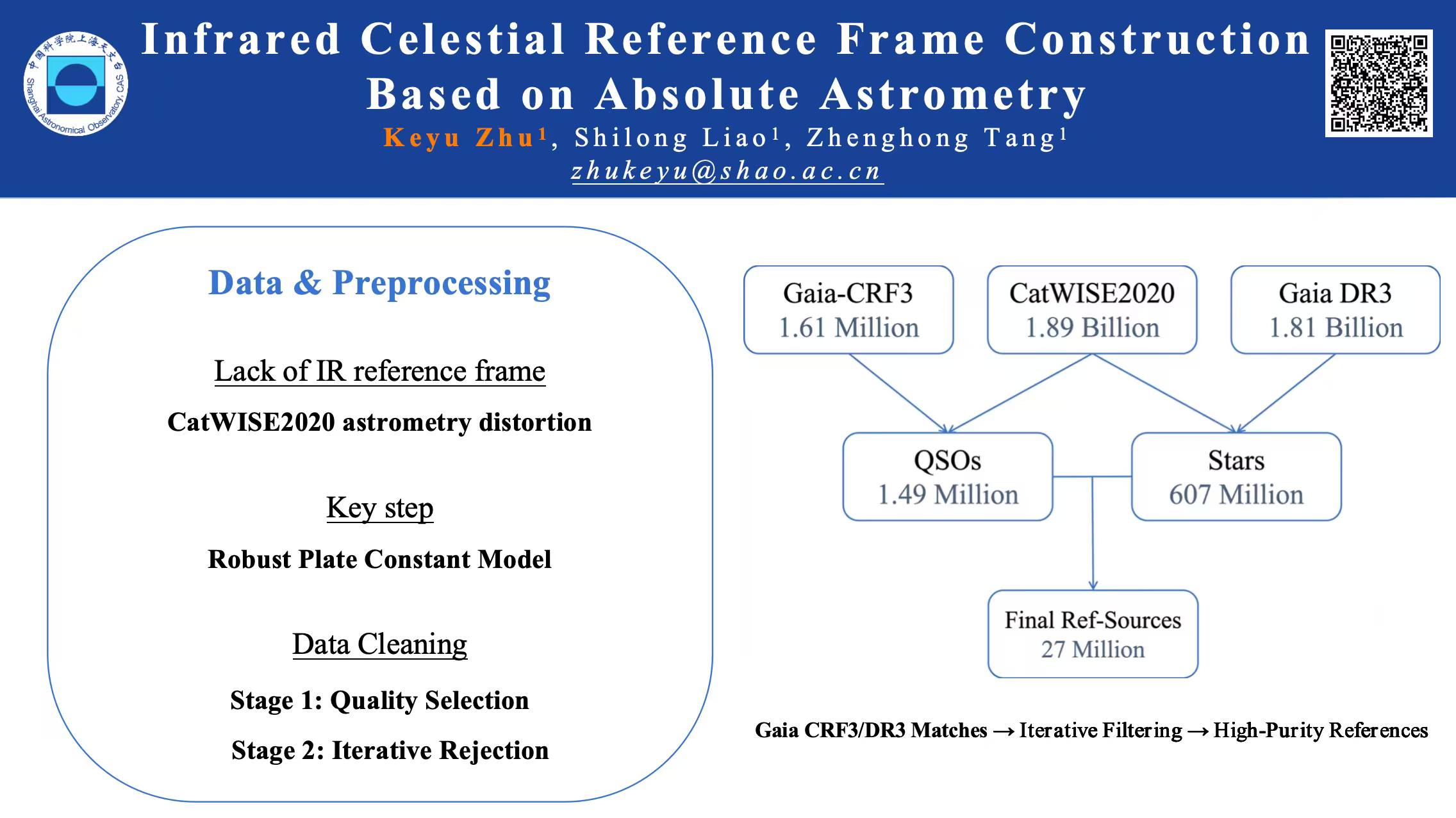
Figure 3. Oral presentation by PhD candidate Ye Ding (up), poster and rapid oral presentation by postdoctoral researcher Qiqi Wu (center), and poster and rapid oral presentation by master's student Keyu Zhu (below).
DOI / Link:https://doi.org/10.1093/mnras/stag1115
Scientific Contacts:
Download attachments:




