

Facilities
High-Performance Computing (HPC) Platform of Shanghai Astronomical Observatory
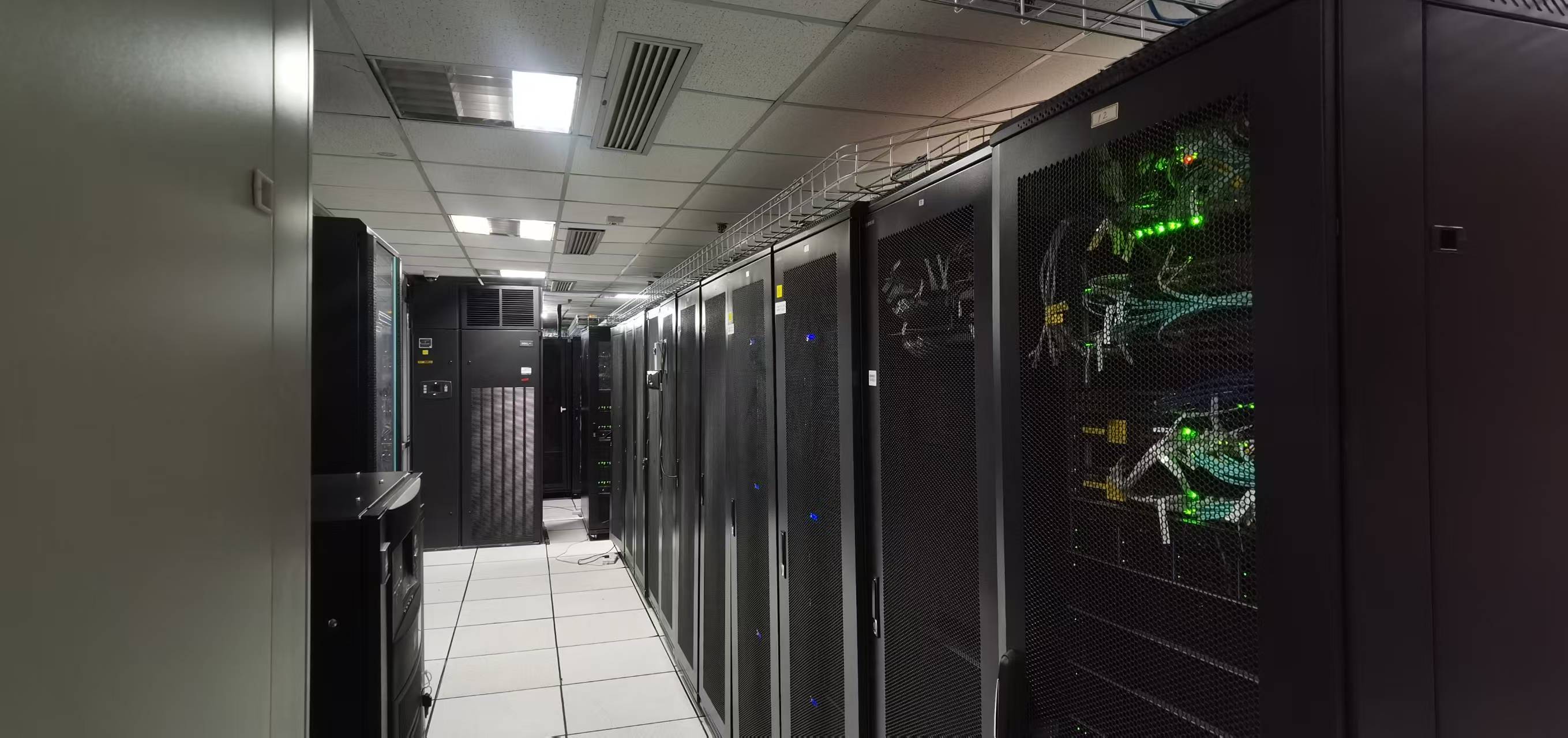
The High-Performance Computing (HPC) Platform of Shanghai Astronomical Observatory (SHAO) is a public supporting facility affiliated with the Information Computing Center of SHAO. In 2011, it was incorporated into the three-tier grid environment of the Supercomputing Network of the Chinese Academy of Sciences (CAS) as one of the first ten institute-level centers approved by CAS.
Over more than a decade, with continuous support from CAS's maintenance and procurement projects, the platform's hardware and software resources have been progressively optimized and upgraded. Currently, its primary computing clusters consist of two CPU-based systems supplied by HP and H3C, featuring a total of 8,616 CPU cores, 2 petabytes (PB) of storage capacity, and a peak computing performance of 520 teraflops (Tflops).
Guided by the core principles of "Resource Sharing, Open Cooperation, Service Innovation, and Safe & Efficient Operation", the platform has established a comprehensive management system and standardized operation & maintenance (O&M) framework. It is equipped with a suite of professional systems, including a cluster management system, job scheduling system, parallel file system, and real-time cluster monitoring system. Furthermore, customized resource scheduling strategies have been developed to accommodate the specific characteristics of astronomical research resources and application requirements. The platform is committed to providing high-quality, efficient HPC services and technical support to research institutions and teams both within and outside CAS, with its foundational focus on serving SHAO's research endeavors.
In addition to supporting researchers of SHAO, the platform also provides computing resources and technical assistance to collaborative research teams from prestigious institutions, including Peking University, Shanghai Jiao Tong University, Xiamen University, and Wuhan University. The key research fields supported by the platform encompass: black hole accretion and active galactic nucleus (AGN) feedback, cosmic large-scale structure, galaxy formation and evolution, theoretical and numerical simulations of fundamental problems in planetary fluid dynamics, dynamical-chemical evolution models of the Milky Way, classification of gamma-ray sources in the Milky Way and nearby galaxies, theoretical and observational studies of exoplanet formation, as well as multi-wavelength observations and radiation characteristics of high-energy sources.
By the end of 2024, researchers utilizing the platform's HPC resources had collectively published 261 high-impact SCI papers, demonstrating the platform's significant contribution to advancing frontiers in astronomical and related sciences.


