

International Collaboration
-
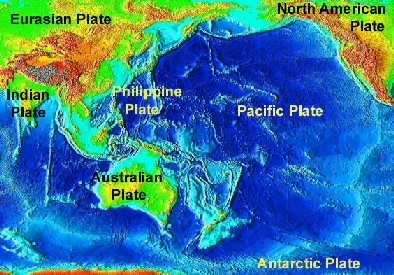 Asia-Pacific Space Geodynamics Program(APSG)Launched in 1996 on the proposal of Madam YE Shuhua, the Asia-Pacific Space Geodynamics Program(APSG) was one of the very few large-scale international research projects led by China at that time. Scientists from nearly 20 countries and regions, including the United States, Australia, Japan, South Korea, Russia, Germany, France, Indonesia and Hong Kong have participated in the program. It’s an unincorporated association of individuals who desire to exchange geodetic and cartographic information relating to worldwide petroleum development. The main objective is to unite all relevant activities in the Asian-Pacific region into a cooperative research project in plate tectonic, crustal motion and deformation, and sea level change in the area.Sep 09, 2026
-
 SKA & China SKA Regional Centre (cnSRC)The Square Kilometer Array, or SKA is a global endeavor to build the world’s largest array of radio astronomy telescopes, and China is a founding member of the SKA Observatory. With unmatched sensitivity, SKA will explore cosmic dawn, galaxy evolution, gravitational waves and the origins of life. It’s a next-generation radio astronomy-driven Big Data facility that will revolutionize our understanding of the Universe and the laws of fundamental physics.Sep 09, 2026
-
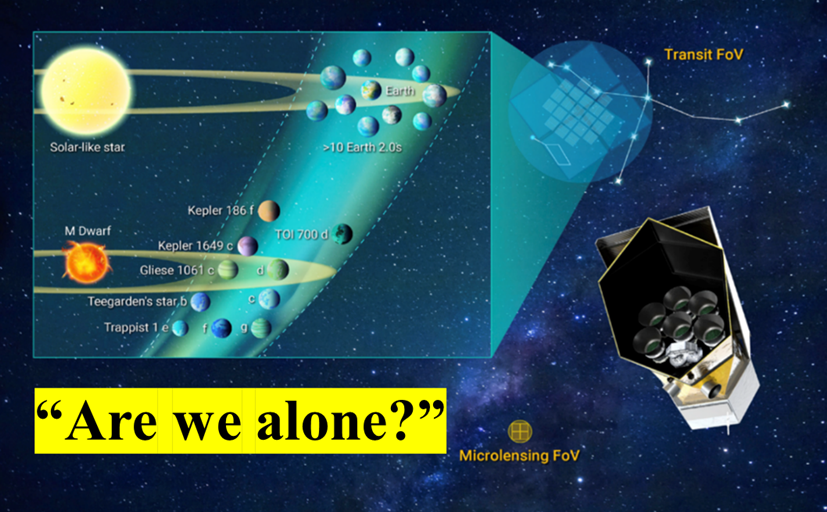 The Earth 2.0 (ET) Space MissionThe Earth 2.0 (ET) space mission is to address a few of fundamental questions in the exoplanet field: How frequently habitable Earth-like planets orbit solar-type stars (Earth 2.0s)? How do terrestrial planets form and evolve? Where do free-floating planets originate? The ET observatory with six transit telescopes and one microlensing telescope in the Earth-Sun L2 orbit will monitor over 2 million dwarf stars in the Kepler and its neighboring regions to search for transiting planets, while simultaneously observing over 30 million stars in the Galactic bulge region to detect microlensing planets.Sep 09, 2026
-
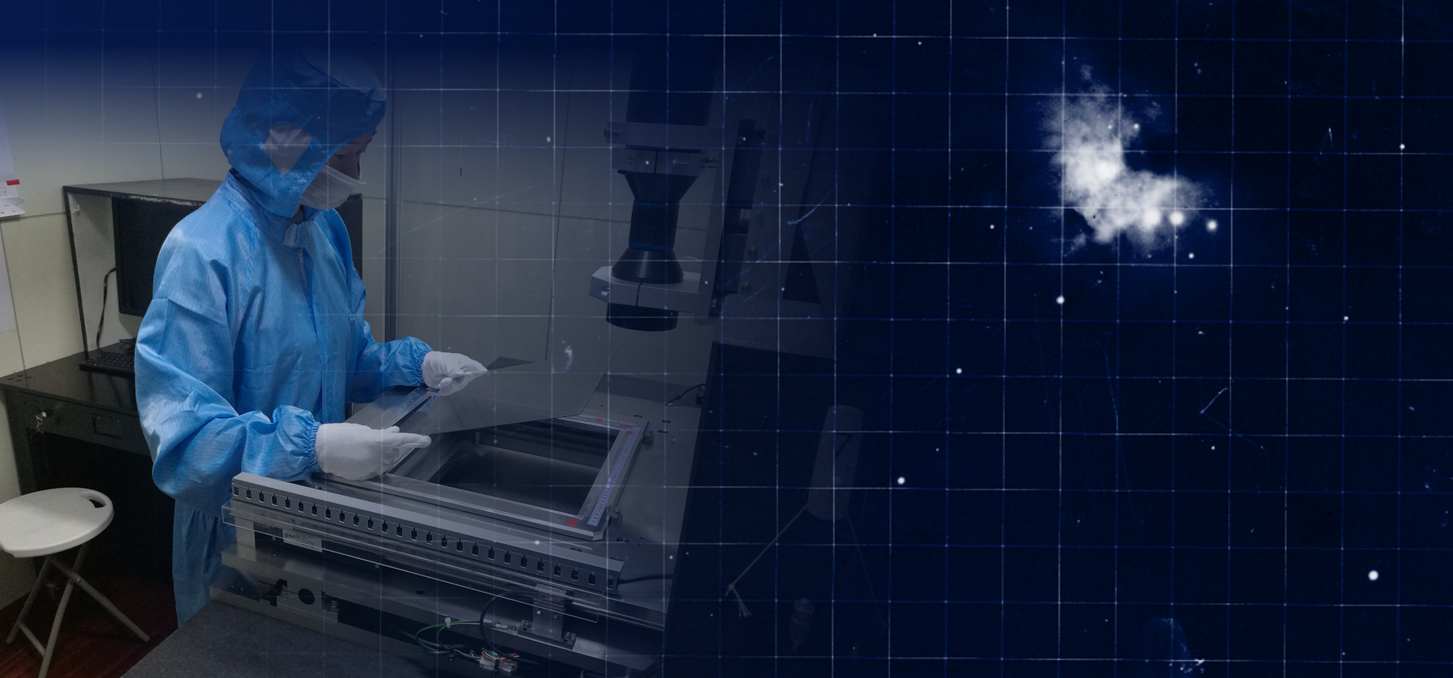 International Astronomical Plate DigitizationSHAO has pioneered the digitization of astronomical photographic plates since 2009. Over the past decade, a world-class Plate Digitization Laboratory has been established, featuring four independently developed high-precision digitizers that deliver sub-micron scanning accuracy (positioning error < 0.3 μm). The initiative has forged international partnerships with astronomical institutions in multiple countries, including Uzbekistan, Italy, Japan, Chile, and beyond, resulting in the digitization of some 50,000 plates worldwide. The project was recognized as an outstanding case at the 2025 World Internet Conference Wuzhen Summit, and the collaborative work with Uzbekistan has been published in the Monthly Notices of the Royal Astronomical Society (MNRAS), marking a landmark Chinese contribution to the preservation and exploitation of historical astronomical plate data.Sep 09, 2026
-
 The EHT CollaborationThe 2020 Breakthrough Prize in Fundamental Physics was awarded to 347 researchers involved in the cooperation of the Event Horizon Telescope (EHT). Sixteen Chinese mainland scholars participated in the international cooperation project, and eight were from SHAO. Using the EHT telescope, scientists obtained an image of the M87 black hole. China has played an active and significant role in the EHT international collaboration, spanning from early support and project participation, to hands-on observation, and complex data processing and analysis. EHT collaboration chairman Anton Zensus acknowledged the broad partnership with Chinese colleagues. EHT Science Council chair Heino Falcke also stated that China made "very important contributions" to the project.Sep 09, 2026
-
CAS-NASA Cooperation on Space GeodesyPromoted by Prof. YE Shuhua, CAS and NASA signed the first MoA on space geodesy collaboration in the 1990s. Ever since, the MoA has been renewed several times (most recently in 2025). Under this cooperation framework, the two sides have achieved fruitful results in personnel exchanges, observation cooperation and equipment upgrading.Sep 09, 2026
-
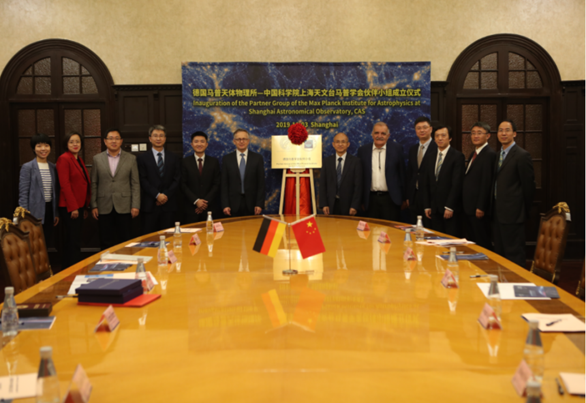 The Sino-German Young Partner GroupsSix Sino-German Max Planck Partner Groups have been successively founded between SHAO/CAS and the Max-Planck-Institut for Astrophysics (MPA) since 2000, led by Chinese scientists JING Yipeng, YANG Xiaohu, LI Cheng, LU Rusen, GUO Hong, and ZHU Ling, together with distinguished German partners. Holding the joint science goals of exploring cosmic structure simulations, galaxy formation and evolution, AGN, galaxy interactions, and etc., the groups have produced internationally recognized outcomes and cultivated a strong domestic research community. The first partner group was established in April 2000 as the first of its kind in the national astrophysical community, and was directed by Prof. JING Yipeng of SHAO with Prof. Gerhard Boerner of the MPA as the German partner to explore dark matter and dark energy in cosmology. The group has sent seven visiting students to the MPA to conduct researches for an average of one year, and successfully held three rounds of Sino-German joint meetings in astrophysics, one of which was convened in Germany. The research partnership has made numerous achievements resulting in the publication of more than 40 high-level SCI papers. The MPA chairman positively evaluated this cooperative program at its final appraisal, indicating that the MPA would continue to establish new partner groups in the future. Professor Gerhard Boener has made prominent contributions to the promotion of Sino-German collaboration in astrophysics sciences and granted the China International Science and Technology Cooperation Award and the Chinese Government Friendship Award in 2010.Sep 09, 2026
-
Collaboration with NRAO in the United StatesIn 2011, an MoU was signed between SHAO and the U.S. National Radio Astronomy Observatory (NRAO) to conduct radio astronomy scientific and technical collaborations. Building on this success, four successive MoUs were signed in 2013, 2014, 2017, and 2020 to sustain ongoing cooperation across a wide range of areas, including joint research projects, VLBA observations, collaborative instrumentation development, and academic exchange.Sep 09, 2026
-
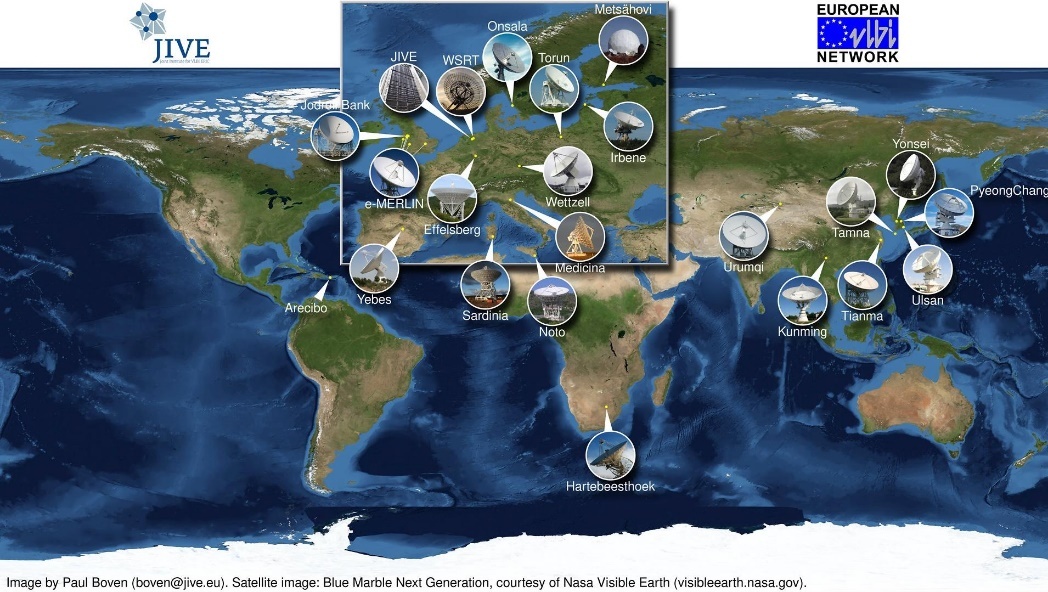 Joint International VLBI ActivitiesWith decades of experience in the Very Long Baseline Interferometry (VLBI) science and technology, SHAO has established long-term cooperation with the National Radio Astronomy Observatory (NRAO) of the United States;jointly developed e-VLBI network with the European Joint Institute for VLBI (JIVE);built China-based centimeter-wave VLBI fast response network with Japan, Russia and beyond;and cooperated with countries such as Japan and South Korea to develop China's millimeter-wave VLBI technology. SHAO is a full member of the European VLBI Network (EVN), the East Asia VLBI Network (EAVN), and the International VLBI Service for Geodesy and Astrometry (IVS).Sep 09, 2026


