Highlights
![2026 J-PAS XXII Collaboration Meeting Successfully Held in Shanghai]() 2026 J-PAS XXII Collaboration Meeting Successfully Held in Shanghai
11-03/2026
2026 J-PAS XXII Collaboration Meeting Successfully Held in Shanghai
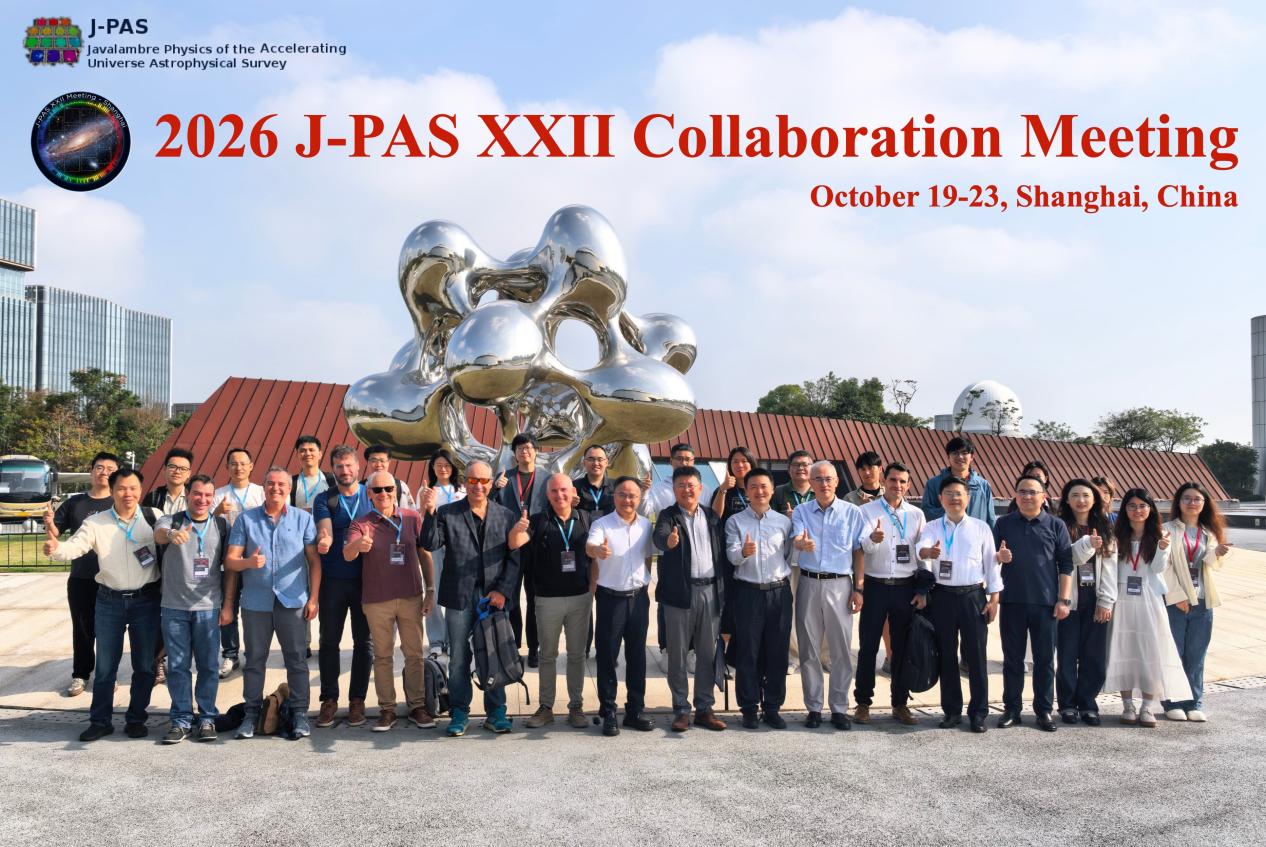
The 2026 J-PAS XXII Collaboration Meeting was held in Shanghai from October 19 to 23, 2026. Organized by the Shanghai Astronomical Observatory of the Chinese Academy of Sciences (SHAO, CAS) and co-organized by the Shanghai Astronomy Museum (a branch of the Shanghai Science and Technology Museum), the meeting marked the first time that the annual J-PAS Collaboration Meeting was hosted in China. Researchers from Spain, Brazil, Japan, China, and other countries participated in the meeting both in person and online. Chinese participants represented a wide range of institutions, including the National Astronomical Observatories, Xinjiang Astronomical Observatory, University of Chinese Academy of Sciences, Beijing Normal University, University of Science and Technology of China, Shanghai Jiao Tong University, Xiamen University, and Yunnan University. More than 80 people attended the conference in total.
The 2026 J-PAS XXII Collaboration Meeting was held in Shanghai from October 19 to 23, 2026. Organized by the Shanghai Astronomical Observatory of the Chinese Academy of Sciences (SHAO, CAS) and co-organized by the Shanghai Astronomy Museum (a branch of the Shanghai Science and Technology Museum), the meeting marked the first time that the annual J-PAS Collaboration Meeting was hosted in China. Researchers from Spain, Brazil, Japan, China, and other countries participated in the meeting both in person and online. Chinese participants represented a wide range of institutions, including the National Astronomical Observatories, Xinjiang Astronomical Observatory, University of Chinese Academy...
![SKAO Chief Scientist Prof. Naomi McClure-Griffiths Visits Shanghai Astronomical Observatory]() SKAO Chief Scientist Prof. Naomi McClure-Griffiths Visits Shanghai Astronomical Observatory
11-03/2026
SKAO Chief Scientist Prof. Naomi McClure-Griffiths Visits Shanghai Astronomical Observatory
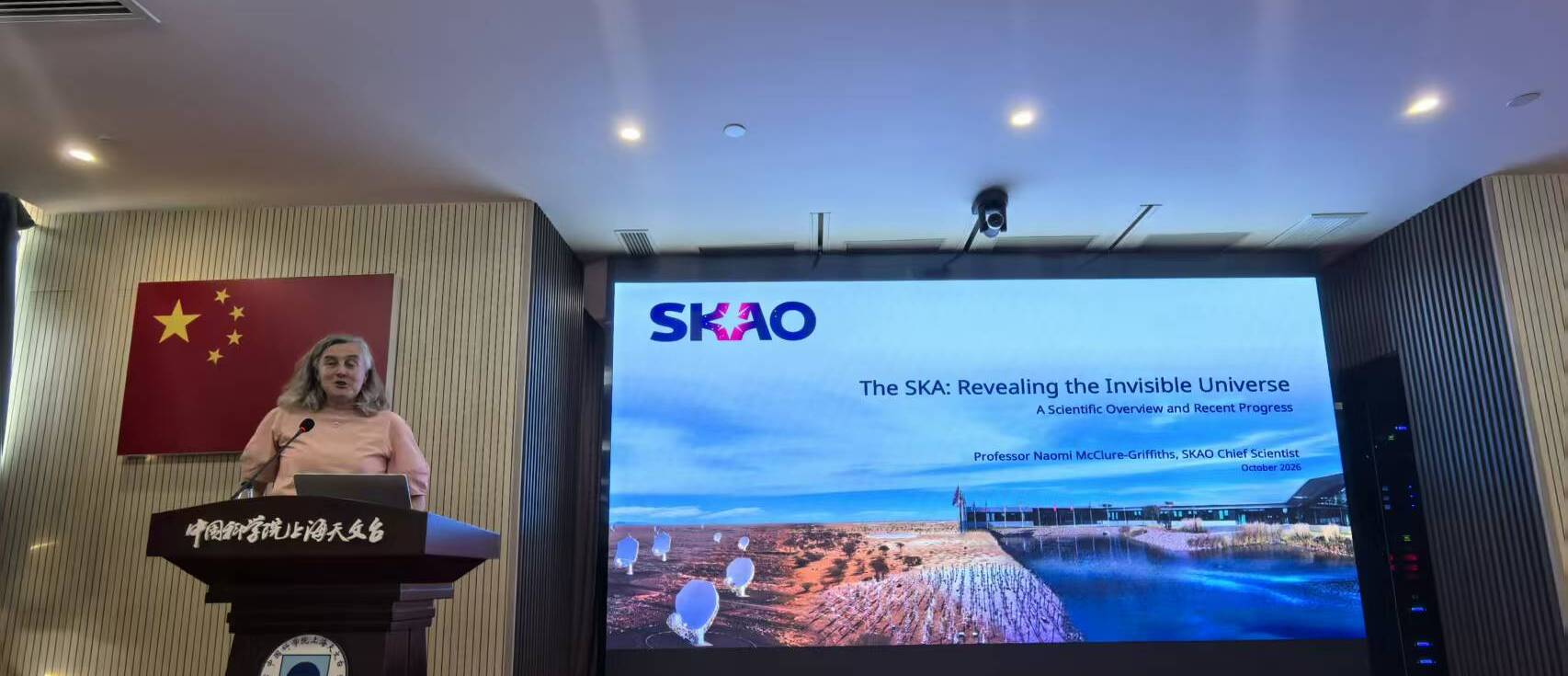
On October 8, 2026, Prof. Naomi McClure-Griffiths, Chief Scientist of the Square Kilometre Array Observatory (SKAO), visited the Shanghai Astronomical Observatory (SHAO) of the Chinese Academy of Sciences. During the visit, Prof. McClure-Griffiths exchanged views with SHAO researchers engaged in Square Kilometre Array (SKA)-related work, learning about the research progress and observation preparations of the observatory's teams and delivering a special academic lecture. The visit deepened the SHAO teams' understanding of SKA science planning and construction progress, and provided a useful reference for refining science cases and preparing for observation and data analysis.
On October 8, 2026, Prof. Naomi McClure-Griffiths, Chief Scientist of the Square Kilometre Array Observatory (SKAO), visited the Shanghai Astronomical Observatory (SHAO) of the Chinese Academy of Sciences. During the visit, Prof. McClure-Griffiths exchanged views with SHAO researchers engaged in Square Kilometre Array (SKA)-related work, learning about the research progress and observation preparations of the observatory's teams and delivering a special academic lecture. The visit deepened the SHAO teams' understanding of SKA science planning and construction progress, and provided a useful reference for refining science cases and preparing for observation and data analysis.
SHAO teams pr...
![Progress in Lunar-based Extremely Long Baseline Black Hole Shadow Imaging]() Progress in Lunar-based Extremely Long Baseline Black Hole Shadow Imaging
09-24/2026
Progress in Lunar-based Extremely Long Baseline Black Hole Shadow Imaging
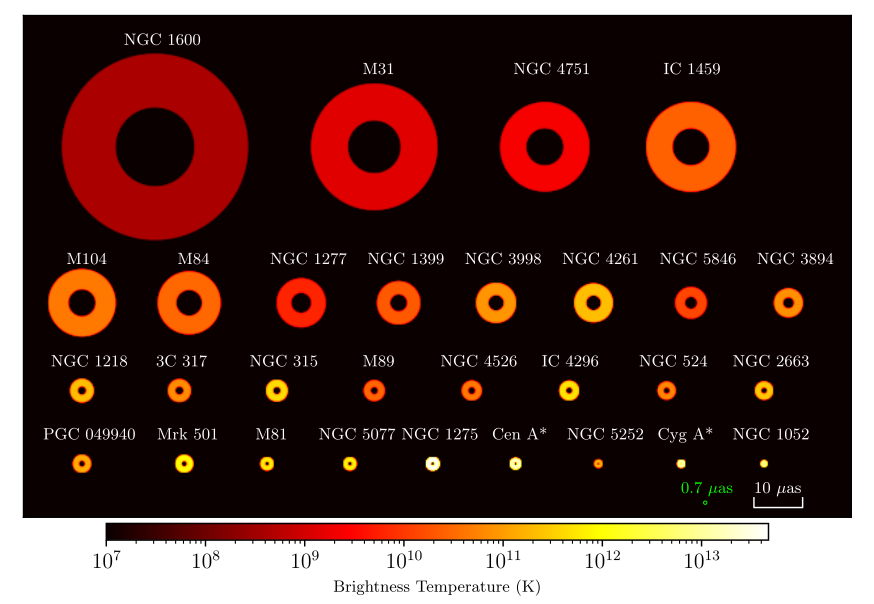
Recently, a research team from the Shanghai Astronomical Observatory of the Chinese Academy of Sciences has made progress in the study of lunar-based very long baseline interferometry (VLBI) for sub-microarcsecond black hole shadow imaging. The related results have been published in the Monthly Notices of the Royal Astronomical Society. The study focuses on the detectability of black hole shadow candidates observable by lunar-based VLBI and the constraints of lunar-based telescopes.
Recently, a research team from the Shanghai Astronomical Observatory of the Chinese Academy of Sciences has made progress in the study of lunar-based very long baseline interferometry (VLBI) for sub-microarcsecond black hole shadow imaging. The related results have been published in the Monthly Notices of the Royal Astronomical Society. The study focuses on the detectability of black hole shadow candidates observable by lunar-based VLBI and the constraints of lunar-based telescopes.
The Event Horizon Telescope (EHT) forms a VLBI network using ground-based telescopes, but due to the limited physical size of the Earth, its angular resolution at the 1.3 mm observing wavelength reaches only 2...
![SKAO Director-General Professor Jessica Dempsey Visits Shanghai]() SKAO Director-General Professor Jessica Dempsey Visits Shanghai
09-14/2026
SKAO Director-General Professor Jessica Dempsey Visits Shanghai
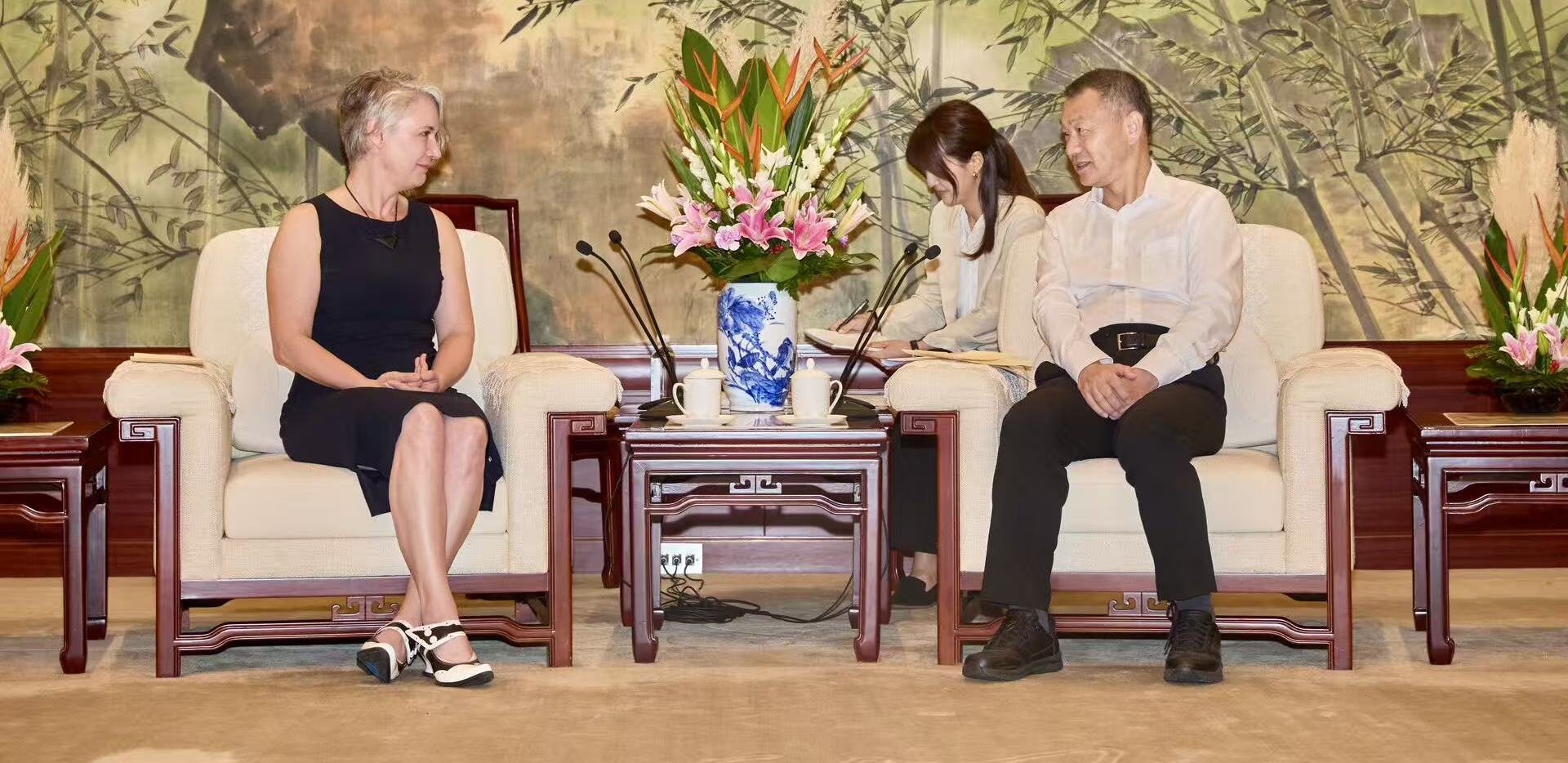
On September 6–7, 2026, Professor Jessica Dempsey, the newly appointed Director-General of the Square Kilometre Array Observatory (SKAO), led a delegation to visit Shanghai. Earlier on September 4, Vice Minister Zhang Guangjun of the Ministry of Science and Technology (MOST) met with Professor Dempsey and her delegation in Beijing, where they held in-depth exchanges on SKA progress and important issues concerning SKAO's development. This was Professor Dempsey's first visit to China since assuming the role of SKAO Director-General on June 1, 2026. The delegation also included Dr. Filippo Zerbi, Chair of the SKAO Council; Dr. Simon Berry, Deputy Director-General and Head of the Director-General's Office; and Mr. Wang Qiming, Policy Advisor. The visit aimed to deepen strategic cooperation between the SKAO and the Chinese astronomical community and to advance China's continued leading role in SKA construction, operations, and international governance.
On September 6–7, 2026, Professor Jessica Dempsey, the newly appointed Director-General of the Square Kilometre Array Observatory (SKAO), led a delegation to visit Shanghai. Earlier on September 4, Vice Minister Zhang Guangjun of the Ministry of Science and Technology (MOST) met with Professor Dempsey and her delegation in Beijing, where they held in-depth exchanges on SKA progress and important issues concerning SKAO's development. This was Professor Dempsey's first visit to China since assuming the role of SKAO Director-General on June 1, 2026. The delegation also included Dr. Filippo Zerbi, Chair of the SKAO Council; Dr. Simon Berry, Deputy Director-General and Head of the Director-Ge...
![Study: Declining Star Formation Not Caused by Simple “Fuel Crisis”]() Study: Declining Star Formation Not Caused by Simple “Fuel Crisis”
08-31/2026
Study: Declining Star Formation Not Caused by Simple “Fuel Crisis”
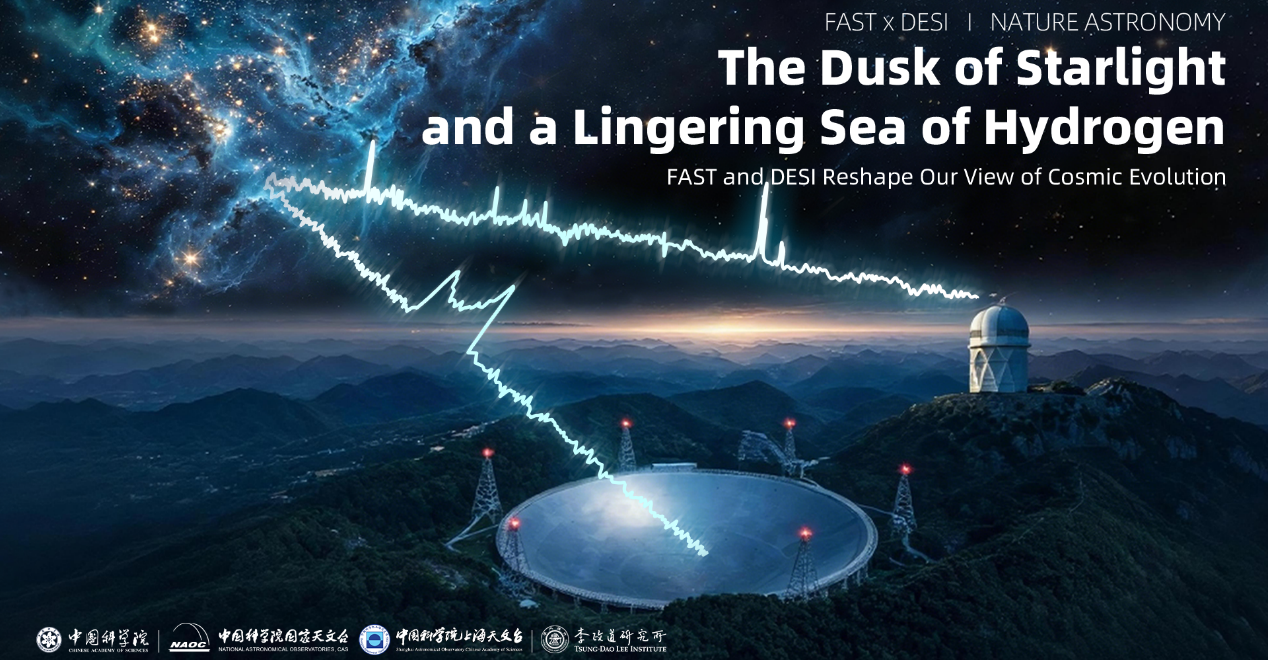
The universe has been having fewer and fewer stellar “babies.” Over the past 4.5 billion years, the rate of star birth has crashed to less than half of what it once was. But here’s the twist: the most essential “fuel” for making stars has barely decreased.
The universe has been having fewer and fewer stellar “babies.” Over the past 4.5 billion years, the rate of star birth has crashed to less than half of what it once was. But here’s the twist: the most essential “fuel” for making stars has barely decreased.
This finding comes from an international team led by researchers from the Chinese Academy of Sciences (CAS), in collaboration with the Dark Energy Spectroscopic Instrument (DESI) project. They used China’s Five-hundred-meter Aperture Spherical radio Telescope (FAST) to make high-precision measurements of cosmic neutral atomic hydrogen over the past 4.5 billion years.
The study reveals that while cosmic star formation has declined ...
![Mengjie Wu Receives Young Scientist Award at URSI GASS 2026]() Mengjie Wu Receives Young Scientist Award at URSI GASS 2026
08-26/2026
Mengjie Wu Receives Young Scientist Award at URSI GASS 2026
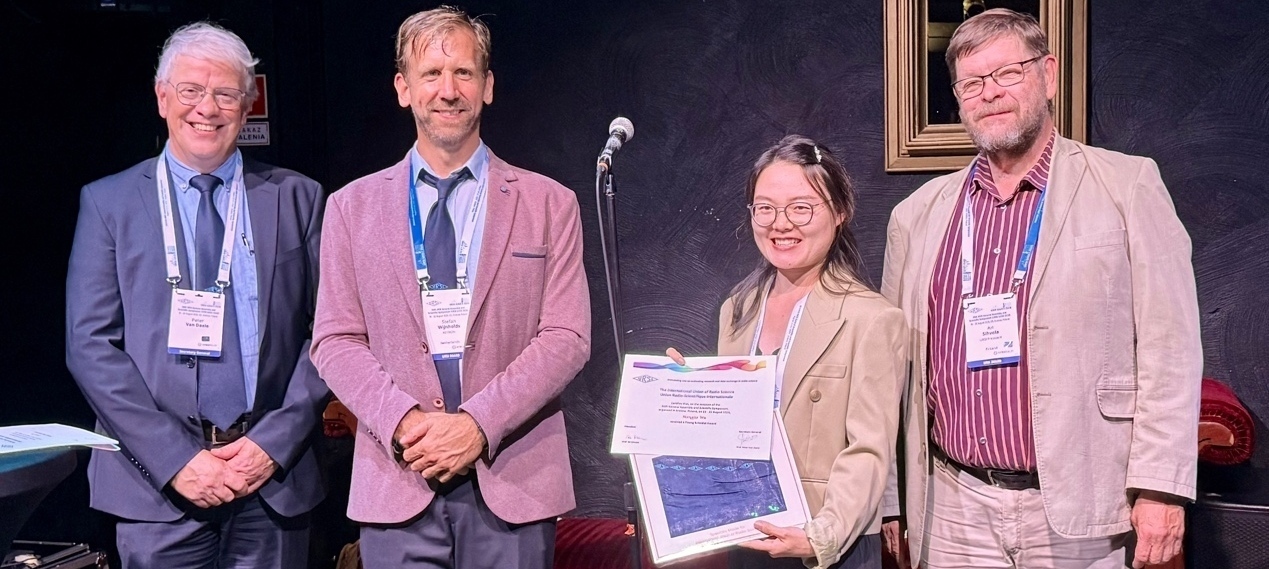
Mengjie Wu, a researcher at Shanghai Astronomical Observatory, received the Young Scientist Award at the XXXVIth URSI General Assembly and Scientific Symposium (URSI GASS), taking place in Kraków, Poland, in recognition of her research achievements and contributions to ionospheric radio science. A total of 61 young scientists received awards at this conference, including 6 scholars from China.
Mengjie Wu, a researcher at Shanghai Astronomical Observatory, received the Young Scientist Award at the XXXVIth URSI General Assembly and Scientific Symposium (URSI GASS), taking place in Kraków, Poland, in recognition of her research achievements and contributions to ionospheric radio science. A total of 61 young scientists received awards at this conference, including 6 scholars from China.
At the conference, Mengjie Wu presented the study “Geolocation of ionospheric irregularities based on MSS-1 high-rate radio occultation measurements”, highlighting recent advances in GNSS RO observations and their implications for spatial geolocation of irregularities. The presentation also provi...
![Mexican University Delegation Visits Shanghai Astronomical Observatory, Signs Strategic Cooperation Framework Agreement]() Mexican University Delegation Visits Shanghai Astronomical Observatory, Signs Strategic Cooperation Framework Agreement
08-19/2026
Mexican University Delegation Visits Shanghai Astronomical Observatory, Signs Strategic Cooperation Framework Agreement
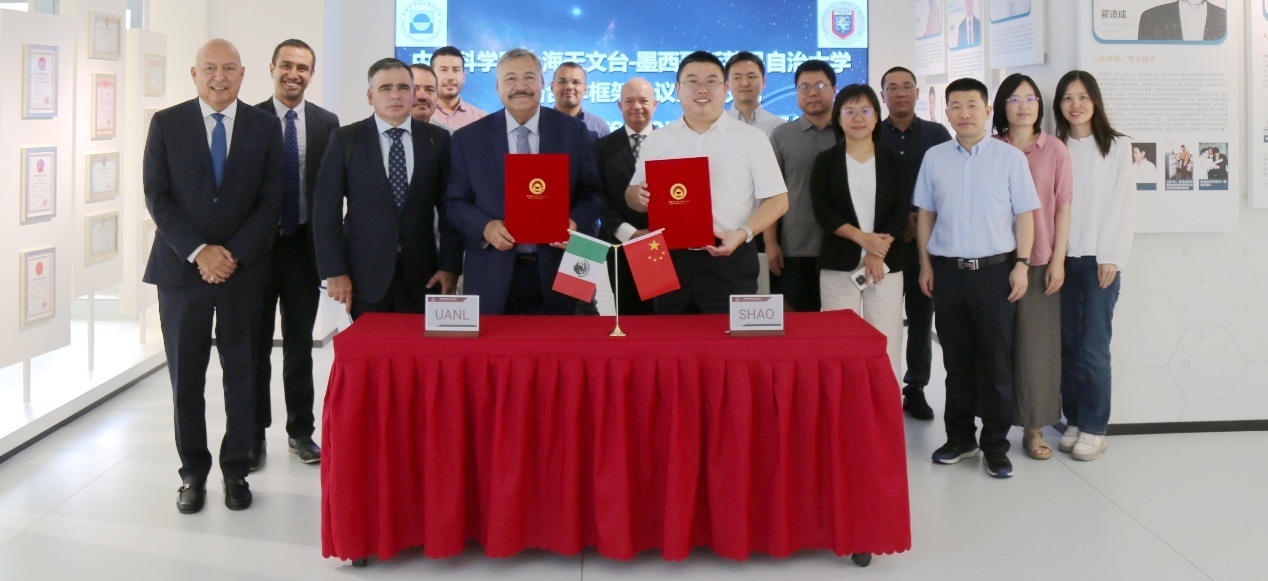
August 17, 2026, A delegation from the Universidad Autónoma de Nuevo León (UANL) in Mexico, led by Rector Santos Guzmán, visited the Shanghai Astronomical Observatory (SHAO), Chinese Academy of Sciences, and signed a Strategic Cooperation Framework Agreement to deepen bilateral collaboration in astronomy and space science.
August 17, 2026, A delegation from the Universidad Autónoma de Nuevo León (UANL) in Mexico, led by Rector Santos Guzmán, visited the Shanghai Astronomical Observatory (SHAO), Chinese Academy of Sciences, and signed a Strategic Cooperation Framework Agreement to deepen bilateral collaboration in astronomy and space science.
During the workshop, Director Kong outlined SHAO’s research landscape and recent scientific advances, highlighting its internationally recognized work in very long baseline interferometry, astro-geodynamics, galactic cosmology and planetary science. He stressed the growing importance of international partnerships in tackling frontier research questions and developin...
![Second Annual Science Meeting of the Earth 2.0 (ET) Space Mission]() Second Annual Science Meeting of the Earth 2.0 (ET) Space Mission
08-03/2026
Second Annual Science Meeting of the Earth 2.0 (ET) Space Mission
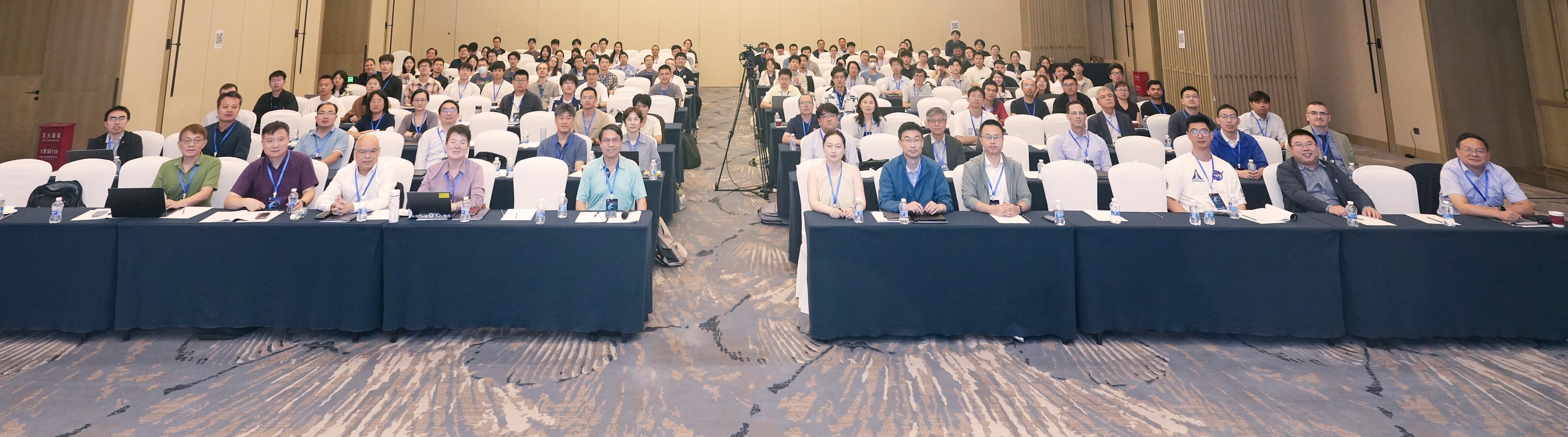
The Second Annual Science Meeting of the Earth 2.0 (ET) Space Mission was successfully held in Kunming, Yunnan Province, from July 27–31, 2026. Organized by the Shanghai Astronomical Observatory (SHAO), Chinese Academy of Sciences (CAS), the meeting brought together more than 200 scientists and students from 26 international institutions and 43 domestic institutions, making it the largest international ET science meeting held to date.
The Second Annual Science Meeting of the Earth 2.0 (ET) Space Mission was successfully held in Kunming, Yunnan Province, from July 27–31, 2026. Organized by the Shanghai Astronomical Observatory (SHAO), Chinese Academy of Sciences (CAS), the meeting brought together more than 200 scientists and students from 26 international institutions and 43 domestic institutions, making it the largest international ET science meeting held to date.
The five-day conference featured more than 160 invited talks, contributed talks, and poster presentations covering the full scientific scope of the ET mission. The program included invited reviews, ET mission updates, parallel scientific sessions, summary p...
![2026 Spaceborne Earth Observations and Global Change Workshop & Summer School Successfully Held in Shanghai]() 2026 Spaceborne Earth Observations and Global Change Workshop & Summer School Successfully Held in Shanghai
07-31/2026
2026 Spaceborne Earth Observations and Global Change Workshop & Summer School Successfully Held in Shanghai
Jointly organized by the Shanghai Astronomical Observatory (SHAO), Chinese Academy of Sciences, and the Department of Land Surveying and Geo-Informatics of The Hong Kong Polytechnic University, the “2026 Workshop and Summer School on Space Earth Observation and Global Change” was successfully held in Shanghai from July 13 to 17, 2026, under the auspices of the SHAO leadership. The event was co-organized by the Shanghai Key Laboratory of Space Navigation and Positioning Technology, and received support from the SHAO Center for Astronomical Geodynamics, the academic journals Geodesy and Geodynamics and Journal of Geodesy and Geodynamics, as well as the Major Program of the National Natural Science Foundation of China on Global Sea-Level Change.
Jointly organized by the Shanghai Astronomical Observatory (SHAO), Chinese Academy of Sciences, and the Department of Land Surveying and Geo-Informatics of The Hong Kong Polytechnic University, the “2026 Workshop and Summer School on Space Earth Observation and Global Change” was successfully held in Shanghai from July 13 to 17, 2026, under the auspices of the SHAO leadership. The event was co-organized by the Shanghai Key Laboratory of Space Navigation and Positioning Technology, and received support from the SHAO Center for Astronomical Geodynamics, the academic journals Geodesy and Geodynamics and Journal of Geodesy and Geodynamics, as well as the Major Program of the National Natura...
![From Seeing a Black Hole to Understanding Its Physics — Dual-Frequency Imaging Unveils the Horizon-Scale Emission Properties of M87]() From Seeing a Black Hole to Understanding Its Physics — Dual-Frequency Imaging Unveils the Horizon-Scale Emission Properties of M87
07-14/2026
From Seeing a Black Hole to Understanding Its Physics — Dual-Frequency Imaging Unveils the Horizon-Scale Emission Properties of M87
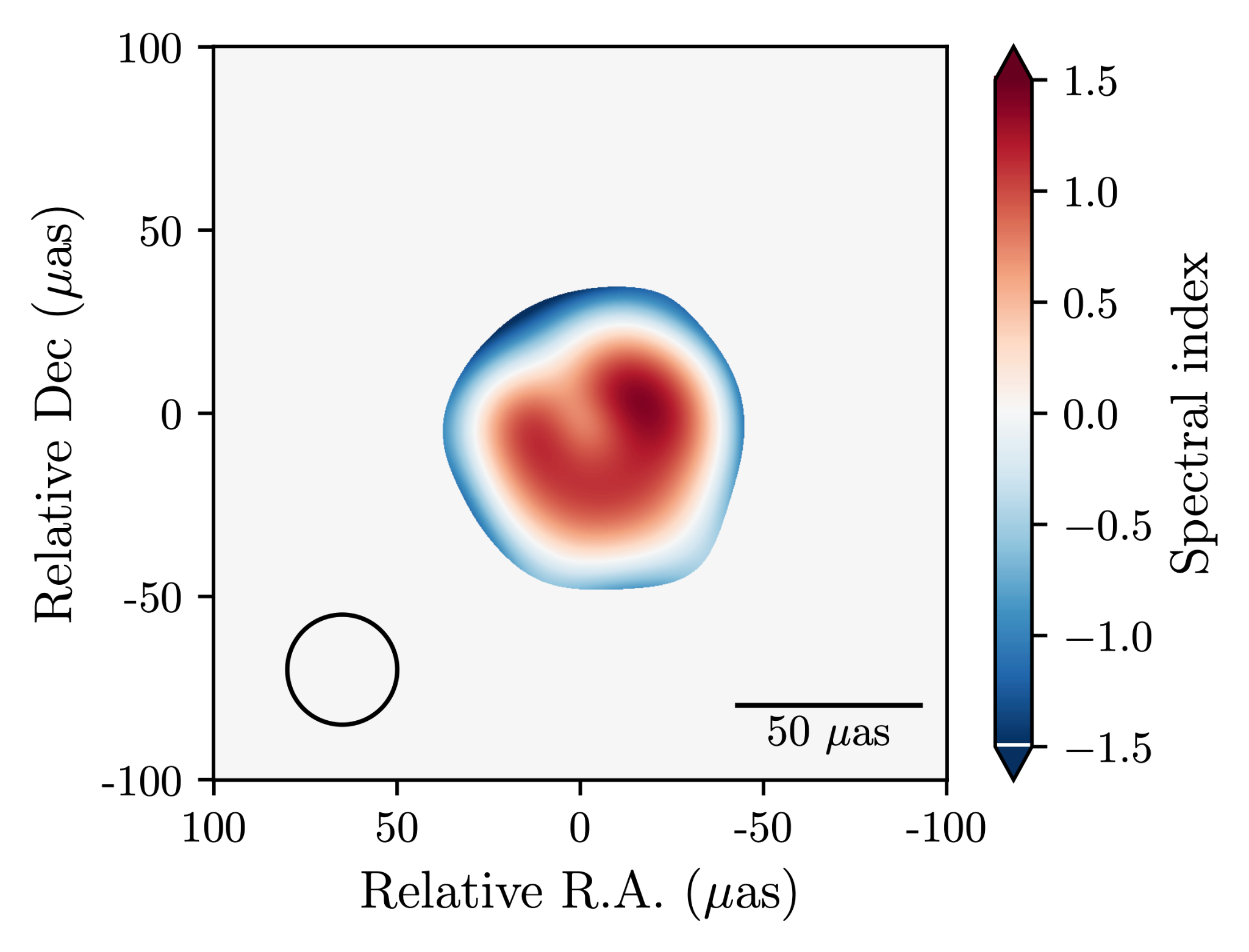
Recently, researchers from the Shanghai Astronomical Observatory of the Chinese Academy of Sciences, together with international collaborators, carried out the first spatially resolved dual-frequency spectral study of the M87 black hole using observations obtained in 2018 with the Event Horizon Telescope (EHT) and the Global Millimeter VLBI Array (GMVA). By combining horizon-scale images obtained at 1.3 mm and 3.5 mm, the team produced the first spatially resolved spectral-index map on event-horizon scales and revealed how the spectral index changes with distance from the black hole (Figure 1). This work provides a new way to characterize the physical conditions of the plasma surrounding a black hole, going beyond imaging the structure alone. The results have been published in The Astrophysical Journal Letters.
Thanks to advances in millimeter very long baseline interferometry (VLBI), astronomers have obtained horizon-scale images of the supermassive black holes at the centers of M87 and the Milky Way. These groundbreaking observations have opened a new window into the extreme environment surrounding black holes, allowing scientists to probe accretion flows, relativistic jets, and high-energy radiation processes on scales close to the event horizon — the boundary beyond which nothing, not even light, can escape.
However, images obtained at a single observing frequency (a single "color") mainly show what a black hole looks like. Combining observations at different frequencies allows astronomers ...
![Researchers at Shanghai Astronomical Observatory Led the Discovery of the Most Distant Lyman Continuum Emitting Galaxy Known to Date]() Researchers at Shanghai Astronomical Observatory Led the Discovery of the Most Distant Lyman Continuum Emitting Galaxy Known to Date
06-25/2026
Researchers at Shanghai Astronomical Observatory Led the Discovery of the Most Distant Lyman Continuum Emitting Galaxy Known to Date
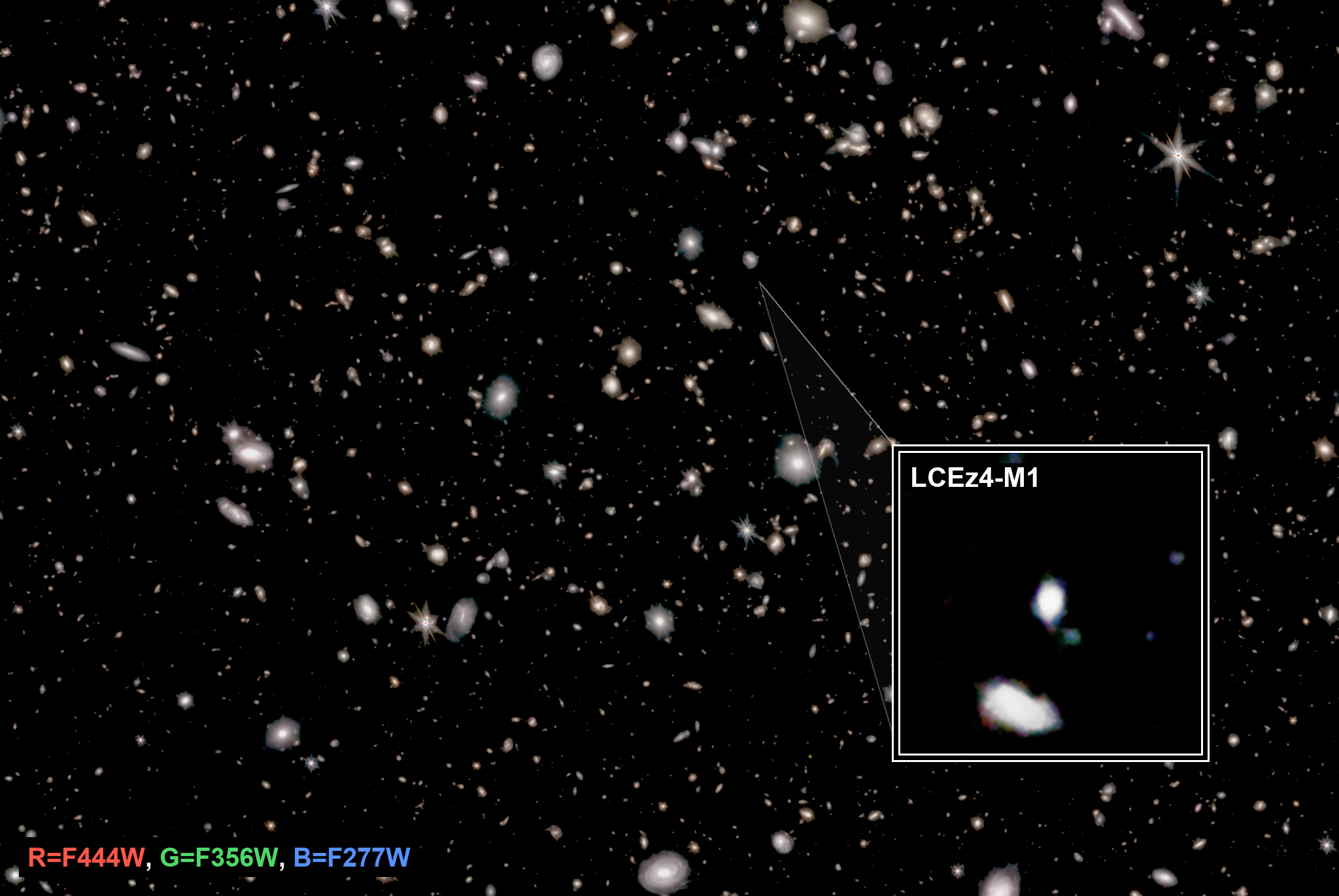
Recently, a research team led by the “Early Universe and High-redshift Galaxies” group at the Shanghai Astronomical Observatory of the Chinese Academy of Sciences, in collaboration with researchers from the European Southern Observatory (ESO) and Arizona State University, has made new progress in the study of high-redshift Lyman continuum emitting galaxies. Using data from the Hubble Space Telescope (HST), the James Webb Space Telescope (JWST), and the MUSE integral field spectrograph on ESO’s Very Large Telescope (VLT), the team discovered and systematically studied a Lyman continuum emitting galaxy, designated LCEz4-M1, at a redshift of z=4.444 in the Hubble Ultra Deep Field. This ob...
![2026 Shanghai Astronomical Society Annual Conference Successfully Held]() 2026 Shanghai Astronomical Society Annual Conference Successfully Held
05-20/2026
2026 Shanghai Astronomical Society Annual Conference Successfully Held
The 2026 Shanghai Astronomical Society Annual Conference concluded successfully on May 16 in Chongming, Shanghai. This year’s conference was jointly organized by the Shanghai Astronomical Observatory of the Chinese Academy of Sciences, Shanghai Jiao Tong University, Fudan University, Shanghai Normal University, and Shanghai University of Engineering Science, co-organized by the Shanghai Astronomical Society, and hosted by the Shanghai Astronomical Observatory of the Chinese Academy of Sciences. The event brought together more than 150 experts, scholars, and early-career researchers from the astronomy community in Shanghai, establishing an efficient and practical academic exchange platform for the collaborative innovation and high-quality development of Shanghai’s astronomy enterprise.
Group photo of the 2026 Shanghai Astronomical Society Annual Conference
The 2026 Shanghai Astronomical Society Annual Conference concluded successfully on May 16 in Chongming, Shanghai. This year’s conference was jointly organized by the Shanghai Astronomical Observatory of the Chinese Academy of Sciences, Shanghai Jiao Tong University, Fudan University, Shanghai Normal University, and Shanghai University of Engineering Science, co-organized by the Shanghai Astronomical Society, and hosted by the Shanghai Astronomical Observatory of the Chinese Academy of Sciences. The event brought together more than 150 experts, scholars, and early-career researchers from the astronomy community in Sh...
Research News
![Filament Collision and Core Formation in Magnetized Molecular Clouds]() Filament Collision and Core Formation in Magnetized Molecular Clouds
10-29/2026
Filament Collision and Core Formation in Magnetized Molecular Clouds
A collaboration of researchers from the Shanghai Astronomical Observatory and the University of California at Berkeley has carried out the currently most comprehensive investigation to date of the complex physical interactions among gas dynamics, turbulence, and magnetic fields inside filamentary molecular clouds. Using high-resolution numerical simulations, the team traced the full evolutionary path from the formation of long, slender filamentary molecular clouds— composed of many filamentary substructures—to the birth of dense cloud cores and their subsequent evolution. The results have recently been accepted for publication in the Astrophysical Journal.
A collaboration of researchers from the Shanghai Astronomical Observatory and the University of California at Berkeley has carried out the currently most comprehensive investigation to date of the complex physical interactions among gas dynamics, turbulence, and magnetic fields inside filamentary molecular clouds. Using high-resolution numerical simulations, the team traced the full evolutionary path from the formation of long, slender filamentary molecular clouds— composed of many filamentary substructures—to the birth of dense cloud cores and their subsequent evolution. The results have recently been accepted for publication in the Astrophysical Journal.
The team used the multi-physic...
![Shanghai Astronomical Observatory Detects First Direct Evidence of Split Infall Flow Along Cosmic Filaments]() Shanghai Astronomical Observatory Detects First Direct Evidence of Split Infall Flow Along Cosmic Filaments
10-12/2026
Shanghai Astronomical Observatory Detects First Direct Evidence of Split Infall Flow Along Cosmic Filaments
Astronomers from the Shanghai Astronomical Observatory (SHAO) of the Chinese Academy of Sciences, in collaboration with researchers from Shanghai Jiao Tong University, have for the first time directly detected a split infall flow of matter along cosmic filaments toward galaxy clusters at both ends. Using spectroscopic galaxies from the Sloan Digital Sky Survey (SDSS), the team measured the velocity field in galaxy cluster–filament–cluster systems. The study was published in Science China Physics, Mechanics & Astronomy.
Astronomers from the Shanghai Astronomical Observatory (SHAO) of the Chinese Academy of Sciences, in collaboration with researchers from Shanghai Jiao Tong University, have for the first time directly detected a split infall flow of matter along cosmic filaments toward galaxy clusters at both ends. Using spectroscopic galaxies from the Sloan Digital Sky Survey (SDSS), the team measured the velocity field in galaxy cluster–filament–cluster systems. The study was published in Science China Physics, Mechanics & Astronomy.
Figure 1 AI produced illustration:Due to the gravity of the two clusters, the filament in between can not maintain stability under its own gravity, and flows into the tw...
![A Stellar Encounter May Turn an Earth-like Planet into a Gas Giant]() A Stellar Encounter May Turn an Earth-like Planet into a Gas Giant
10-06/2026
A Stellar Encounter May Turn an Earth-like Planet into a Gas Giant
A joint team of researchers from Nanjing University and the Shanghai Astronomical Observatory, Chinese Academy of Sciences, has proposed a new pathway for the formation of giant planets: Flyby-Induced Second Accretion (FISA). The study shows that a planet initially only about the mass of Earth could gain a “second chance” to grow after its low-mass host star experiences a close encounter with another star. By reaccreting substantial amounts of solids and gas, the planet could eventually evolve into a gas giant. The study has been published in The Astrophysical Journal Letters.
A close stellar flyby could fundamentally alter the growth path of a planet.
A joint team of researchers from Nanjing University and the Shanghai Astronomical Observatory, Chinese Academy of Sciences, has proposed a new pathway for the formation of giant planets: Flyby-Induced Second Accretion (FISA). The study shows that a planet initially only about the mass of Earth could gain a “second chance” to grow after its low-mass host star experiences a close encounter with another star. By reaccreting substantial amounts of solids and gas, the planet could eventually evolve into a gas giant. The study has been published in The Astrophysical Journal Letters.
Where do giant planets around M dw...
![Progress in Lunar-based Extremely Long Baseline Black Hole Shadow Imaging]() Progress in Lunar-based Extremely Long Baseline Black Hole Shadow Imaging
09-24/2026
Progress in Lunar-based Extremely Long Baseline Black Hole Shadow Imaging
Recently, a research team from the Shanghai Astronomical Observatory of the Chinese Academy of Sciences has made progress in the study of lunar-based very long baseline interferometry (VLBI) for sub-microarcsecond black hole shadow imaging. The related results have been published in the Monthly Notices of the Royal Astronomical Society. The study focuses on the detectability of black hole shadow candidates observable by lunar-based VLBI and the constraints of lunar-based telescopes.
Recently, a research team from the Shanghai Astronomical Observatory of the Chinese Academy of Sciences has made progress in the study of lunar-based very long baseline interferometry (VLBI) for sub-microarcsecond black hole shadow imaging. The related results have been published in the Monthly Notices of the Royal Astronomical Society. The study focuses on the detectability of black hole shadow candidates observable by lunar-based VLBI and the constraints of lunar-based telescopes.
The Event Horizon Telescope (EHT) forms a VLBI network using ground-based telescopes, but due to the limited physical size of the Earth, its angular resolution at the 1.3 mm observing wavelength reaches only 2...
![Predicting a Space Telescope’s View of Galaxies: Generative AI Bridges Ground- and Space-Based Observations]() Predicting a Space Telescope’s View of Galaxies: Generative AI Bridges Ground- and Space-Based Observations
09-18/2026
Predicting a Space Telescope’s View of Galaxies: Generative AI Bridges Ground- and Space-Based Observations
Renhao Ye and Shiyin Shen at the Shanghai Astronomical Observatory of the Chinese Academy of Sciences have recently explored a method for predicting images across telescopes using generative artificial intelligence. Based on real, paired galaxy images from the DESI ground-based survey and the Euclid space telescope, the study established a generative mapping from ground-based, seeing-limited images to high-resolution space-based images. The team also generated E-BGS, a large dataset of predicted images for the sky area expected to be covered by the forthcoming Euclid DR1. This work explores a new approach to mitigating the limitations that ground-based image resolution imposes on galaxy structure measurements and to extending such studies across a wider area of the sky. The results have been published in The Astrophysical Journal Letters.
Renhao Ye and Shiyin Shen at the Shanghai Astronomical Observatory of the Chinese Academy of Sciences have recently explored a method for predicting images across telescopes using generative artificial intelligence. Based on real, paired galaxy images from the DESI ground-based survey and the Euclid space telescope, the study established a generative mapping from ground-based, seeing-limited images to high-resolution space-based images. The team also generated E-BGS, a large dataset of predicted images for the sky area expected to be covered by the forthcoming Euclid DR1. This work explores a new approach to mitigating the limitations that ground-based image resolution imposes on galaxy s...
![SHAO Advances Laser-Based Precise Orbit Determination and Time-Frequency Transfer in Cislunar Space]() SHAO Advances Laser-Based Precise Orbit Determination and Time-Frequency Transfer in Cislunar Space
09-17/2026
SHAO Advances Laser-Based Precise Orbit Determination and Time-Frequency Transfer in Cislunar Space
A research team from the Shanghai Astronomical Observatory (SHAO) of the Chinese Academy of Sciences (CAS) has made a series of advances in applying satellite laser ranging (SLR) to precise orbit determination and timefrequency transfer for cislunar spacecraft. Their study on precise orbit determination by integrating two-way SLR with ground-based radio ranging was published in SCIENTIA SINICA Physica, Mechanica & Astronomica, while their work on precise orbit determination and timefrequency transfer for cislunar spacecraft using one-way laser ranging was published in Advances in Space Research.
Fig. 1. Schematic of two-way laser ranging observations of the TD-1 and DRO-A satellites
By in...
![Satellite-Ground Laser Time-Frequency Transfer Achieves Picosecond Precision and Sub-Picosecond Stability]() Satellite-Ground Laser Time-Frequency Transfer Achieves Picosecond Precision and Sub-Picosecond Stability
07-31/2026
Satellite-Ground Laser Time-Frequency Transfer Achieves Picosecond Precision and Sub-Picosecond Stability
Recently, research team from Shanghai Astronomical Observatory (SHAO) of the Chinese Academy of Sciences (CAS) achieved a major breakthrough in satellite-ground laser time-frequency transfer. The team developed a laser time-frequency transfer payload and dedicated ground station for Mengtian Laboratory Module of the Chinese Space Station. The system demonstrated a 1-second Normal Point accuracy of 2–5 picoseconds (ps) for satellite-ground clock difference measurements, a time deviation stability better than 0.7 ps at 50 seconds, and a modified Allan deviation stability of 2×10⁻¹⁴ at 50 seconds—representing the best satellite-ground laser time-frequency transfer performance reported ...
![Shanghai Astronomical Observatory Conducts a Bibliometric Study of Hubble Space Telescope Scientific Publications]() Shanghai Astronomical Observatory Conducts a Bibliometric Study of Hubble Space Telescope Scientific Publications
09-07/2026
Shanghai Astronomical Observatory Conducts a Bibliometric Study of Hubble Space Telescope Scientific Publications
A research team led by Zhenya Zheng of the Shanghai Astronomical Observatory, Chinese Academy of Sciences, has completed a bibliometric study of more than three decades of scientific publications from the Hubble Space Telescope (HST), identifying the factors that have kept the observatory at the frontier of astronomy, as well as the experience that next-generation space facilities such as the Chinese Space-station Survey Telescope (CSST) can draw on.
The study has been published online in the journal Astronomical Techniques and Instruments.
HST's scientific publications follow a classic life-cycle pattern in which instrument iteration is the strongest driver. Publication output evolved in...
![Study: Declining Star Formation Not Caused by Simple “Fuel Crisis”]() Study: Declining Star Formation Not Caused by Simple “Fuel Crisis”
08-31/2026
Study: Declining Star Formation Not Caused by Simple “Fuel Crisis”
The universe has been having fewer and fewer stellar “babies.” Over the past 4.5 billion years, the rate of star birth has crashed to less than half of what it once was. But here’s the twist: the most essential “fuel” for making stars has barely decreased.
The universe has been having fewer and fewer stellar “babies.” Over the past 4.5 billion years, the rate of star birth has crashed to less than half of what it once was. But here’s the twist: the most essential “fuel” for making stars has barely decreased.
This finding comes from an international team led by researchers from the Chinese Academy of Sciences (CAS), in collaboration with the Dark Energy Spectroscopic Instrument (DESI) project. They used China’s Five-hundred-meter Aperture Spherical radio Telescope (FAST) to make high-precision measurements of cosmic neutral atomic hydrogen over the past 4.5 billion years.
The study reveals that while cosmic star formation has declined ...
![Finds New Observational Evidence That Cosmic Filaments Channel Galaxies]() Finds New Observational Evidence That Cosmic Filaments Channel Galaxies
08-26/2026
Finds New Observational Evidence That Cosmic Filaments Channel Galaxies
Figure. Two-stage accretion around a cosmic filament. Matter and galaxies first flow from the surrounding environment, including cosmic walls, into the filament in directions approximately perpendicular to its axis. Once inside the filament, satellite galaxies are transported toward galaxy groups or clusters through longitudinal and helical motions along the filament axis. Blue arrows indicate lateral infall, while golden arrows indicate transport along the filament.
A research team led by Prof. Wang Peng of the Shanghai Astronomical Observatory (SHAO), Chinese Academy of Sciences, has discovered that satellite galaxies retain a measurable “kinematic memory” of matter flowing into and ...
![Advancing the Search for Near-Earth Asteroid Pairs and the Study of Their Orbital Evolution]() Advancing the Search for Near-Earth Asteroid Pairs and the Study of Their Orbital Evolution
08-12/2026
Advancing the Search for Near-Earth Asteroid Pairs and the Study of Their Orbital Evolution
The research team utilized orbital similarity criteria and numerical simulations to systematically screen known near-Earth asteroids, identifying multiple groups of potential candidates that may share a common origin, and determining their possible separation times. This study not only deepens our understanding of the evolutionary mechanisms of near-Earth asteroids and the formation process of small bodies in the solar system but also effectively expands the sample of near-Earth asteroids, providing a basis for selecting sources for future deep-space exploration missions targeting near-Earth asteroids. Recently, the Shanghai Astronomical Observatory of the Chinese Academy of Sciences, in collaboration with Anhui Normal University, has made new progress in the search for near-Earth asteroid Paircandidates and the study of their orbital evolution. The findings were published in the international astronomical journal The Astrophysical Journal.
The research team utilized orbital similarity criteria and numerical simulations to systematically screen known near-Earth asteroids, identifying multiple groups of potential candidates that may share a common origin, and determining their possible separation times. This study not only deepens our understanding of the evolutionary mechanisms of near-Earth asteroids and the formation process of small bodies in the solar system but also effectively expands the sample of near-Earth asteroids, providing a basis for selecting sources for future deep-space exploration missions targeting near-Earth asteroids. Recently, the Shanghai Astronomical Observatory of the Chinese Academy of Sciences, in ...
![Reionization Degeneracy Can Explain the JWST Early Galaxy “Crisis”]() Reionization Degeneracy Can Explain the JWST Early Galaxy “Crisis”
07-29/2026
Reionization Degeneracy Can Explain the JWST Early Galaxy “Crisis”
Researchers from Shanghai Astronomical Observatory (SHAO) of the Chinese Academy of Sciences and and collaborators have shown that the apparent “early galaxy crisis” triggered by recent James Webb Space Telescope (JWST) observations may not require a breakdown of the standard cosmological model. Instead, it may arise from a structural degeneracy in how reionization observations are interpreted.
The study, led by Zihan Wang and Huanyuan Shan, has been published in The Astrophysical Journal Letters.
JWST has discovered surprisingly bright galaxies at redshifts (z>10), corresponding to an epoch when the Universe was only a few hundred million years old. These galaxies appear to have formed...
News Updates
![2026 J-PAS XXII Collaboration Meeting Successfully Held in Shanghai]() 2026 J-PAS XXII Collaboration Meeting Successfully Held in Shanghai
11-03/2026
2026 J-PAS XXII Collaboration Meeting Successfully Held in Shanghai
The 2026 J-PAS XXII Collaboration Meeting was held in Shanghai from October 19 to 23, 2026. Organized by the Shanghai Astronomical Observatory of the Chinese Academy of Sciences (SHAO, CAS) and co-organized by the Shanghai Astronomy Museum (a branch of the Shanghai Science and Technology Museum), the meeting marked the first time that the annual J-PAS Collaboration Meeting was hosted in China. Researchers from Spain, Brazil, Japan, China, and other countries participated in the meeting both in person and online. Chinese participants represented a wide range of institutions, including the National Astronomical Observatories, Xinjiang Astronomical Observatory, University of Chinese Academy of Sciences, Beijing Normal University, University of Science and Technology of China, Shanghai Jiao Tong University, Xiamen University, and Yunnan University. More than 80 people attended the conference in total.
The 2026 J-PAS XXII Collaboration Meeting was held in Shanghai from October 19 to 23, 2026. Organized by the Shanghai Astronomical Observatory of the Chinese Academy of Sciences (SHAO, CAS) and co-organized by the Shanghai Astronomy Museum (a branch of the Shanghai Science and Technology Museum), the meeting marked the first time that the annual J-PAS Collaboration Meeting was hosted in China. Researchers from Spain, Brazil, Japan, China, and other countries participated in the meeting both in person and online. Chinese participants represented a wide range of institutions, including the National Astronomical Observatories, Xinjiang Astronomical Observatory, University of Chinese Academy...
![SKAO Chief Scientist Prof. Naomi McClure-Griffiths Visits Shanghai Astronomical Observatory]() SKAO Chief Scientist Prof. Naomi McClure-Griffiths Visits Shanghai Astronomical Observatory
11-03/2026
SKAO Chief Scientist Prof. Naomi McClure-Griffiths Visits Shanghai Astronomical Observatory
On October 8, 2026, Prof. Naomi McClure-Griffiths, Chief Scientist of the Square Kilometre Array Observatory (SKAO), visited the Shanghai Astronomical Observatory (SHAO) of the Chinese Academy of Sciences. During the visit, Prof. McClure-Griffiths exchanged views with SHAO researchers engaged in Square Kilometre Array (SKA)-related work, learning about the research progress and observation preparations of the observatory's teams and delivering a special academic lecture. The visit deepened the SHAO teams' understanding of SKA science planning and construction progress, and provided a useful reference for refining science cases and preparing for observation and data analysis.
On October 8, 2026, Prof. Naomi McClure-Griffiths, Chief Scientist of the Square Kilometre Array Observatory (SKAO), visited the Shanghai Astronomical Observatory (SHAO) of the Chinese Academy of Sciences. During the visit, Prof. McClure-Griffiths exchanged views with SHAO researchers engaged in Square Kilometre Array (SKA)-related work, learning about the research progress and observation preparations of the observatory's teams and delivering a special academic lecture. The visit deepened the SHAO teams' understanding of SKA science planning and construction progress, and provided a useful reference for refining science cases and preparing for observation and data analysis.
SHAO teams pr...
![Swiss Astronomy Delegation Visits Shanghai Astronomical Observatory]() Swiss Astronomy Delegation Visits Shanghai Astronomical Observatory
10-29/2026
Swiss Astronomy Delegation Visits Shanghai Astronomical Observatory
On October 23, 2026, a Swiss astronomy delegation from the University of Geneva, the Swiss Federal Institute of Technology in Lausanne (EPFL) and the University of Basel visited the Shanghai Astronomical Observatory (SHAO), Chinese Academy of Sciences.The delegation and SHAO researchers conducted academic exchanges on Square Kilometre Array (SKA) science cooperation, regional centre development and frontier research in radio astronomy, and visited the SHAO Sheshan campus. The visit enhanced mutual understanding between the Chinese and Swiss astronomical communities and laid a foundation for deeper practical cooperation between the two sides.
In the morning, SHAO teams gave academic report...
![SKAO Director-General Professor Jessica Dempsey Visits Shanghai]() SKAO Director-General Professor Jessica Dempsey Visits Shanghai
09-14/2026
SKAO Director-General Professor Jessica Dempsey Visits Shanghai
On September 6–7, 2026, Professor Jessica Dempsey, the newly appointed Director-General of the Square Kilometre Array Observatory (SKAO), led a delegation to visit Shanghai. Earlier on September 4, Vice Minister Zhang Guangjun of the Ministry of Science and Technology (MOST) met with Professor Dempsey and her delegation in Beijing, where they held in-depth exchanges on SKA progress and important issues concerning SKAO's development. This was Professor Dempsey's first visit to China since assuming the role of SKAO Director-General on June 1, 2026. The delegation also included Dr. Filippo Zerbi, Chair of the SKAO Council; Dr. Simon Berry, Deputy Director-General and Head of the Director-General's Office; and Mr. Wang Qiming, Policy Advisor. The visit aimed to deepen strategic cooperation between the SKAO and the Chinese astronomical community and to advance China's continued leading role in SKA construction, operations, and international governance.
On September 6–7, 2026, Professor Jessica Dempsey, the newly appointed Director-General of the Square Kilometre Array Observatory (SKAO), led a delegation to visit Shanghai. Earlier on September 4, Vice Minister Zhang Guangjun of the Ministry of Science and Technology (MOST) met with Professor Dempsey and her delegation in Beijing, where they held in-depth exchanges on SKA progress and important issues concerning SKAO's development. This was Professor Dempsey's first visit to China since assuming the role of SKAO Director-General on June 1, 2026. The delegation also included Dr. Filippo Zerbi, Chair of the SKAO Council; Dr. Simon Berry, Deputy Director-General and Head of the Director-Ge...
![Workshop on Digitization of Astronomical Plates and Its Application in Long-term Time-domain Astronomy Held in Shanghai]() Workshop on Digitization of Astronomical Plates and Its Application in Long-term Time-domain Astronomy Held in Shanghai
09-11/2026
Workshop on Digitization of Astronomical Plates and Its Application in Long-term Time-domain Astronomy Held in Shanghai
A workshop on the digitization of astronomical plates and its application in long-term time-domain astronomy was held from August 27 to 29 in Shanghai, bringing together 38 experts and researchers from major Chinese research institutes and universities.
The event, hosted by the Shanghai Astronomical Observatory of the Chinese Academy of Sciences (CAS), was conducted both online and on-site at the Sheshan. Participants came from the National Astronomical Observatories of CAS, Yunnan Observatories of CAS, National Time Service Center of CAS, Academy of Mathematics and Systems Science of CAS, as well as Beijing Normal University, University of Science and Technology of China, Beijing Univers...
![Mengjie Wu Receives Young Scientist Award at URSI GASS 2026]() Mengjie Wu Receives Young Scientist Award at URSI GASS 2026
08-26/2026
Mengjie Wu Receives Young Scientist Award at URSI GASS 2026
Mengjie Wu, a researcher at Shanghai Astronomical Observatory, received the Young Scientist Award at the XXXVIth URSI General Assembly and Scientific Symposium (URSI GASS), taking place in Kraków, Poland, in recognition of her research achievements and contributions to ionospheric radio science. A total of 61 young scientists received awards at this conference, including 6 scholars from China.
Mengjie Wu, a researcher at Shanghai Astronomical Observatory, received the Young Scientist Award at the XXXVIth URSI General Assembly and Scientific Symposium (URSI GASS), taking place in Kraków, Poland, in recognition of her research achievements and contributions to ionospheric radio science. A total of 61 young scientists received awards at this conference, including 6 scholars from China.
At the conference, Mengjie Wu presented the study “Geolocation of ionospheric irregularities based on MSS-1 high-rate radio occultation measurements”, highlighting recent advances in GNSS RO observations and their implications for spatial geolocation of irregularities. The presentation also provi...
![Mexican University Delegation Visits Shanghai Astronomical Observatory, Signs Strategic Cooperation Framework Agreement]() Mexican University Delegation Visits Shanghai Astronomical Observatory, Signs Strategic Cooperation Framework Agreement
08-19/2026
Mexican University Delegation Visits Shanghai Astronomical Observatory, Signs Strategic Cooperation Framework Agreement
August 17, 2026, A delegation from the Universidad Autónoma de Nuevo León (UANL) in Mexico, led by Rector Santos Guzmán, visited the Shanghai Astronomical Observatory (SHAO), Chinese Academy of Sciences, and signed a Strategic Cooperation Framework Agreement to deepen bilateral collaboration in astronomy and space science.
August 17, 2026, A delegation from the Universidad Autónoma de Nuevo León (UANL) in Mexico, led by Rector Santos Guzmán, visited the Shanghai Astronomical Observatory (SHAO), Chinese Academy of Sciences, and signed a Strategic Cooperation Framework Agreement to deepen bilateral collaboration in astronomy and space science.
During the workshop, Director Kong outlined SHAO’s research landscape and recent scientific advances, highlighting its internationally recognized work in very long baseline interferometry, astro-geodynamics, galactic cosmology and planetary science. He stressed the growing importance of international partnerships in tackling frontier research questions and developin...
![Second Annual Science Meeting of the Earth 2.0 (ET) Space Mission]() Second Annual Science Meeting of the Earth 2.0 (ET) Space Mission
08-03/2026
Second Annual Science Meeting of the Earth 2.0 (ET) Space Mission
The Second Annual Science Meeting of the Earth 2.0 (ET) Space Mission was successfully held in Kunming, Yunnan Province, from July 27–31, 2026. Organized by the Shanghai Astronomical Observatory (SHAO), Chinese Academy of Sciences (CAS), the meeting brought together more than 200 scientists and students from 26 international institutions and 43 domestic institutions, making it the largest international ET science meeting held to date.
The Second Annual Science Meeting of the Earth 2.0 (ET) Space Mission was successfully held in Kunming, Yunnan Province, from July 27–31, 2026. Organized by the Shanghai Astronomical Observatory (SHAO), Chinese Academy of Sciences (CAS), the meeting brought together more than 200 scientists and students from 26 international institutions and 43 domestic institutions, making it the largest international ET science meeting held to date.
The five-day conference featured more than 160 invited talks, contributed talks, and poster presentations covering the full scientific scope of the ET mission. The program included invited reviews, ET mission updates, parallel scientific sessions, summary p...
![2026 Spaceborne Earth Observations and Global Change Workshop & Summer School Successfully Held in Shanghai]() 2026 Spaceborne Earth Observations and Global Change Workshop & Summer School Successfully Held in Shanghai
07-31/2026
2026 Spaceborne Earth Observations and Global Change Workshop & Summer School Successfully Held in Shanghai
Jointly organized by the Shanghai Astronomical Observatory (SHAO), Chinese Academy of Sciences, and the Department of Land Surveying and Geo-Informatics of The Hong Kong Polytechnic University, the “2026 Workshop and Summer School on Space Earth Observation and Global Change” was successfully held in Shanghai from July 13 to 17, 2026, under the auspices of the SHAO leadership. The event was co-organized by the Shanghai Key Laboratory of Space Navigation and Positioning Technology, and received support from the SHAO Center for Astronomical Geodynamics, the academic journals Geodesy and Geodynamics and Journal of Geodesy and Geodynamics, as well as the Major Program of the National Natural Science Foundation of China on Global Sea-Level Change.
Jointly organized by the Shanghai Astronomical Observatory (SHAO), Chinese Academy of Sciences, and the Department of Land Surveying and Geo-Informatics of The Hong Kong Polytechnic University, the “2026 Workshop and Summer School on Space Earth Observation and Global Change” was successfully held in Shanghai from July 13 to 17, 2026, under the auspices of the SHAO leadership. The event was co-organized by the Shanghai Key Laboratory of Space Navigation and Positioning Technology, and received support from the SHAO Center for Astronomical Geodynamics, the academic journals Geodesy and Geodynamics and Journal of Geodesy and Geodynamics, as well as the Major Program of the National Natura...
![2026 Shanghai Astronomical Society Annual Conference Successfully Held]() 2026 Shanghai Astronomical Society Annual Conference Successfully Held
05-20/2026
2026 Shanghai Astronomical Society Annual Conference Successfully Held
The 2026 Shanghai Astronomical Society Annual Conference concluded successfully on May 16 in Chongming, Shanghai. This year’s conference was jointly organized by the Shanghai Astronomical Observatory of the Chinese Academy of Sciences, Shanghai Jiao Tong University, Fudan University, Shanghai Normal University, and Shanghai University of Engineering Science, co-organized by the Shanghai Astronomical Society, and hosted by the Shanghai Astronomical Observatory of the Chinese Academy of Sciences. The event brought together more than 150 experts, scholars, and early-career researchers from the astronomy community in Shanghai, establishing an efficient and practical academic exchange platform for the collaborative innovation and high-quality development of Shanghai’s astronomy enterprise.
Group photo of the 2026 Shanghai Astronomical Society Annual Conference
The 2026 Shanghai Astronomical Society Annual Conference concluded successfully on May 16 in Chongming, Shanghai. This year’s conference was jointly organized by the Shanghai Astronomical Observatory of the Chinese Academy of Sciences, Shanghai Jiao Tong University, Fudan University, Shanghai Normal University, and Shanghai University of Engineering Science, co-organized by the Shanghai Astronomical Society, and hosted by the Shanghai Astronomical Observatory of the Chinese Academy of Sciences. The event brought together more than 150 experts, scholars, and early-career researchers from the astronomy community in Sh...
![China SKA Science Meeting 2026 Successfully Held in Shanghai]() China SKA Science Meeting 2026 Successfully Held in Shanghai
05-20/2026
China SKA Science Meeting 2026 Successfully Held in Shanghai
The China SKA Science Meeting 2026 was successfully held from May 12 to 14, 2026, in Shanghai, bringing together over 200 researchers and young scientists from universities and research institutions across China.
SHANGHAI, May 12–14, 2026 – The China SKA Science Meeting 2026 was successfully held from May 12 to 14, 2026, in Shanghai, bringing together over 200 researchers and young scientists from universities and research institutions across China.
Guided by the International Science and Technology Cooperation Center (ISTCC) of the Ministry of Science and Technology (MOST), and hosted by the Shanghai Astronomical Observatory (SHAO) of the Chinese Academy of Sciences (CAS), the event featured 47 talks, highlighting preparations for early science with the SKA telescopes. Lead authors of the upcoming second SKAO science book were invited to present their latest progress, and SKAO Scientists delive...
![Workshop on the Formation of Exo-terrestrial Planets Held in Shanghai]() Workshop on the Formation of Exo-terrestrial Planets Held in Shanghai
04-20/2026
Workshop on the Formation of Exo-terrestrial Planets Held in Shanghai
On April 17, 2026, the Workshop on the Formation of Exo-terrestrial Planets, hosted by the Shanghai Astronomical Observatory (SHAO) of the Chinese Academy of Sciences, was held in Shanghai. The meeting was chaired by Professor Jian Ge, Principal Investigator of the Earth 2.0 (ET) space mission under China’s Space Origins Exploration Program.
On April 17, 2026, the Workshop on the Formation of Exo-terrestrial Planets, hosted by the Shanghai Astronomical Observatory (SHAO) of the Chinese Academy of Sciences, was held in Shanghai. The meeting was chaired by Professor Jian Ge, Principal Investigator of the Earth 2.0 (ET) space mission under China’s Space Origins Exploration Program.
The workshop was conducted in a hybrid format and brought together more than 20 experts and scholars from 12 research institutions in China and abroad. Participating institutions included the University of California, Santa Cruz, the Max Planck Institute for Astronomy, the University of Southern Queensland, the University of Hong Kong, the University...
Upcoming Events
![The precession and circularization of stellar debris stream in tidal disruption events]() The precession and circularization of stellar debris stream in tidal disruption events
11-06/2026
The precession and circularization of stellar debris stream in tidal disruption events
Title: The precession and circularization of stellar debris stream in tidal disruption events
Speaker: SHEN Rongfeng(Sun Yat-Sen University)
Time: 10:00 AM, Fri, 6 Nov 2026
Location:Lecture Hall, 3rd floor
Invited by: Hengxiao Guo
Abstract:In a tidal disruption event (TDE), the stellar debris after disruption falls back toward the black hole in the form of an elongated stream. It must undergo orbital energy dissipation (i.e., circularization) before it can accrete onto the black hole in the form of a disk. Therefore, the efficiency of the circularization process not only affects timescale of the accretion process, but also determines its own corresponding radiation signatures. Taking in...
![Detection of Extragalactic sources and Transients from LHAASO-WCDA]() Detection of Extragalactic sources and Transients from LHAASO-WCDA
11-05/2026
Detection of Extragalactic sources and Transients from LHAASO-WCDA
Title: Detection of Extragalactic sources and Transients from LHAASO-WCDA
Speaker: Prof. Min Zha (Institute of High Energy Physics, CAS)
Time: 15:00, Thursday, 05 Nov. 2026
Tencent Meeting: 46822606747 password: 6360
Location: Lecture Hall, 3rd floor
Invited by: Liang Chen
Abstract: Blazars, gamma-ray bursts, and other transient phenomena are key extragalactic sources of very-high-energy gamma rays, probing black-hole accretion, particle acceleration, and explosion dynamics. LHAASO in China observes cosmic rays and gamma rays from a few hundred GeV to the PeV regime. Its Water Cherenkov Detector Array (WCDA) — wide field of view, high duty cycle, high sensitivity — is ideally suited to ...
![Probing dark matter with pulsar experiments]() Probing dark matter with pulsar experiments
10-30/2026
Probing dark matter with pulsar experiments
Title: Probing dark matter with pulsar experiments
Time: 10:00 am, Friday, October 30th, 2026
Location: Large meeting room(三楼大会议室), the 3rd floor, Astronomy building, Xujiahui
Abstract: Pulsars, which are very rapidly spinning neutron stars, can be instrumental in solving the puzzle, which has perplexed the minds of the scientific community for almost a century – dark matter (DM). In the talk I will explain how different DM candidates can be searched for in pulsar observables. The ultralight scalar field DM (also known as "fuzzy" DM), consisting of bosons with extremely low masses of 10^−22 eV, solves some of the problems of the conventional cold DM hypothesis. It was shown by K...
![Taking pictures and making movies of supermassive black holes]() Taking pictures and making movies of supermassive black holes
10-29/2026
Taking pictures and making movies of supermassive black holes
Title: Taking pictures and making movies of supermassive black holes.
Speaker: Sheperd Doeleman (Center for Astrophysics | Harvard & Smithsonian)
Special Time: 10:00, Thursday, 29 October 2026
Tencent Meeting: 953-393-101
Location: Lecture Hall, 3rd floor
Invited by: Zhiqiang Shen
Abstract:
The next-generation Event Horizon Telescope (ngEHT) project will enhance the global EHT array so that it is possible to make real-time and time-lapse movies of supermassive black holes. It will do this by constructing radio dishes in new geographical locations, increasing the bandwidth of Very Long Baseline Interferometry (VLBI) instrumentation, expanding the frequency coverage to three observing band...
![CASFIS Symposium 2026 2nd Circular(December 7-11 Shanghai)]() CASFIS Symposium 2026 2nd Circular(December 7-11 Shanghai)
10-22/2026
CASFIS Symposium 2026 2nd Circular(December 7-11 Shanghai)
Chinese Academy of Sciences
Youth-Led Vanguard International Symposium
Toward Sub-micro-arcsecond Astrometry: Scientific Opportunities and Measurement Pathways
SECOND CIRCULAR
Following the First Circular, we are pleased to provide an update on the scientific program and participation arrangements for the symposium. Funded by the Bureau of International Cooperation, Chinese Academy of Sciences, and hosted by the Shanghai Astronomical Observatory (SHAO), the meeting will bring together international experts and early-career researchers to explore scientific opportunities and measurement pathways toward sub-micro-arcsecond astrometry.
Dates: December 7–11, 2026
Venue: Shanghai Astronomical...
![Recycled pulsar-like white dwarfs in close binaries AE Aquarii, AR Scorpii and LAMOST J024048.51+195226.9]() Recycled pulsar-like white dwarfs in close binaries AE Aquarii, AR Scorpii and LAMOST J024048.51+195226.9
10-22/2026
Recycled pulsar-like white dwarfs in close binaries AE Aquarii, AR Scorpii and LAMOST J024048.51+195226.9
Title:Recycled pulsar-like white dwarfs in close binaries AE Aquarii, AR Scorpii and LAMOST J024048.51+195226.9
Speaker: Nazar Ikhsanov (Pulkovo Observatory (RAS), Saint-Petersburg, Russia)
Time: 15:00, Thursday, 22 October 2026
Tencent Meeting: 46822606747 password: 6360
Location: Lecture Hall, 3rd floor
Invited by: Minfeng Gu
Abstract:
The problem caused by the inconsistency between the age and spin-down time scale of the white dwarfs in the systems AE Aquarii and AR Scorpii is discussed within the hypothesis of their accretion-driven spin-up during a previous epoch. Considering a scenario of accretion from a Keplerian disk, we conclude that the white dwarfs in these systems could be...
![Star Formation: Jets, explosions, N-body interactions]() Star Formation: Jets, explosions, N-body interactions
10-22/2026
Star Formation: Jets, explosions, N-body interactions
Title: Star Formation: Jets, explosions, N-body interactions
Speaker: John Bally (University of Colorado Boulder)
Special Time: 10:00, Thursday, 22 October 2026
Tencent Meeting: 478-641-728
Location: Lecture Hall, 3rd floor
Invited by: Xing Lu
Abstract:
Stars form from the gravitational collapse and fragmentations of turbulent clouds which mostly lead to the birth of dense but short-lived, transient clusters. Collapse is opposed by the "Feedback Ladder" of ever more powerful feedback mechanisms as stars gain mass. Most forming stars drive jets and bipolar outflows while they accrete. Massive stars ionize their environments, drive stellar winds, and eventually explode as supernovae. ...
![Three-Dimensional Morphological Modeling of Fresh Impact Craters on the Lunar Surface]() Three-Dimensional Morphological Modeling of Fresh Impact Craters on the Lunar Surface
10-20/2026
Three-Dimensional Morphological Modeling of Fresh Impact Craters on the Lunar Surface
Title: Three-Dimensional Morphological Modeling of Fresh Impact Craters on the Lunar Surface
Speaker: Du Jun, Researcher, National Space Science Center, Chinese Academy of Sciences
Time: 10:00, Tuesday, 20 October
Venue: Large Meeting Room, 3rd Floor
Tencent Meeting: 498-253-602
Abstract:
The morphology of fresh impact craters on the lunar surface reflects the physical properties of the impactor and the lunar surface, and thus has important implications for understanding the formation process of impact craters. Previous morphological studies of lunar impact craters have usually been conducted within an axisymmetric geometric assumption, and therefore cannot capture the detailed textural f...
![The Interstellar Visitors]() The Interstellar Visitors
10-19/2026
The Interstellar Visitors
Title: The Interstellar Visitors
Speaker: Colin Snodgrass,University of Edinburgh
Time: Oct.19, 2026 (Monday) 10:00 am
Venue: Large Meeting Room, 3rd Floor
Tencent Meeting: 925-332-949
Abstract:
The first macroscopic interstellar object (ISO) passing through our Solar System, `Oumuamua, was discovered in 2017 and caused a lot of excitement, due to both its novelty and its unexpected properties. The subsequent two discoveries, 2I/Borisov and 3I/ATLAS, appear more like comets. 3I/ATLAS has been observable for most of the last year, and as the first ISO seen in the JWST era has been well studied, and appears to be an ancient object that is significantly older than our Solar System. I will ...
![Observations and modelling of interstellar clouds]() Observations and modelling of interstellar clouds
10-15/2026
Observations and modelling of interstellar clouds
Title: Observations and modelling of interstellar clouds
Speaker: Dr. Mika Juvela (University of Helsinki, Finland)
Location: Mid conference room, 3rd floor
Time:15 Oct. 15:00
Abstract: I will describe ongoing studies of three sources, where radiative transfer modelling is a central part of the analysis. The dust emission of the Orion Molecular Cloud 3 was previously examined with Spitzer and Herschel observations, and the next steps include the study of small-scale cloud structures, now with JWST data. The second target is the fragmented prestellar core G205-M3, for which the dust polarisation has been mapped with ALMA. The final example is the high-latitude cloud MBM-12. In th...
![Dark matter clues from the faintest Milky Way satellites]() Dark matter clues from the faintest Milky Way satellites
10-15/2026
Dark matter clues from the faintest Milky Way satellites
Title: Dark matter clues from the faintest Milky Way satellites
Speaker: Isabel Santos-Santos (Leibniz Institute for Astrophysics Potsdam)
Time: 15:00, Thursday, 15 October 2026
Tencent Meeting: 46822606747 password: 6360
Location: Lecture Hall, 3rd floor
Invited by: Peng Wang
Abstract:
The cold dark matter (CDM) cosmological model successfully reproduces the large-scale distribution of galaxies and has been established as the standard paradigm. On small scales, it makes robust predictions, yet these remain to be fully tested against observational data of dwarf galaxies. The last decade has seen a rise in the number of known Milky Way (MW) satellites, primarily thanks to the discovery of...
![Exo-Giants: From System Architecture to Dynamical History]() Exo-Giants: From System Architecture to Dynamical History
10-14/2026
Exo-Giants: From System Architecture to Dynamical History
Exo-Giants: From System Architecture to Dynamical History
Speaker: Xian-Yu Wang (Indiana University)
Time: 10:00 am, October 14 (Wednesday)
Location: Lecture Hall, 3rd Floor
#Tencent meeting:334-447-971
Abstract:
Giant exoplanets provide a unique window into the formation and dynamical evolution of planetary systems. Since the discovery of the first hot Jupiters, observations have revealed a remarkable diversity in their orbital properties and system architectures, challenging simple pictures of planet formation and migration. In this talk, I will review how our understanding of exo-giants has evolved from characterizing individual planets to reconstructing the dynamical histories of pla...


 11-03/2026
2026 J-PAS XXII Collaboration Meeting Successfully Held in Shanghai
The 2026 J-PAS XXII Collaboration Meeting was held in Shanghai from October 19 to 23, 2026. Organized by the Shanghai Astronomical Observatory of the Chinese Academy of Sciences (SHAO, CAS) and co-organized by the Shanghai Astronomy Museum (a branch of the Shanghai Science and Technology Museum), the meeting marked the first time that the annual J-PAS Collaboration Meeting was hosted in China. Researchers from Spain, Brazil, Japan, China, and other countries participated in the meeting both in person and online. Chinese participants represented a wide range of institutions, including the National Astronomical Observatories, Xinjiang Astronomical Observatory, University of Chinese Academy of Sciences, Beijing Normal University, University of Science and Technology of China, Shanghai Jiao Tong University, Xiamen University, and Yunnan University. More than 80 people attended the conference in total.
The 2026 J-PAS XXII Collaboration Meeting was held in Shanghai from October 19 to 23, 2026. Organized by the Shanghai Astronomical Observatory of the Chinese Academy of Sciences (SHAO, CAS) and co-organized by the Shanghai Astronomy Museum (a branch of the Shanghai Science and Technology Museum), the meeting marked the first time that the annual J-PAS Collaboration Meeting was hosted in China. Researchers from Spain, Brazil, Japan, China, and other countries participated in the meeting both in person and online. Chinese participants represented a wide range of institutions, including the National Astronomical Observatories, Xinjiang Astronomical Observatory, University of Chinese Academy...
 11-03/2026
SKAO Chief Scientist Prof. Naomi McClure-Griffiths Visits Shanghai Astronomical Observatory
On October 8, 2026, Prof. Naomi McClure-Griffiths, Chief Scientist of the Square Kilometre Array Observatory (SKAO), visited the Shanghai Astronomical Observatory (SHAO) of the Chinese Academy of Sciences. During the visit, Prof. McClure-Griffiths exchanged views with SHAO researchers engaged in Square Kilometre Array (SKA)-related work, learning about the research progress and observation preparations of the observatory's teams and delivering a special academic lecture. The visit deepened the SHAO teams' understanding of SKA science planning and construction progress, and provided a useful reference for refining science cases and preparing for observation and data analysis.
On October 8, 2026, Prof. Naomi McClure-Griffiths, Chief Scientist of the Square Kilometre Array Observatory (SKAO), visited the Shanghai Astronomical Observatory (SHAO) of the Chinese Academy of Sciences. During the visit, Prof. McClure-Griffiths exchanged views with SHAO researchers engaged in Square Kilometre Array (SKA)-related work, learning about the research progress and observation preparations of the observatory's teams and delivering a special academic lecture. The visit deepened the SHAO teams' understanding of SKA science planning and construction progress, and provided a useful reference for refining science cases and preparing for observation and data analysis.
SHAO teams pr...
 09-24/2026
Progress in Lunar-based Extremely Long Baseline Black Hole Shadow Imaging
Recently, a research team from the Shanghai Astronomical Observatory of the Chinese Academy of Sciences has made progress in the study of lunar-based very long baseline interferometry (VLBI) for sub-microarcsecond black hole shadow imaging. The related results have been published in the Monthly Notices of the Royal Astronomical Society. The study focuses on the detectability of black hole shadow candidates observable by lunar-based VLBI and the constraints of lunar-based telescopes.
Recently, a research team from the Shanghai Astronomical Observatory of the Chinese Academy of Sciences has made progress in the study of lunar-based very long baseline interferometry (VLBI) for sub-microarcsecond black hole shadow imaging. The related results have been published in the Monthly Notices of the Royal Astronomical Society. The study focuses on the detectability of black hole shadow candidates observable by lunar-based VLBI and the constraints of lunar-based telescopes.
The Event Horizon Telescope (EHT) forms a VLBI network using ground-based telescopes, but due to the limited physical size of the Earth, its angular resolution at the 1.3 mm observing wavelength reaches only 2...
 09-14/2026
SKAO Director-General Professor Jessica Dempsey Visits Shanghai
On September 6–7, 2026, Professor Jessica Dempsey, the newly appointed Director-General of the Square Kilometre Array Observatory (SKAO), led a delegation to visit Shanghai. Earlier on September 4, Vice Minister Zhang Guangjun of the Ministry of Science and Technology (MOST) met with Professor Dempsey and her delegation in Beijing, where they held in-depth exchanges on SKA progress and important issues concerning SKAO's development. This was Professor Dempsey's first visit to China since assuming the role of SKAO Director-General on June 1, 2026. The delegation also included Dr. Filippo Zerbi, Chair of the SKAO Council; Dr. Simon Berry, Deputy Director-General and Head of the Director-General's Office; and Mr. Wang Qiming, Policy Advisor. The visit aimed to deepen strategic cooperation between the SKAO and the Chinese astronomical community and to advance China's continued leading role in SKA construction, operations, and international governance.
On September 6–7, 2026, Professor Jessica Dempsey, the newly appointed Director-General of the Square Kilometre Array Observatory (SKAO), led a delegation to visit Shanghai. Earlier on September 4, Vice Minister Zhang Guangjun of the Ministry of Science and Technology (MOST) met with Professor Dempsey and her delegation in Beijing, where they held in-depth exchanges on SKA progress and important issues concerning SKAO's development. This was Professor Dempsey's first visit to China since assuming the role of SKAO Director-General on June 1, 2026. The delegation also included Dr. Filippo Zerbi, Chair of the SKAO Council; Dr. Simon Berry, Deputy Director-General and Head of the Director-Ge...
 08-31/2026
Study: Declining Star Formation Not Caused by Simple “Fuel Crisis”
The universe has been having fewer and fewer stellar “babies.” Over the past 4.5 billion years, the rate of star birth has crashed to less than half of what it once was. But here’s the twist: the most essential “fuel” for making stars has barely decreased.
The universe has been having fewer and fewer stellar “babies.” Over the past 4.5 billion years, the rate of star birth has crashed to less than half of what it once was. But here’s the twist: the most essential “fuel” for making stars has barely decreased.
This finding comes from an international team led by researchers from the Chinese Academy of Sciences (CAS), in collaboration with the Dark Energy Spectroscopic Instrument (DESI) project. They used China’s Five-hundred-meter Aperture Spherical radio Telescope (FAST) to make high-precision measurements of cosmic neutral atomic hydrogen over the past 4.5 billion years.
The study reveals that while cosmic star formation has declined ...
 08-26/2026
Mengjie Wu Receives Young Scientist Award at URSI GASS 2026
Mengjie Wu, a researcher at Shanghai Astronomical Observatory, received the Young Scientist Award at the XXXVIth URSI General Assembly and Scientific Symposium (URSI GASS), taking place in Kraków, Poland, in recognition of her research achievements and contributions to ionospheric radio science. A total of 61 young scientists received awards at this conference, including 6 scholars from China.
Mengjie Wu, a researcher at Shanghai Astronomical Observatory, received the Young Scientist Award at the XXXVIth URSI General Assembly and Scientific Symposium (URSI GASS), taking place in Kraków, Poland, in recognition of her research achievements and contributions to ionospheric radio science. A total of 61 young scientists received awards at this conference, including 6 scholars from China.
At the conference, Mengjie Wu presented the study “Geolocation of ionospheric irregularities based on MSS-1 high-rate radio occultation measurements”, highlighting recent advances in GNSS RO observations and their implications for spatial geolocation of irregularities. The presentation also provi...
 08-19/2026
Mexican University Delegation Visits Shanghai Astronomical Observatory, Signs Strategic Cooperation Framework Agreement
August 17, 2026, A delegation from the Universidad Autónoma de Nuevo León (UANL) in Mexico, led by Rector Santos Guzmán, visited the Shanghai Astronomical Observatory (SHAO), Chinese Academy of Sciences, and signed a Strategic Cooperation Framework Agreement to deepen bilateral collaboration in astronomy and space science.
August 17, 2026, A delegation from the Universidad Autónoma de Nuevo León (UANL) in Mexico, led by Rector Santos Guzmán, visited the Shanghai Astronomical Observatory (SHAO), Chinese Academy of Sciences, and signed a Strategic Cooperation Framework Agreement to deepen bilateral collaboration in astronomy and space science.
During the workshop, Director Kong outlined SHAO’s research landscape and recent scientific advances, highlighting its internationally recognized work in very long baseline interferometry, astro-geodynamics, galactic cosmology and planetary science. He stressed the growing importance of international partnerships in tackling frontier research questions and developin...
 08-03/2026
Second Annual Science Meeting of the Earth 2.0 (ET) Space Mission
The Second Annual Science Meeting of the Earth 2.0 (ET) Space Mission was successfully held in Kunming, Yunnan Province, from July 27–31, 2026. Organized by the Shanghai Astronomical Observatory (SHAO), Chinese Academy of Sciences (CAS), the meeting brought together more than 200 scientists and students from 26 international institutions and 43 domestic institutions, making it the largest international ET science meeting held to date.
The Second Annual Science Meeting of the Earth 2.0 (ET) Space Mission was successfully held in Kunming, Yunnan Province, from July 27–31, 2026. Organized by the Shanghai Astronomical Observatory (SHAO), Chinese Academy of Sciences (CAS), the meeting brought together more than 200 scientists and students from 26 international institutions and 43 domestic institutions, making it the largest international ET science meeting held to date.
The five-day conference featured more than 160 invited talks, contributed talks, and poster presentations covering the full scientific scope of the ET mission. The program included invited reviews, ET mission updates, parallel scientific sessions, summary p...
 07-31/2026
2026 Spaceborne Earth Observations and Global Change Workshop & Summer School Successfully Held in Shanghai
Jointly organized by the Shanghai Astronomical Observatory (SHAO), Chinese Academy of Sciences, and the Department of Land Surveying and Geo-Informatics of The Hong Kong Polytechnic University, the “2026 Workshop and Summer School on Space Earth Observation and Global Change” was successfully held in Shanghai from July 13 to 17, 2026, under the auspices of the SHAO leadership. The event was co-organized by the Shanghai Key Laboratory of Space Navigation and Positioning Technology, and received support from the SHAO Center for Astronomical Geodynamics, the academic journals Geodesy and Geodynamics and Journal of Geodesy and Geodynamics, as well as the Major Program of the National Natural Science Foundation of China on Global Sea-Level Change.
Jointly organized by the Shanghai Astronomical Observatory (SHAO), Chinese Academy of Sciences, and the Department of Land Surveying and Geo-Informatics of The Hong Kong Polytechnic University, the “2026 Workshop and Summer School on Space Earth Observation and Global Change” was successfully held in Shanghai from July 13 to 17, 2026, under the auspices of the SHAO leadership. The event was co-organized by the Shanghai Key Laboratory of Space Navigation and Positioning Technology, and received support from the SHAO Center for Astronomical Geodynamics, the academic journals Geodesy and Geodynamics and Journal of Geodesy and Geodynamics, as well as the Major Program of the National Natura...
 07-14/2026
From Seeing a Black Hole to Understanding Its Physics — Dual-Frequency Imaging Unveils the Horizon-Scale Emission Properties of M87
Recently, researchers from the Shanghai Astronomical Observatory of the Chinese Academy of Sciences, together with international collaborators, carried out the first spatially resolved dual-frequency spectral study of the M87 black hole using observations obtained in 2018 with the Event Horizon Telescope (EHT) and the Global Millimeter VLBI Array (GMVA). By combining horizon-scale images obtained at 1.3 mm and 3.5 mm, the team produced the first spatially resolved spectral-index map on event-horizon scales and revealed how the spectral index changes with distance from the black hole (Figure 1). This work provides a new way to characterize the physical conditions of the plasma surrounding a black hole, going beyond imaging the structure alone. The results have been published in The Astrophysical Journal Letters.
Thanks to advances in millimeter very long baseline interferometry (VLBI), astronomers have obtained horizon-scale images of the supermassive black holes at the centers of M87 and the Milky Way. These groundbreaking observations have opened a new window into the extreme environment surrounding black holes, allowing scientists to probe accretion flows, relativistic jets, and high-energy radiation processes on scales close to the event horizon — the boundary beyond which nothing, not even light, can escape.
However, images obtained at a single observing frequency (a single "color") mainly show what a black hole looks like. Combining observations at different frequencies allows astronomers ...
 06-25/2026
Researchers at Shanghai Astronomical Observatory Led the Discovery of the Most Distant Lyman Continuum Emitting Galaxy Known to Date
Recently, a research team led by the “Early Universe and High-redshift Galaxies” group at the Shanghai Astronomical Observatory of the Chinese Academy of Sciences, in collaboration with researchers from the European Southern Observatory (ESO) and Arizona State University, has made new progress in the study of high-redshift Lyman continuum emitting galaxies. Using data from the Hubble Space Telescope (HST), the James Webb Space Telescope (JWST), and the MUSE integral field spectrograph on ESO’s Very Large Telescope (VLT), the team discovered and systematically studied a Lyman continuum emitting galaxy, designated LCEz4-M1, at a redshift of z=4.444 in the Hubble Ultra Deep Field. This ob...
 05-20/2026
2026 Shanghai Astronomical Society Annual Conference Successfully Held
The 2026 Shanghai Astronomical Society Annual Conference concluded successfully on May 16 in Chongming, Shanghai. This year’s conference was jointly organized by the Shanghai Astronomical Observatory of the Chinese Academy of Sciences, Shanghai Jiao Tong University, Fudan University, Shanghai Normal University, and Shanghai University of Engineering Science, co-organized by the Shanghai Astronomical Society, and hosted by the Shanghai Astronomical Observatory of the Chinese Academy of Sciences. The event brought together more than 150 experts, scholars, and early-career researchers from the astronomy community in Shanghai, establishing an efficient and practical academic exchange platform for the collaborative innovation and high-quality development of Shanghai’s astronomy enterprise.
Group photo of the 2026 Shanghai Astronomical Society Annual Conference
The 2026 Shanghai Astronomical Society Annual Conference concluded successfully on May 16 in Chongming, Shanghai. This year’s conference was jointly organized by the Shanghai Astronomical Observatory of the Chinese Academy of Sciences, Shanghai Jiao Tong University, Fudan University, Shanghai Normal University, and Shanghai University of Engineering Science, co-organized by the Shanghai Astronomical Society, and hosted by the Shanghai Astronomical Observatory of the Chinese Academy of Sciences. The event brought together more than 150 experts, scholars, and early-career researchers from the astronomy community in Sh...
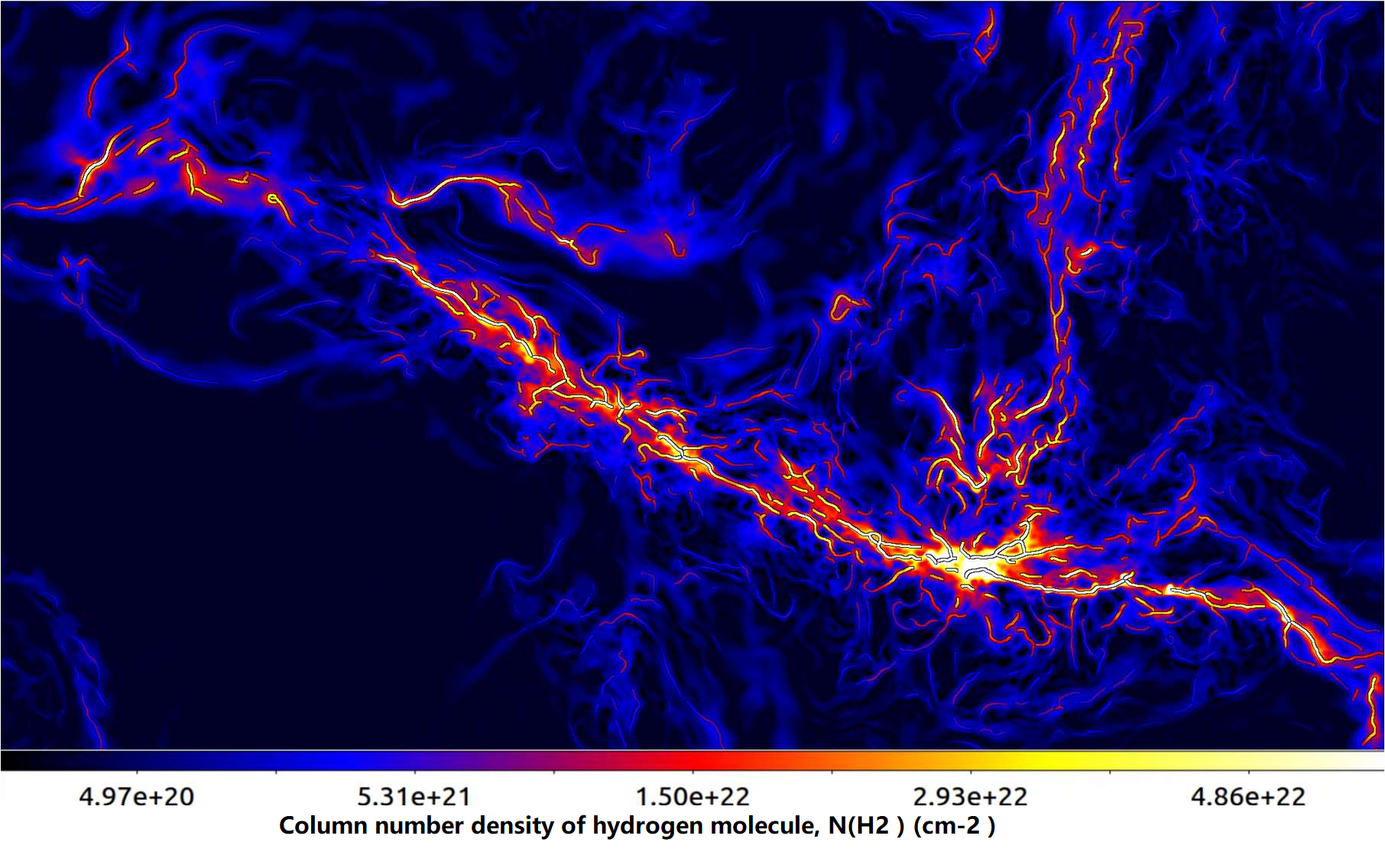 10-29/2026
Filament Collision and Core Formation in Magnetized Molecular Clouds
A collaboration of researchers from the Shanghai Astronomical Observatory and the University of California at Berkeley has carried out the currently most comprehensive investigation to date of the complex physical interactions among gas dynamics, turbulence, and magnetic fields inside filamentary molecular clouds. Using high-resolution numerical simulations, the team traced the full evolutionary path from the formation of long, slender filamentary molecular clouds— composed of many filamentary substructures—to the birth of dense cloud cores and their subsequent evolution. The results have recently been accepted for publication in the Astrophysical Journal.
A collaboration of researchers from the Shanghai Astronomical Observatory and the University of California at Berkeley has carried out the currently most comprehensive investigation to date of the complex physical interactions among gas dynamics, turbulence, and magnetic fields inside filamentary molecular clouds. Using high-resolution numerical simulations, the team traced the full evolutionary path from the formation of long, slender filamentary molecular clouds— composed of many filamentary substructures—to the birth of dense cloud cores and their subsequent evolution. The results have recently been accepted for publication in the Astrophysical Journal.
The team used the multi-physic...
 10-12/2026
Shanghai Astronomical Observatory Detects First Direct Evidence of Split Infall Flow Along Cosmic Filaments
Astronomers from the Shanghai Astronomical Observatory (SHAO) of the Chinese Academy of Sciences, in collaboration with researchers from Shanghai Jiao Tong University, have for the first time directly detected a split infall flow of matter along cosmic filaments toward galaxy clusters at both ends. Using spectroscopic galaxies from the Sloan Digital Sky Survey (SDSS), the team measured the velocity field in galaxy cluster–filament–cluster systems. The study was published in Science China Physics, Mechanics & Astronomy.
Astronomers from the Shanghai Astronomical Observatory (SHAO) of the Chinese Academy of Sciences, in collaboration with researchers from Shanghai Jiao Tong University, have for the first time directly detected a split infall flow of matter along cosmic filaments toward galaxy clusters at both ends. Using spectroscopic galaxies from the Sloan Digital Sky Survey (SDSS), the team measured the velocity field in galaxy cluster–filament–cluster systems. The study was published in Science China Physics, Mechanics & Astronomy.
Figure 1 AI produced illustration:Due to the gravity of the two clusters, the filament in between can not maintain stability under its own gravity, and flows into the tw...
 10-06/2026
A Stellar Encounter May Turn an Earth-like Planet into a Gas Giant
A joint team of researchers from Nanjing University and the Shanghai Astronomical Observatory, Chinese Academy of Sciences, has proposed a new pathway for the formation of giant planets: Flyby-Induced Second Accretion (FISA). The study shows that a planet initially only about the mass of Earth could gain a “second chance” to grow after its low-mass host star experiences a close encounter with another star. By reaccreting substantial amounts of solids and gas, the planet could eventually evolve into a gas giant. The study has been published in The Astrophysical Journal Letters.
A close stellar flyby could fundamentally alter the growth path of a planet.
A joint team of researchers from Nanjing University and the Shanghai Astronomical Observatory, Chinese Academy of Sciences, has proposed a new pathway for the formation of giant planets: Flyby-Induced Second Accretion (FISA). The study shows that a planet initially only about the mass of Earth could gain a “second chance” to grow after its low-mass host star experiences a close encounter with another star. By reaccreting substantial amounts of solids and gas, the planet could eventually evolve into a gas giant. The study has been published in The Astrophysical Journal Letters.
Where do giant planets around M dw...
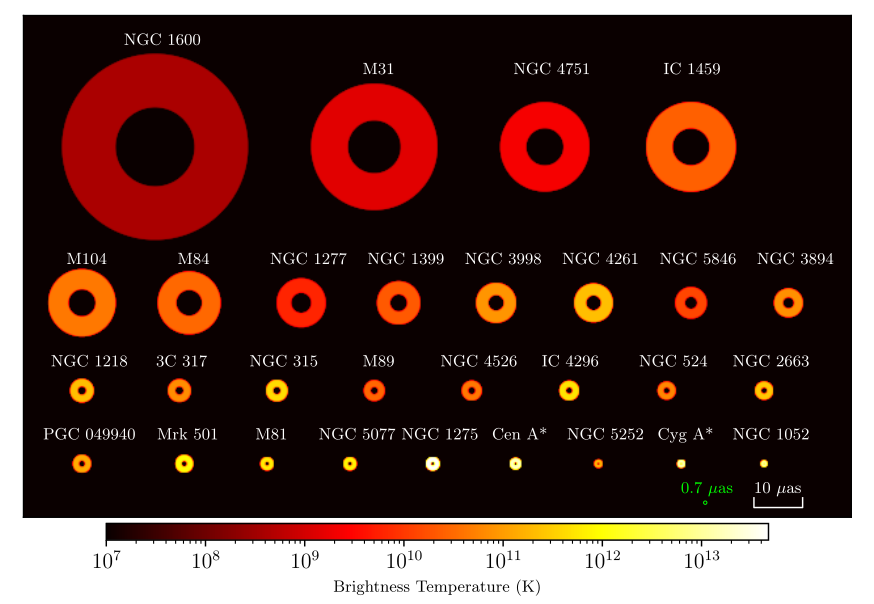 09-24/2026
Progress in Lunar-based Extremely Long Baseline Black Hole Shadow Imaging
Recently, a research team from the Shanghai Astronomical Observatory of the Chinese Academy of Sciences has made progress in the study of lunar-based very long baseline interferometry (VLBI) for sub-microarcsecond black hole shadow imaging. The related results have been published in the Monthly Notices of the Royal Astronomical Society. The study focuses on the detectability of black hole shadow candidates observable by lunar-based VLBI and the constraints of lunar-based telescopes.
Recently, a research team from the Shanghai Astronomical Observatory of the Chinese Academy of Sciences has made progress in the study of lunar-based very long baseline interferometry (VLBI) for sub-microarcsecond black hole shadow imaging. The related results have been published in the Monthly Notices of the Royal Astronomical Society. The study focuses on the detectability of black hole shadow candidates observable by lunar-based VLBI and the constraints of lunar-based telescopes.
The Event Horizon Telescope (EHT) forms a VLBI network using ground-based telescopes, but due to the limited physical size of the Earth, its angular resolution at the 1.3 mm observing wavelength reaches only 2...
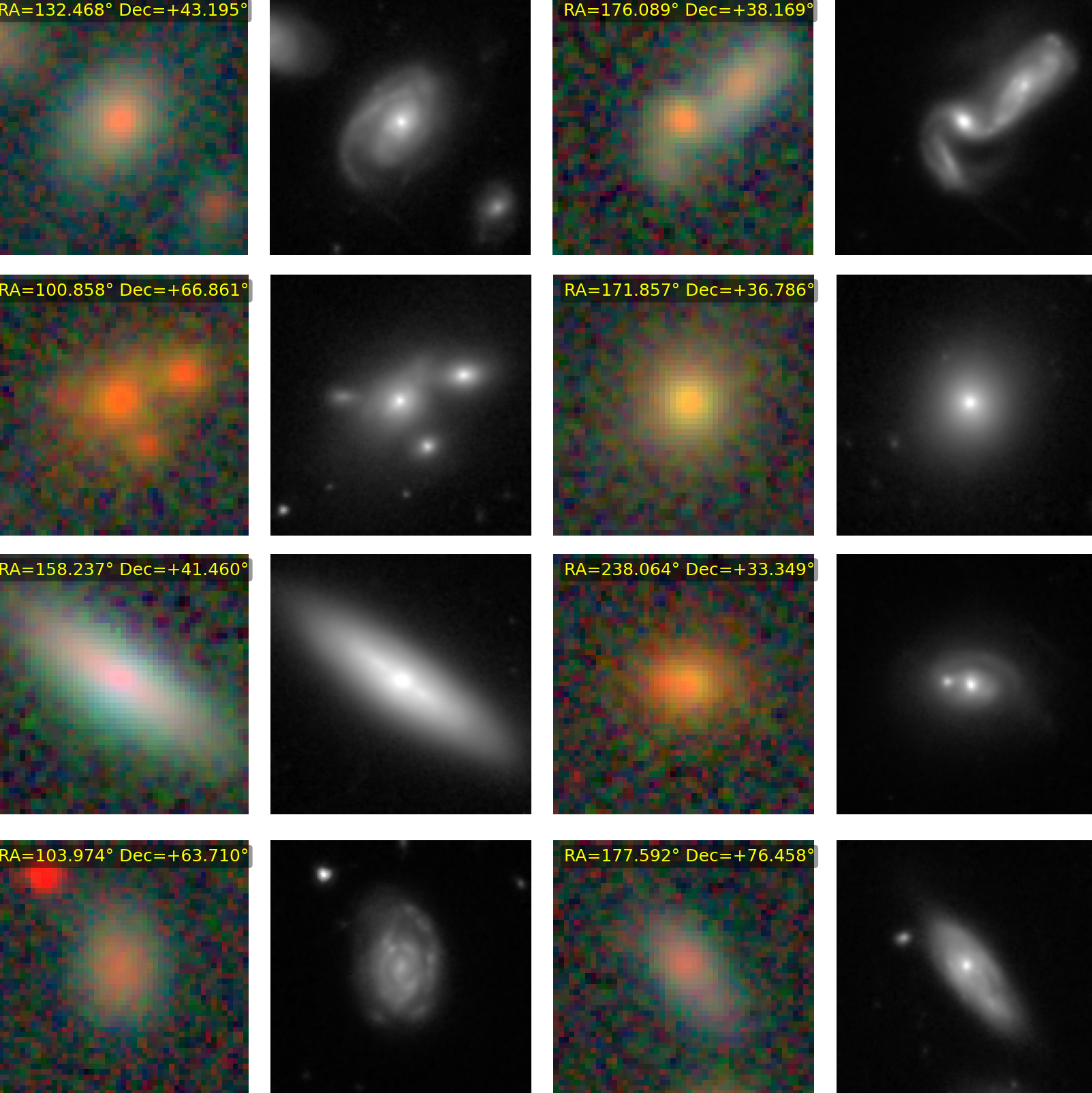 09-18/2026
Predicting a Space Telescope’s View of Galaxies: Generative AI Bridges Ground- and Space-Based Observations
Renhao Ye and Shiyin Shen at the Shanghai Astronomical Observatory of the Chinese Academy of Sciences have recently explored a method for predicting images across telescopes using generative artificial intelligence. Based on real, paired galaxy images from the DESI ground-based survey and the Euclid space telescope, the study established a generative mapping from ground-based, seeing-limited images to high-resolution space-based images. The team also generated E-BGS, a large dataset of predicted images for the sky area expected to be covered by the forthcoming Euclid DR1. This work explores a new approach to mitigating the limitations that ground-based image resolution imposes on galaxy structure measurements and to extending such studies across a wider area of the sky. The results have been published in The Astrophysical Journal Letters.
Renhao Ye and Shiyin Shen at the Shanghai Astronomical Observatory of the Chinese Academy of Sciences have recently explored a method for predicting images across telescopes using generative artificial intelligence. Based on real, paired galaxy images from the DESI ground-based survey and the Euclid space telescope, the study established a generative mapping from ground-based, seeing-limited images to high-resolution space-based images. The team also generated E-BGS, a large dataset of predicted images for the sky area expected to be covered by the forthcoming Euclid DR1. This work explores a new approach to mitigating the limitations that ground-based image resolution imposes on galaxy s...
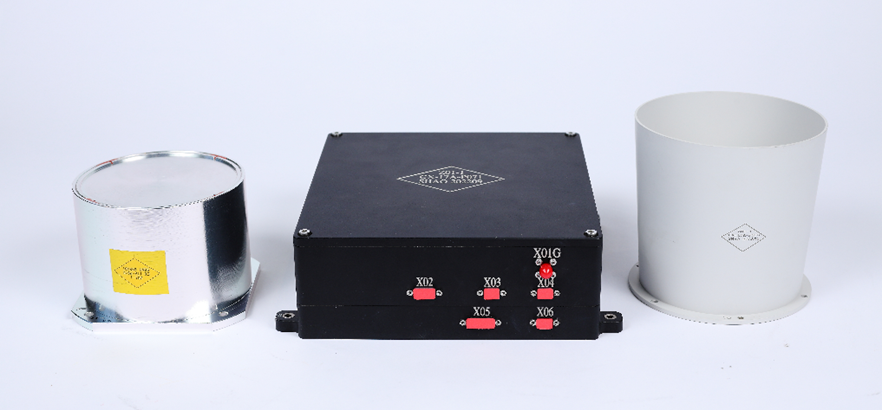 09-17/2026
SHAO Advances Laser-Based Precise Orbit Determination and Time-Frequency Transfer in Cislunar Space
A research team from the Shanghai Astronomical Observatory (SHAO) of the Chinese Academy of Sciences (CAS) has made a series of advances in applying satellite laser ranging (SLR) to precise orbit determination and timefrequency transfer for cislunar spacecraft. Their study on precise orbit determination by integrating two-way SLR with ground-based radio ranging was published in SCIENTIA SINICA Physica, Mechanica & Astronomica, while their work on precise orbit determination and timefrequency transfer for cislunar spacecraft using one-way laser ranging was published in Advances in Space Research.
Fig. 1. Schematic of two-way laser ranging observations of the TD-1 and DRO-A satellites
By in...
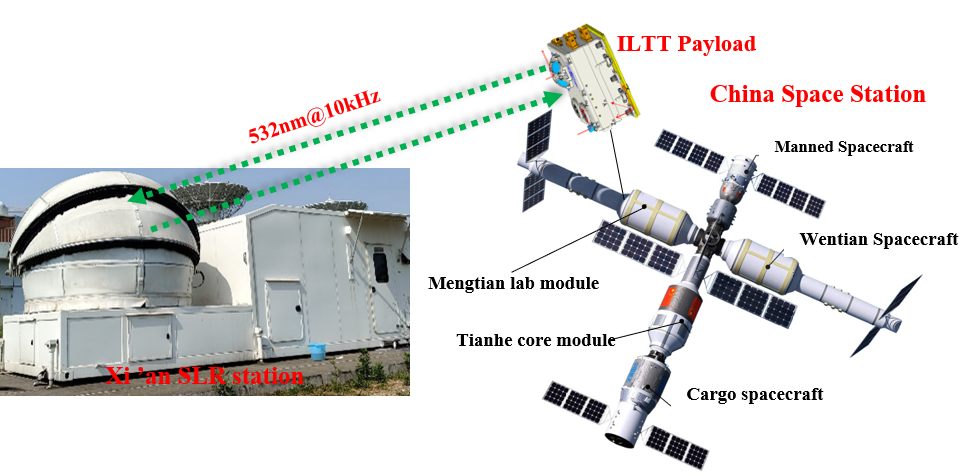 07-31/2026
Satellite-Ground Laser Time-Frequency Transfer Achieves Picosecond Precision and Sub-Picosecond Stability
Recently, research team from Shanghai Astronomical Observatory (SHAO) of the Chinese Academy of Sciences (CAS) achieved a major breakthrough in satellite-ground laser time-frequency transfer. The team developed a laser time-frequency transfer payload and dedicated ground station for Mengtian Laboratory Module of the Chinese Space Station. The system demonstrated a 1-second Normal Point accuracy of 2–5 picoseconds (ps) for satellite-ground clock difference measurements, a time deviation stability better than 0.7 ps at 50 seconds, and a modified Allan deviation stability of 2×10⁻¹⁴ at 50 seconds—representing the best satellite-ground laser time-frequency transfer performance reported ...
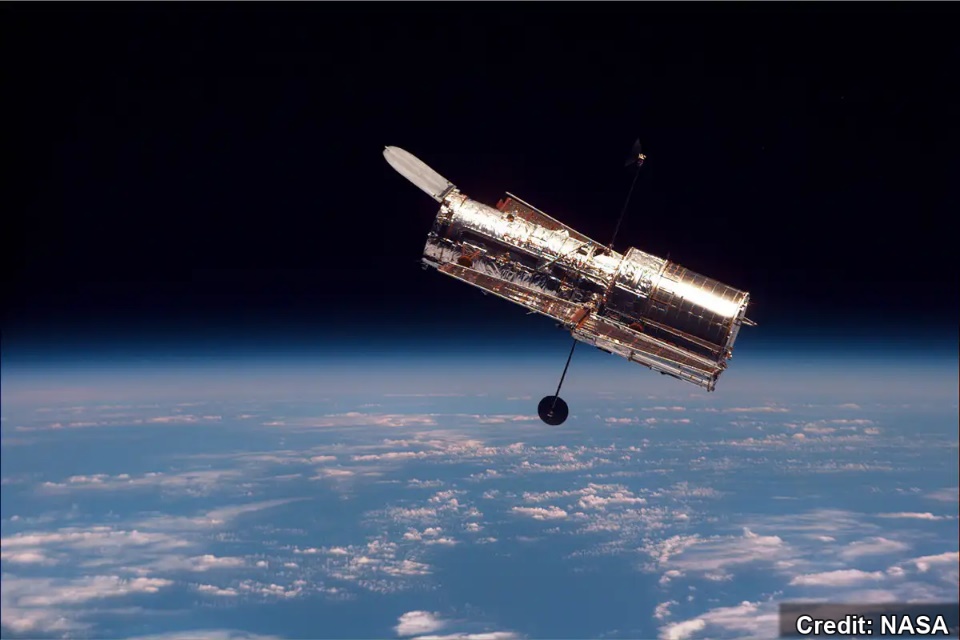 09-07/2026
Shanghai Astronomical Observatory Conducts a Bibliometric Study of Hubble Space Telescope Scientific Publications
A research team led by Zhenya Zheng of the Shanghai Astronomical Observatory, Chinese Academy of Sciences, has completed a bibliometric study of more than three decades of scientific publications from the Hubble Space Telescope (HST), identifying the factors that have kept the observatory at the frontier of astronomy, as well as the experience that next-generation space facilities such as the Chinese Space-station Survey Telescope (CSST) can draw on.
The study has been published online in the journal Astronomical Techniques and Instruments.
HST's scientific publications follow a classic life-cycle pattern in which instrument iteration is the strongest driver. Publication output evolved in...
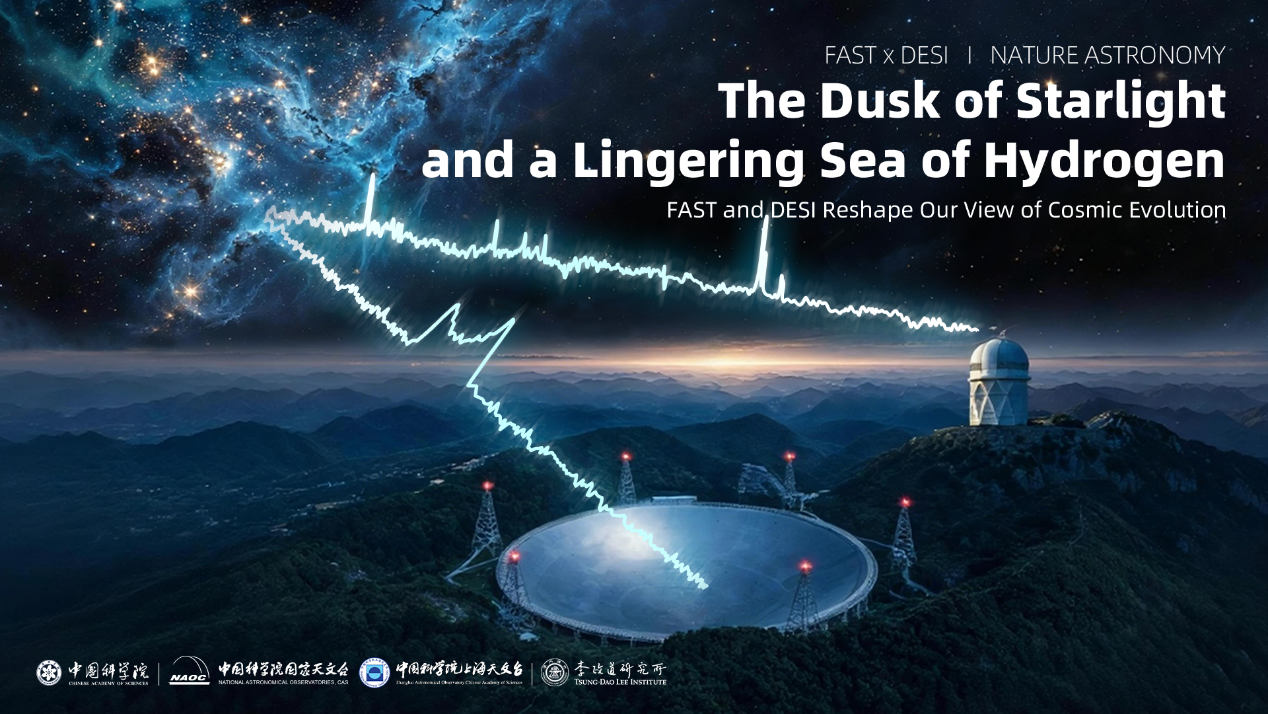 08-31/2026
Study: Declining Star Formation Not Caused by Simple “Fuel Crisis”
The universe has been having fewer and fewer stellar “babies.” Over the past 4.5 billion years, the rate of star birth has crashed to less than half of what it once was. But here’s the twist: the most essential “fuel” for making stars has barely decreased.
The universe has been having fewer and fewer stellar “babies.” Over the past 4.5 billion years, the rate of star birth has crashed to less than half of what it once was. But here’s the twist: the most essential “fuel” for making stars has barely decreased.
This finding comes from an international team led by researchers from the Chinese Academy of Sciences (CAS), in collaboration with the Dark Energy Spectroscopic Instrument (DESI) project. They used China’s Five-hundred-meter Aperture Spherical radio Telescope (FAST) to make high-precision measurements of cosmic neutral atomic hydrogen over the past 4.5 billion years.
The study reveals that while cosmic star formation has declined ...
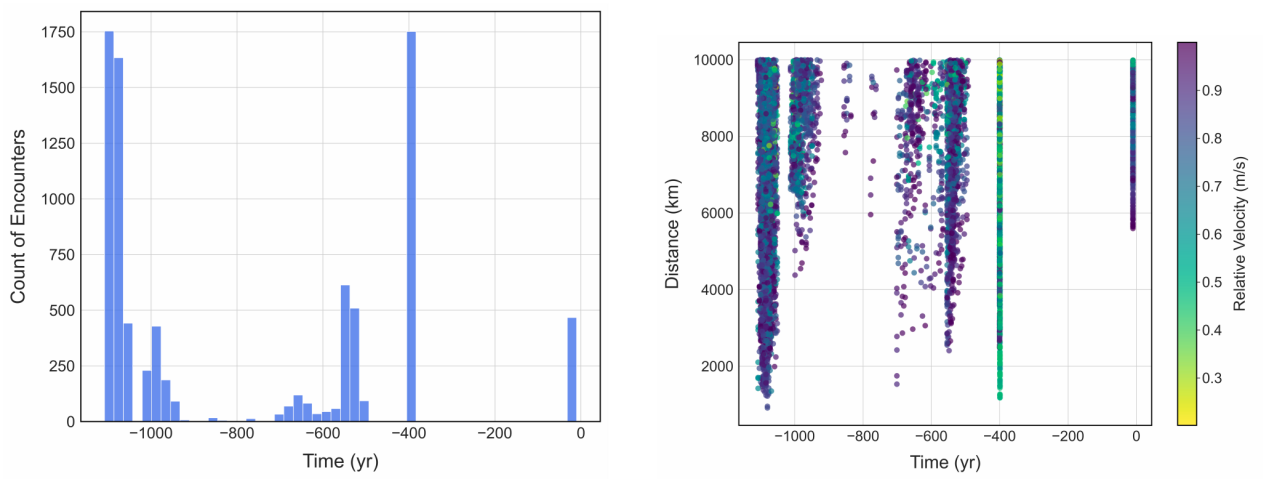 08-12/2026
Advancing the Search for Near-Earth Asteroid Pairs and the Study of Their Orbital Evolution
The research team utilized orbital similarity criteria and numerical simulations to systematically screen known near-Earth asteroids, identifying multiple groups of potential candidates that may share a common origin, and determining their possible separation times. This study not only deepens our understanding of the evolutionary mechanisms of near-Earth asteroids and the formation process of small bodies in the solar system but also effectively expands the sample of near-Earth asteroids, providing a basis for selecting sources for future deep-space exploration missions targeting near-Earth asteroids. Recently, the Shanghai Astronomical Observatory of the Chinese Academy of Sciences, in collaboration with Anhui Normal University, has made new progress in the search for near-Earth asteroid Paircandidates and the study of their orbital evolution. The findings were published in the international astronomical journal The Astrophysical Journal.
The research team utilized orbital similarity criteria and numerical simulations to systematically screen known near-Earth asteroids, identifying multiple groups of potential candidates that may share a common origin, and determining their possible separation times. This study not only deepens our understanding of the evolutionary mechanisms of near-Earth asteroids and the formation process of small bodies in the solar system but also effectively expands the sample of near-Earth asteroids, providing a basis for selecting sources for future deep-space exploration missions targeting near-Earth asteroids. Recently, the Shanghai Astronomical Observatory of the Chinese Academy of Sciences, in ...
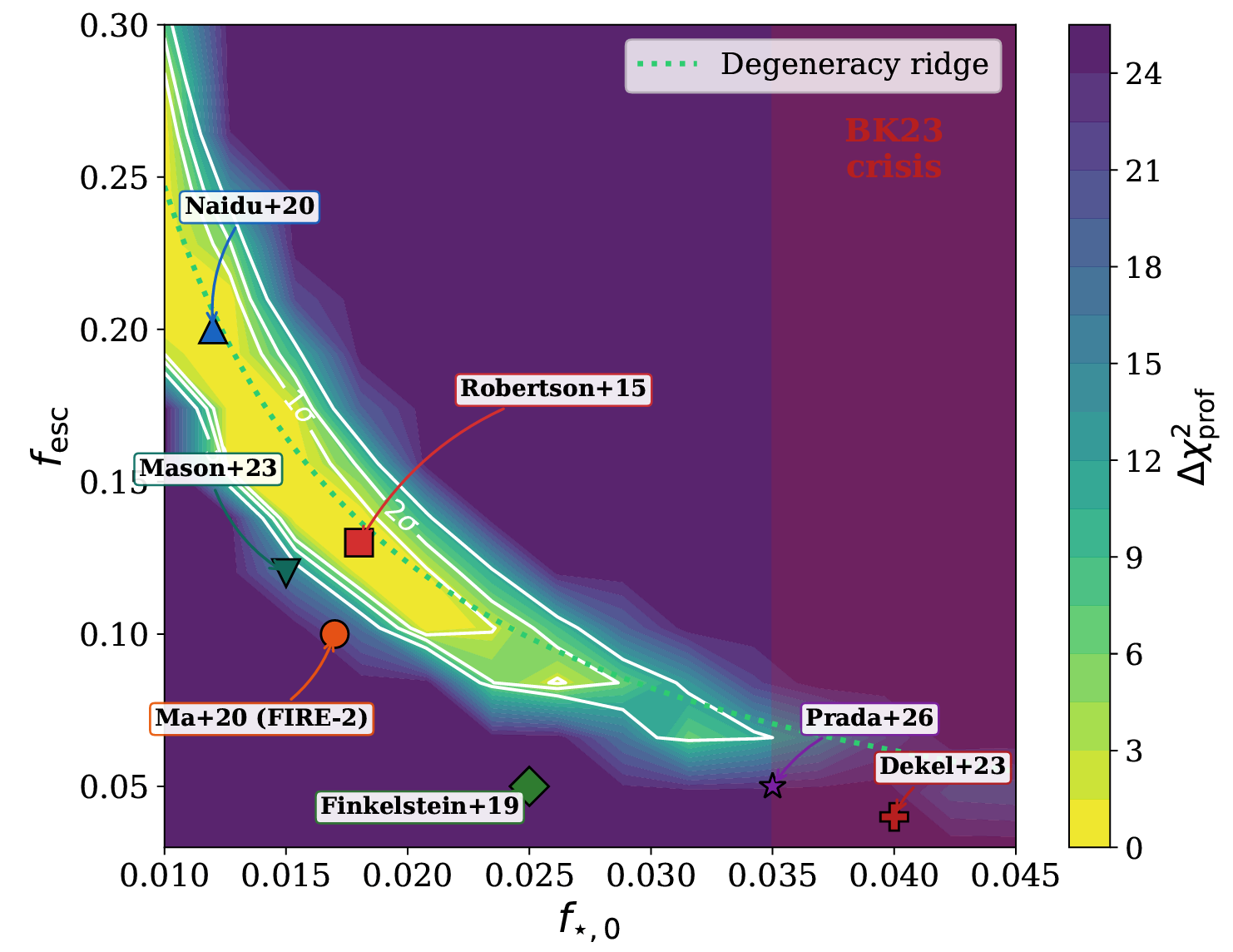 07-29/2026
Reionization Degeneracy Can Explain the JWST Early Galaxy “Crisis”
Researchers from Shanghai Astronomical Observatory (SHAO) of the Chinese Academy of Sciences and and collaborators have shown that the apparent “early galaxy crisis” triggered by recent James Webb Space Telescope (JWST) observations may not require a breakdown of the standard cosmological model. Instead, it may arise from a structural degeneracy in how reionization observations are interpreted.
The study, led by Zihan Wang and Huanyuan Shan, has been published in The Astrophysical Journal Letters.
JWST has discovered surprisingly bright galaxies at redshifts (z>10), corresponding to an epoch when the Universe was only a few hundred million years old. These galaxies appear to have formed...
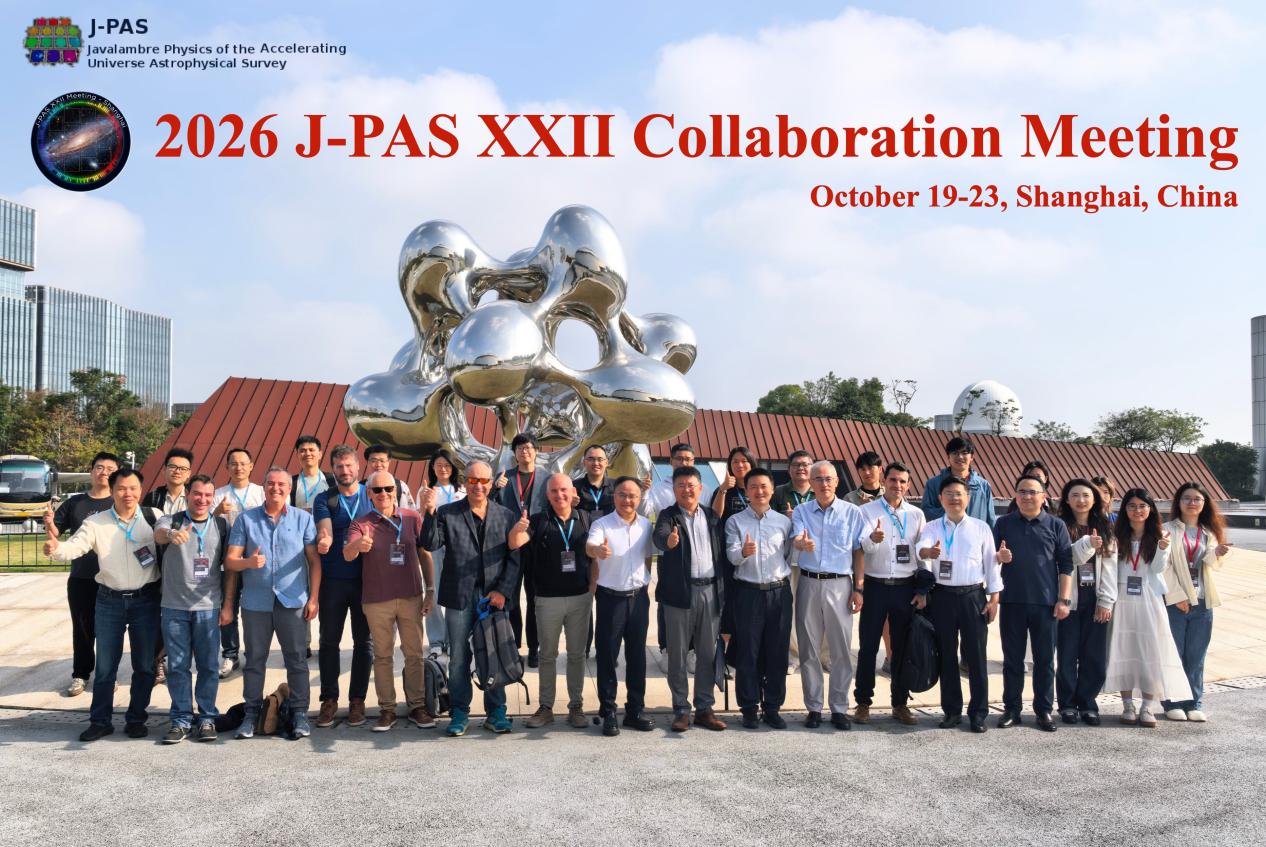 11-03/2026
2026 J-PAS XXII Collaboration Meeting Successfully Held in Shanghai
The 2026 J-PAS XXII Collaboration Meeting was held in Shanghai from October 19 to 23, 2026. Organized by the Shanghai Astronomical Observatory of the Chinese Academy of Sciences (SHAO, CAS) and co-organized by the Shanghai Astronomy Museum (a branch of the Shanghai Science and Technology Museum), the meeting marked the first time that the annual J-PAS Collaboration Meeting was hosted in China. Researchers from Spain, Brazil, Japan, China, and other countries participated in the meeting both in person and online. Chinese participants represented a wide range of institutions, including the National Astronomical Observatories, Xinjiang Astronomical Observatory, University of Chinese Academy of Sciences, Beijing Normal University, University of Science and Technology of China, Shanghai Jiao Tong University, Xiamen University, and Yunnan University. More than 80 people attended the conference in total.
The 2026 J-PAS XXII Collaboration Meeting was held in Shanghai from October 19 to 23, 2026. Organized by the Shanghai Astronomical Observatory of the Chinese Academy of Sciences (SHAO, CAS) and co-organized by the Shanghai Astronomy Museum (a branch of the Shanghai Science and Technology Museum), the meeting marked the first time that the annual J-PAS Collaboration Meeting was hosted in China. Researchers from Spain, Brazil, Japan, China, and other countries participated in the meeting both in person and online. Chinese participants represented a wide range of institutions, including the National Astronomical Observatories, Xinjiang Astronomical Observatory, University of Chinese Academy...
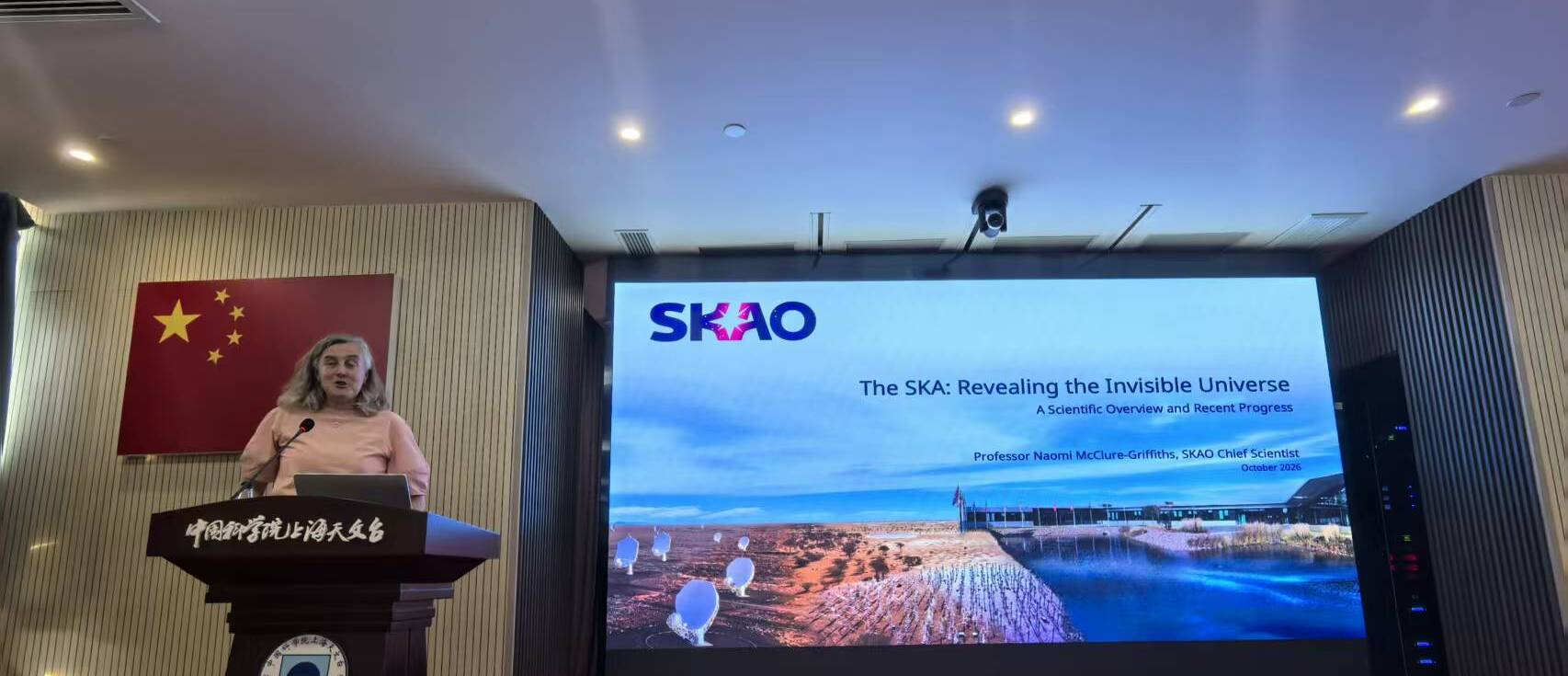 11-03/2026
SKAO Chief Scientist Prof. Naomi McClure-Griffiths Visits Shanghai Astronomical Observatory
On October 8, 2026, Prof. Naomi McClure-Griffiths, Chief Scientist of the Square Kilometre Array Observatory (SKAO), visited the Shanghai Astronomical Observatory (SHAO) of the Chinese Academy of Sciences. During the visit, Prof. McClure-Griffiths exchanged views with SHAO researchers engaged in Square Kilometre Array (SKA)-related work, learning about the research progress and observation preparations of the observatory's teams and delivering a special academic lecture. The visit deepened the SHAO teams' understanding of SKA science planning and construction progress, and provided a useful reference for refining science cases and preparing for observation and data analysis.
On October 8, 2026, Prof. Naomi McClure-Griffiths, Chief Scientist of the Square Kilometre Array Observatory (SKAO), visited the Shanghai Astronomical Observatory (SHAO) of the Chinese Academy of Sciences. During the visit, Prof. McClure-Griffiths exchanged views with SHAO researchers engaged in Square Kilometre Array (SKA)-related work, learning about the research progress and observation preparations of the observatory's teams and delivering a special academic lecture. The visit deepened the SHAO teams' understanding of SKA science planning and construction progress, and provided a useful reference for refining science cases and preparing for observation and data analysis.
SHAO teams pr...
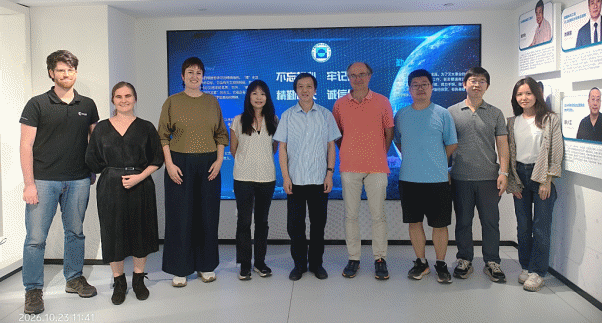 10-29/2026
Swiss Astronomy Delegation Visits Shanghai Astronomical Observatory
On October 23, 2026, a Swiss astronomy delegation from the University of Geneva, the Swiss Federal Institute of Technology in Lausanne (EPFL) and the University of Basel visited the Shanghai Astronomical Observatory (SHAO), Chinese Academy of Sciences.The delegation and SHAO researchers conducted academic exchanges on Square Kilometre Array (SKA) science cooperation, regional centre development and frontier research in radio astronomy, and visited the SHAO Sheshan campus. The visit enhanced mutual understanding between the Chinese and Swiss astronomical communities and laid a foundation for deeper practical cooperation between the two sides.
In the morning, SHAO teams gave academic report...
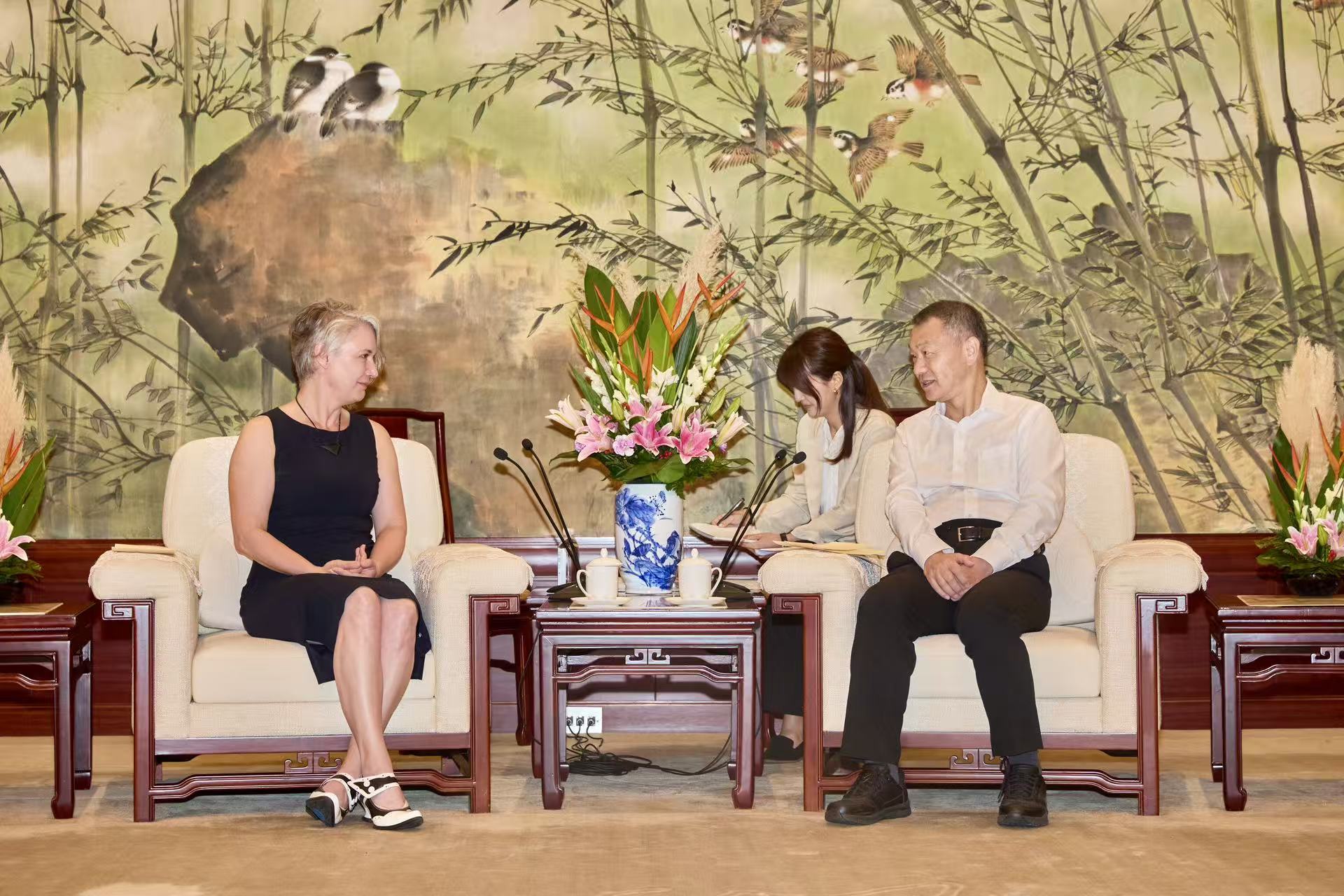 09-14/2026
SKAO Director-General Professor Jessica Dempsey Visits Shanghai
On September 6–7, 2026, Professor Jessica Dempsey, the newly appointed Director-General of the Square Kilometre Array Observatory (SKAO), led a delegation to visit Shanghai. Earlier on September 4, Vice Minister Zhang Guangjun of the Ministry of Science and Technology (MOST) met with Professor Dempsey and her delegation in Beijing, where they held in-depth exchanges on SKA progress and important issues concerning SKAO's development. This was Professor Dempsey's first visit to China since assuming the role of SKAO Director-General on June 1, 2026. The delegation also included Dr. Filippo Zerbi, Chair of the SKAO Council; Dr. Simon Berry, Deputy Director-General and Head of the Director-General's Office; and Mr. Wang Qiming, Policy Advisor. The visit aimed to deepen strategic cooperation between the SKAO and the Chinese astronomical community and to advance China's continued leading role in SKA construction, operations, and international governance.
On September 6–7, 2026, Professor Jessica Dempsey, the newly appointed Director-General of the Square Kilometre Array Observatory (SKAO), led a delegation to visit Shanghai. Earlier on September 4, Vice Minister Zhang Guangjun of the Ministry of Science and Technology (MOST) met with Professor Dempsey and her delegation in Beijing, where they held in-depth exchanges on SKA progress and important issues concerning SKAO's development. This was Professor Dempsey's first visit to China since assuming the role of SKAO Director-General on June 1, 2026. The delegation also included Dr. Filippo Zerbi, Chair of the SKAO Council; Dr. Simon Berry, Deputy Director-General and Head of the Director-Ge...
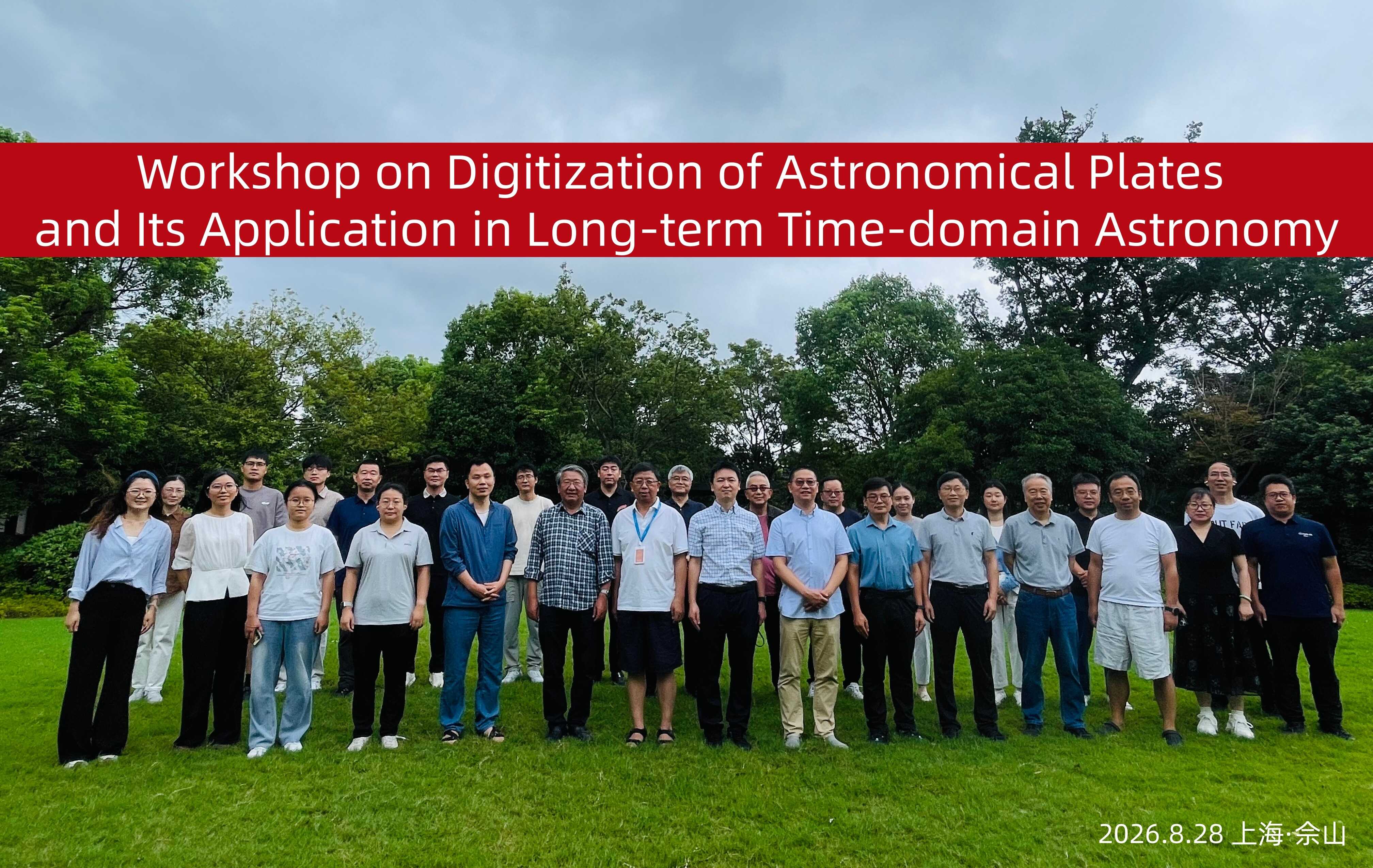 09-11/2026
Workshop on Digitization of Astronomical Plates and Its Application in Long-term Time-domain Astronomy Held in Shanghai
A workshop on the digitization of astronomical plates and its application in long-term time-domain astronomy was held from August 27 to 29 in Shanghai, bringing together 38 experts and researchers from major Chinese research institutes and universities.
The event, hosted by the Shanghai Astronomical Observatory of the Chinese Academy of Sciences (CAS), was conducted both online and on-site at the Sheshan. Participants came from the National Astronomical Observatories of CAS, Yunnan Observatories of CAS, National Time Service Center of CAS, Academy of Mathematics and Systems Science of CAS, as well as Beijing Normal University, University of Science and Technology of China, Beijing Univers...
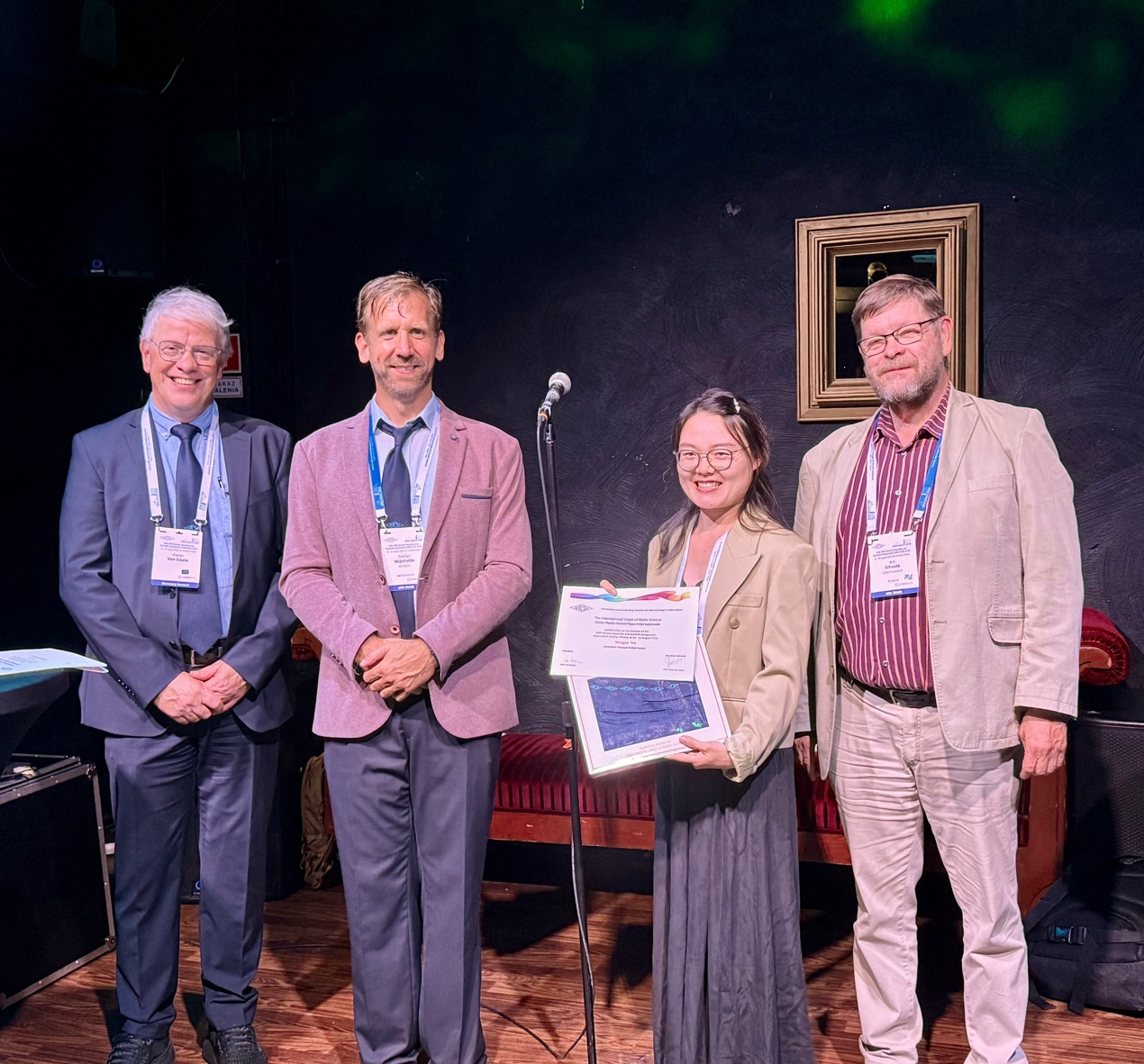 08-26/2026
Mengjie Wu Receives Young Scientist Award at URSI GASS 2026
Mengjie Wu, a researcher at Shanghai Astronomical Observatory, received the Young Scientist Award at the XXXVIth URSI General Assembly and Scientific Symposium (URSI GASS), taking place in Kraków, Poland, in recognition of her research achievements and contributions to ionospheric radio science. A total of 61 young scientists received awards at this conference, including 6 scholars from China.
Mengjie Wu, a researcher at Shanghai Astronomical Observatory, received the Young Scientist Award at the XXXVIth URSI General Assembly and Scientific Symposium (URSI GASS), taking place in Kraków, Poland, in recognition of her research achievements and contributions to ionospheric radio science. A total of 61 young scientists received awards at this conference, including 6 scholars from China.
At the conference, Mengjie Wu presented the study “Geolocation of ionospheric irregularities based on MSS-1 high-rate radio occultation measurements”, highlighting recent advances in GNSS RO observations and their implications for spatial geolocation of irregularities. The presentation also provi...
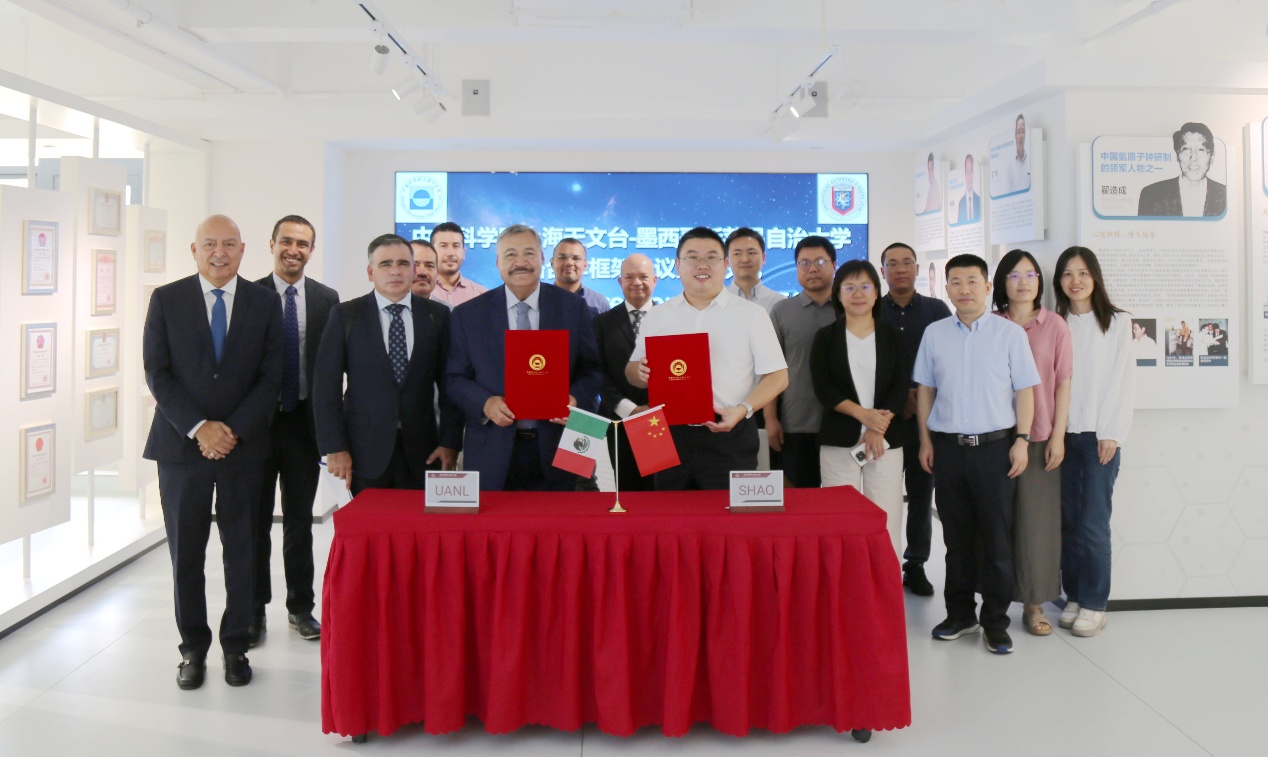 08-19/2026
Mexican University Delegation Visits Shanghai Astronomical Observatory, Signs Strategic Cooperation Framework Agreement
August 17, 2026, A delegation from the Universidad Autónoma de Nuevo León (UANL) in Mexico, led by Rector Santos Guzmán, visited the Shanghai Astronomical Observatory (SHAO), Chinese Academy of Sciences, and signed a Strategic Cooperation Framework Agreement to deepen bilateral collaboration in astronomy and space science.
August 17, 2026, A delegation from the Universidad Autónoma de Nuevo León (UANL) in Mexico, led by Rector Santos Guzmán, visited the Shanghai Astronomical Observatory (SHAO), Chinese Academy of Sciences, and signed a Strategic Cooperation Framework Agreement to deepen bilateral collaboration in astronomy and space science.
During the workshop, Director Kong outlined SHAO’s research landscape and recent scientific advances, highlighting its internationally recognized work in very long baseline interferometry, astro-geodynamics, galactic cosmology and planetary science. He stressed the growing importance of international partnerships in tackling frontier research questions and developin...
 08-03/2026
Second Annual Science Meeting of the Earth 2.0 (ET) Space Mission
The Second Annual Science Meeting of the Earth 2.0 (ET) Space Mission was successfully held in Kunming, Yunnan Province, from July 27–31, 2026. Organized by the Shanghai Astronomical Observatory (SHAO), Chinese Academy of Sciences (CAS), the meeting brought together more than 200 scientists and students from 26 international institutions and 43 domestic institutions, making it the largest international ET science meeting held to date.
The Second Annual Science Meeting of the Earth 2.0 (ET) Space Mission was successfully held in Kunming, Yunnan Province, from July 27–31, 2026. Organized by the Shanghai Astronomical Observatory (SHAO), Chinese Academy of Sciences (CAS), the meeting brought together more than 200 scientists and students from 26 international institutions and 43 domestic institutions, making it the largest international ET science meeting held to date.
The five-day conference featured more than 160 invited talks, contributed talks, and poster presentations covering the full scientific scope of the ET mission. The program included invited reviews, ET mission updates, parallel scientific sessions, summary p...
 07-31/2026
2026 Spaceborne Earth Observations and Global Change Workshop & Summer School Successfully Held in Shanghai
Jointly organized by the Shanghai Astronomical Observatory (SHAO), Chinese Academy of Sciences, and the Department of Land Surveying and Geo-Informatics of The Hong Kong Polytechnic University, the “2026 Workshop and Summer School on Space Earth Observation and Global Change” was successfully held in Shanghai from July 13 to 17, 2026, under the auspices of the SHAO leadership. The event was co-organized by the Shanghai Key Laboratory of Space Navigation and Positioning Technology, and received support from the SHAO Center for Astronomical Geodynamics, the academic journals Geodesy and Geodynamics and Journal of Geodesy and Geodynamics, as well as the Major Program of the National Natural Science Foundation of China on Global Sea-Level Change.
Jointly organized by the Shanghai Astronomical Observatory (SHAO), Chinese Academy of Sciences, and the Department of Land Surveying and Geo-Informatics of The Hong Kong Polytechnic University, the “2026 Workshop and Summer School on Space Earth Observation and Global Change” was successfully held in Shanghai from July 13 to 17, 2026, under the auspices of the SHAO leadership. The event was co-organized by the Shanghai Key Laboratory of Space Navigation and Positioning Technology, and received support from the SHAO Center for Astronomical Geodynamics, the academic journals Geodesy and Geodynamics and Journal of Geodesy and Geodynamics, as well as the Major Program of the National Natura...
 05-20/2026
2026 Shanghai Astronomical Society Annual Conference Successfully Held
The 2026 Shanghai Astronomical Society Annual Conference concluded successfully on May 16 in Chongming, Shanghai. This year’s conference was jointly organized by the Shanghai Astronomical Observatory of the Chinese Academy of Sciences, Shanghai Jiao Tong University, Fudan University, Shanghai Normal University, and Shanghai University of Engineering Science, co-organized by the Shanghai Astronomical Society, and hosted by the Shanghai Astronomical Observatory of the Chinese Academy of Sciences. The event brought together more than 150 experts, scholars, and early-career researchers from the astronomy community in Shanghai, establishing an efficient and practical academic exchange platform for the collaborative innovation and high-quality development of Shanghai’s astronomy enterprise.
Group photo of the 2026 Shanghai Astronomical Society Annual Conference
The 2026 Shanghai Astronomical Society Annual Conference concluded successfully on May 16 in Chongming, Shanghai. This year’s conference was jointly organized by the Shanghai Astronomical Observatory of the Chinese Academy of Sciences, Shanghai Jiao Tong University, Fudan University, Shanghai Normal University, and Shanghai University of Engineering Science, co-organized by the Shanghai Astronomical Society, and hosted by the Shanghai Astronomical Observatory of the Chinese Academy of Sciences. The event brought together more than 150 experts, scholars, and early-career researchers from the astronomy community in Sh...
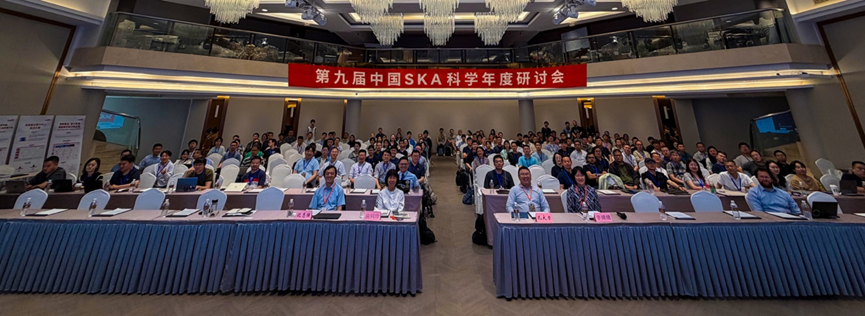 05-20/2026
China SKA Science Meeting 2026 Successfully Held in Shanghai
The China SKA Science Meeting 2026 was successfully held from May 12 to 14, 2026, in Shanghai, bringing together over 200 researchers and young scientists from universities and research institutions across China.
SHANGHAI, May 12–14, 2026 – The China SKA Science Meeting 2026 was successfully held from May 12 to 14, 2026, in Shanghai, bringing together over 200 researchers and young scientists from universities and research institutions across China.
Guided by the International Science and Technology Cooperation Center (ISTCC) of the Ministry of Science and Technology (MOST), and hosted by the Shanghai Astronomical Observatory (SHAO) of the Chinese Academy of Sciences (CAS), the event featured 47 talks, highlighting preparations for early science with the SKA telescopes. Lead authors of the upcoming second SKAO science book were invited to present their latest progress, and SKAO Scientists delive...
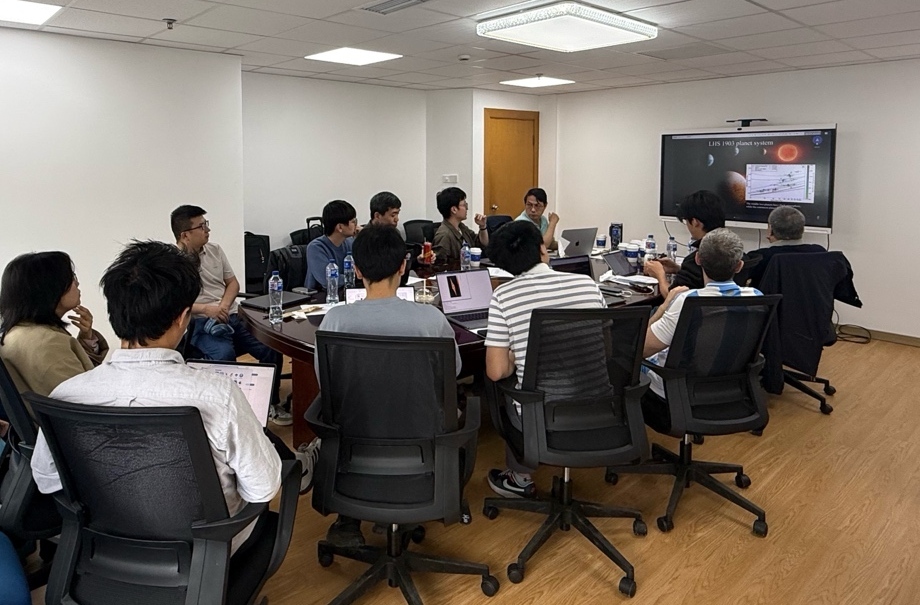 04-20/2026
Workshop on the Formation of Exo-terrestrial Planets Held in Shanghai
On April 17, 2026, the Workshop on the Formation of Exo-terrestrial Planets, hosted by the Shanghai Astronomical Observatory (SHAO) of the Chinese Academy of Sciences, was held in Shanghai. The meeting was chaired by Professor Jian Ge, Principal Investigator of the Earth 2.0 (ET) space mission under China’s Space Origins Exploration Program.
On April 17, 2026, the Workshop on the Formation of Exo-terrestrial Planets, hosted by the Shanghai Astronomical Observatory (SHAO) of the Chinese Academy of Sciences, was held in Shanghai. The meeting was chaired by Professor Jian Ge, Principal Investigator of the Earth 2.0 (ET) space mission under China’s Space Origins Exploration Program.
The workshop was conducted in a hybrid format and brought together more than 20 experts and scholars from 12 research institutions in China and abroad. Participating institutions included the University of California, Santa Cruz, the Max Planck Institute for Astronomy, the University of Southern Queensland, the University of Hong Kong, the University...


