

Research News
-
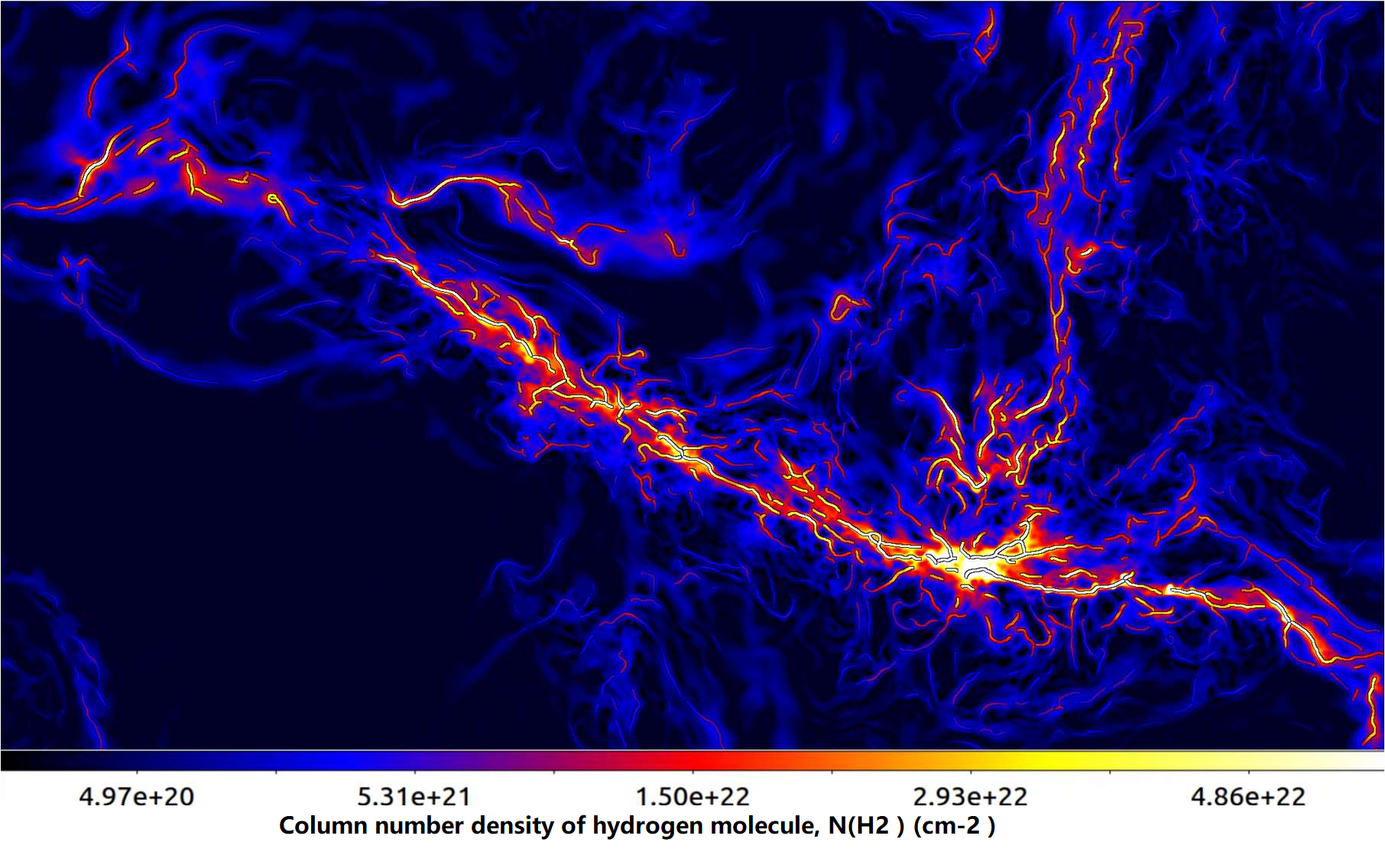 Filament Collision and Core Formation in Magnetized Molecular CloudsA collaboration of researchers from the Shanghai Astronomical Observatory and the University of California at Berkeley has carried out the currently most comprehensive investigation to date of the complex physical interactions among gas dynamics, turbulence, and magnetic fields inside filamentary molecular clouds. Using high-resolution numerical simulations, the team traced the full evolutionary path from the formation of long, slender filamentary molecular clouds— composed of many filamentary substructures—to the birth of dense cloud cores and their subsequent evolution. The results have recently been accepted for publication in the Astrophysical Journal.Oct 29, 2026
-
 Shanghai Astronomical Observatory Detects First Direct Evidence of Split Infall Flow Along Cosmic FilamentsAstronomers from the Shanghai Astronomical Observatory (SHAO) of the Chinese Academy of Sciences, in collaboration with researchers from Shanghai Jiao Tong University, have for the first time directly detected a split infall flow of matter along cosmic filaments toward galaxy clusters at both ends. Using spectroscopic galaxies from the Sloan Digital Sky Survey (SDSS), the team measured the velocity field in galaxy cluster–filament–cluster systems. The study was published in Science China Physics, Mechanics & Astronomy.Oct 12, 2026
-
 A Stellar Encounter May Turn an Earth-like Planet into a Gas GiantA joint team of researchers from Nanjing University and the Shanghai Astronomical Observatory, Chinese Academy of Sciences, has proposed a new pathway for the formation of giant planets: Flyby-Induced Second Accretion (FISA). The study shows that a planet initially only about the mass of Earth could gain a “second chance” to grow after its low-mass host star experiences a close encounter with another star. By reaccreting substantial amounts of solids and gas, the planet could eventually evolve into a gas giant. The study has been published in The Astrophysical Journal Letters.Oct 06, 2026
-
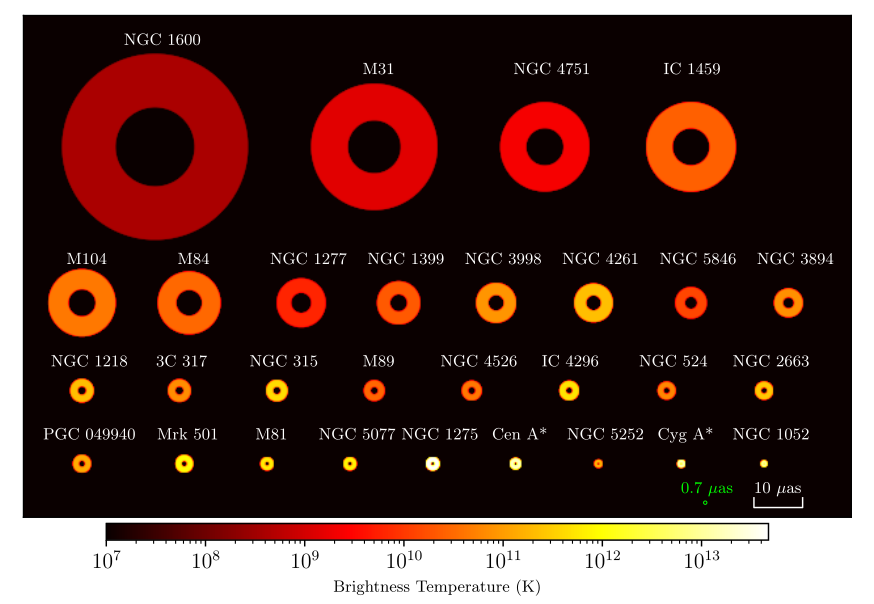 Progress in Lunar-based Extremely Long Baseline Black Hole Shadow ImagingRecently, a research team from the Shanghai Astronomical Observatory of the Chinese Academy of Sciences has made progress in the study of lunar-based very long baseline interferometry (VLBI) for sub-microarcsecond black hole shadow imaging. The related results have been published in the Monthly Notices of the Royal Astronomical Society. The study focuses on the detectability of black hole shadow candidates observable by lunar-based VLBI and the constraints of lunar-based telescopes.Sep 24, 2026
-
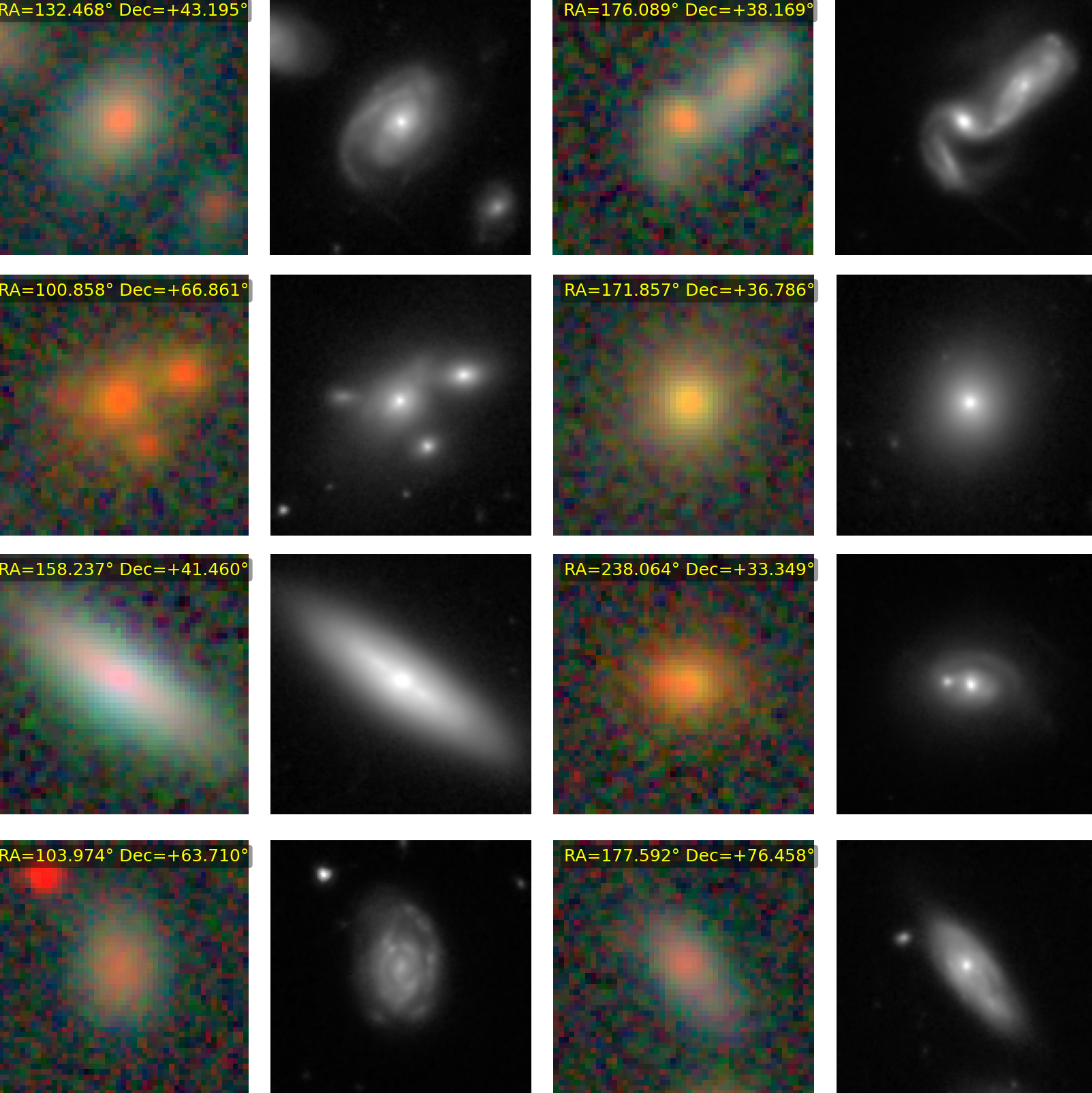 Predicting a Space Telescope’s View of Galaxies: Generative AI Bridges Ground- and Space-Based ObservationsRenhao Ye and Shiyin Shen at the Shanghai Astronomical Observatory of the Chinese Academy of Sciences have recently explored a method for predicting images across telescopes using generative artificial intelligence. Based on real, paired galaxy images from the DESI ground-based survey and the Euclid space telescope, the study established a generative mapping from ground-based, seeing-limited images to high-resolution space-based images. The team also generated E-BGS, a large dataset of predicted images for the sky area expected to be covered by the forthcoming Euclid DR1. This work explores a new approach to mitigating the limitations that ground-based image resolution imposes on galaxy structure measurements and to extending such studies across a wider area of the sky. The results have been published in The Astrophysical Journal Letters.Sep 18, 2026
-
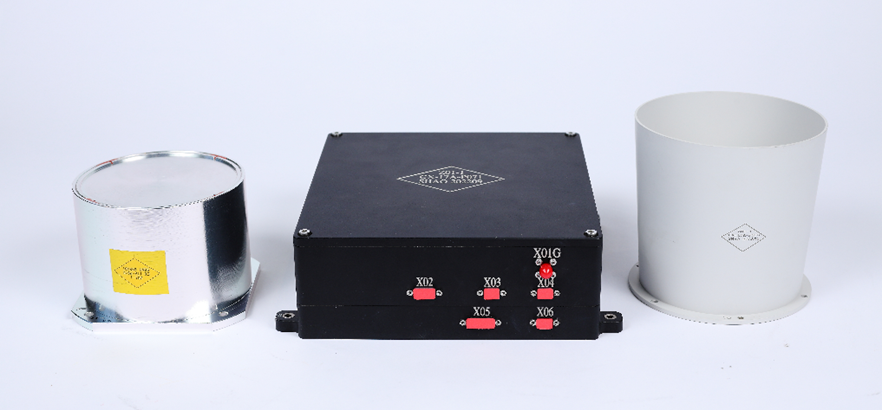 SHAO Advances Laser-Based Precise Orbit Determination and Time-Frequency Transfer in Cislunar SpaceSep 17, 2026
-
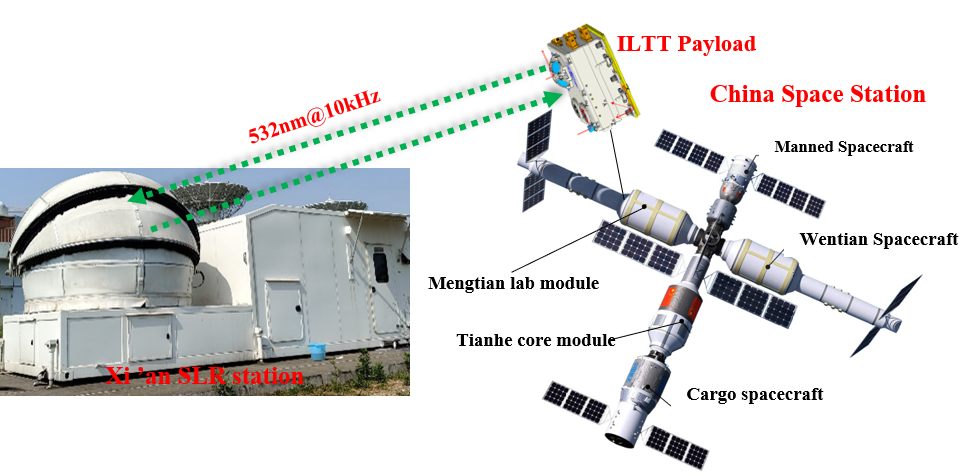 Satellite-Ground Laser Time-Frequency Transfer Achieves Picosecond Precision and Sub-Picosecond StabilityJul 31, 2026
-
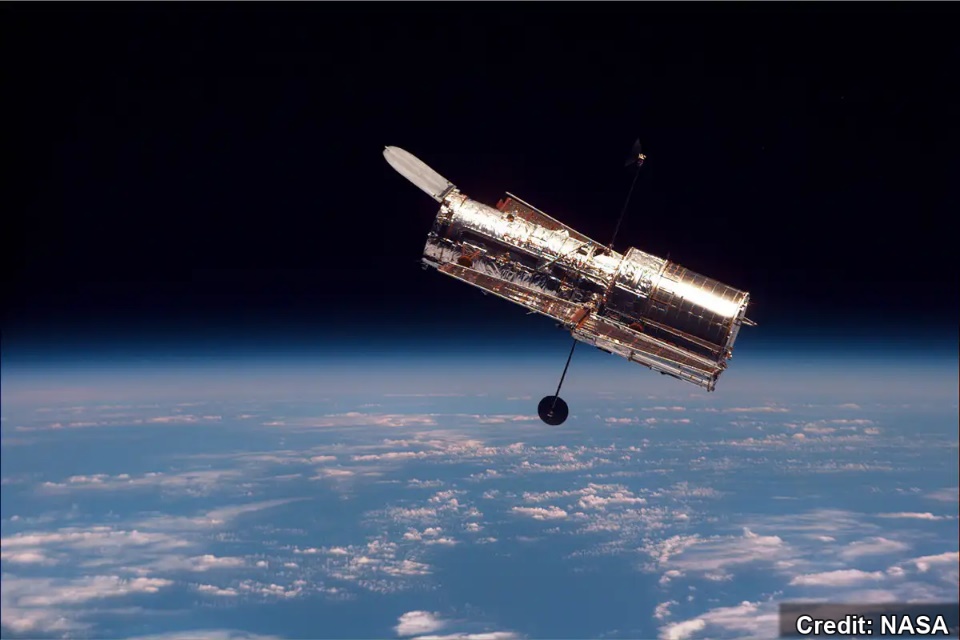 Shanghai Astronomical Observatory Conducts a Bibliometric Study of Hubble Space Telescope Scientific PublicationsSep 07, 2026
-
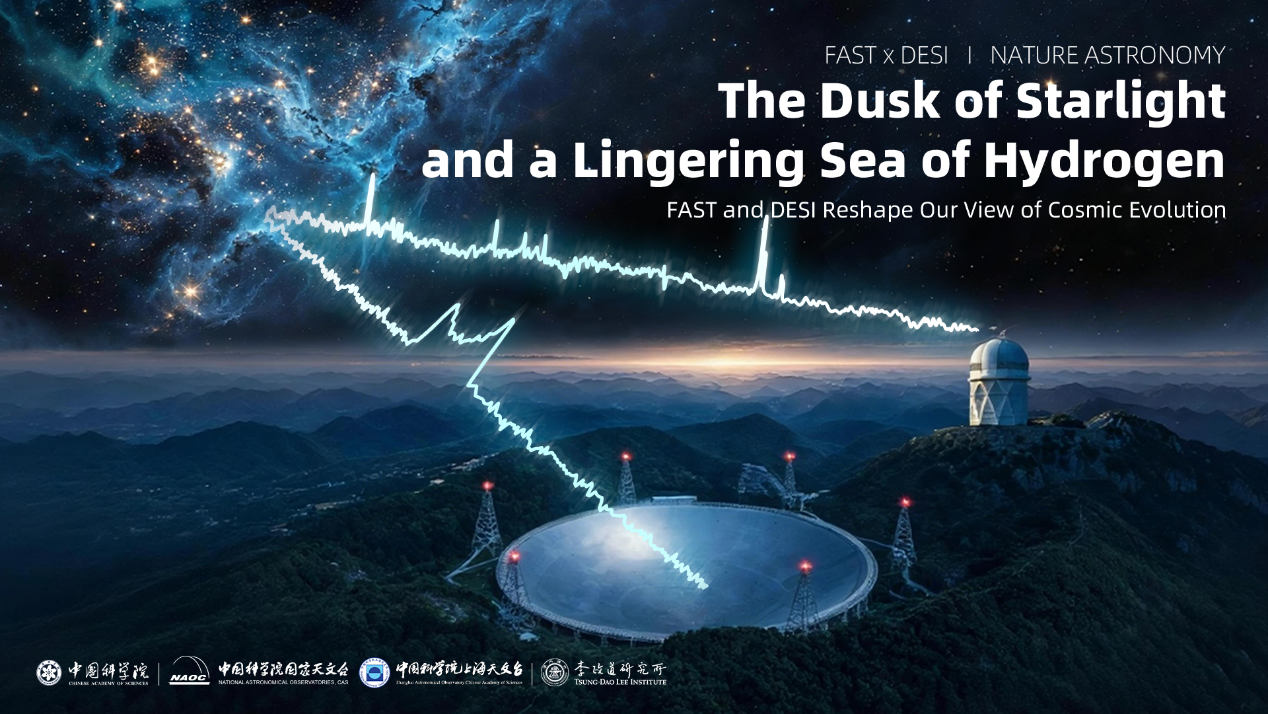 Study: Declining Star Formation Not Caused by Simple “Fuel Crisis”The universe has been having fewer and fewer stellar “babies.” Over the past 4.5 billion years, the rate of star birth has crashed to less than half of what it once was. But here’s the twist: the most essential “fuel” for making stars has barely decreased.Aug 31, 2026
-
Finds New Observational Evidence That Cosmic Filaments Channel GalaxiesAug 26, 2026


